
 IAfrika
 IAsiya
 IYurophu
 uMzantsi Melika
 IOstreliya neOceania
 IAntarctica
 uLwandlekazi lwePasifiki
 uLwandlekazi lweAtlantiki
 uLwandlekazi lwaseIndiya
 uLwandlekazi lweArctic
 uLwandle lweMeditera
 uLwandle oluBomvu
 uLwandle lweKharibhiya
 uLwandle lweCoral
 uLwandle lwaseMzantsi China
 uLwandle lwePhilippines
 uLwandle lweAndaman
 uLwandle lwaseMntla (North Sea)
 uLwandle lweTimor ne-Arafura
 iBhayi yaseBengal
 iGulf yaseCalifornia
Fea's viper
 Ukuluma
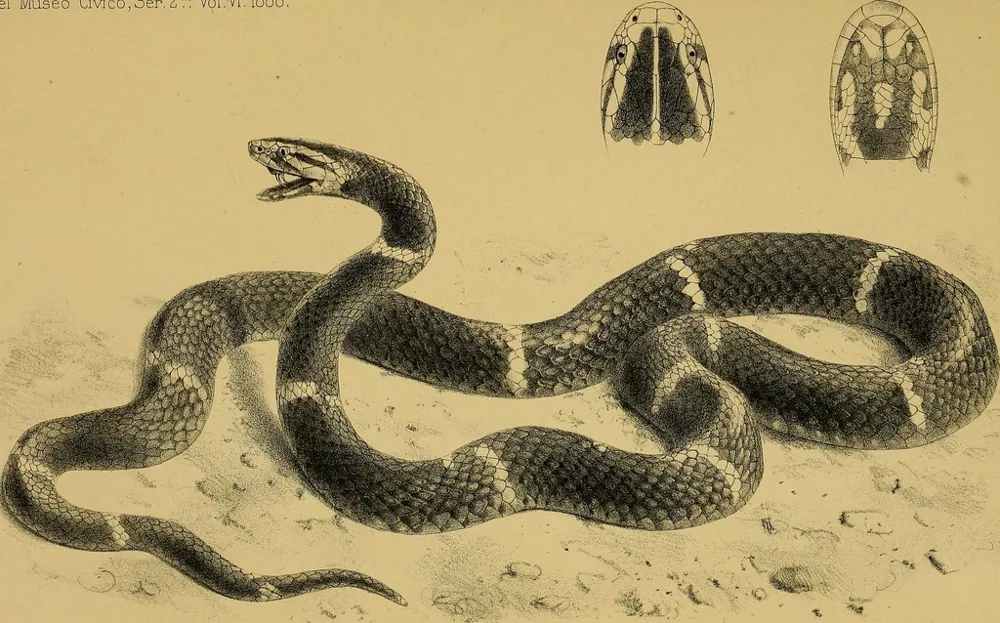
Fea's viper is a venomous snake that lives in the mountains of Southeast Asia. It is special because scientists once thought it was one of the most primitive vipers, but later studies showed it is more closely related to the pit vipers. It can also be found on roadsides, in rice fields and around homes.1

 Indlela yokusiqaphela
- The body is shiny, deep blue-grey to black, with several widely spaced, thin white-orange crossbands.1
- The head is orange to slightly yellow, with a cross-pattern outlined in grey.1
- The eyes are yellowish with vertical pupils.1
- The scales are smooth, not keeled, and arranged in 17 rows at midbody.1
- Adults are no longer than about 77 cm.1
Amandla etyhefu yokuluma nokuhlaba
Ityhefu iphuma ngamazinyo aso etyhefu okanye ngamazinyo aso xa siluma.
Ityhefu yaso yokuluma okanye yokuhlaba yenza ntoni?
Its venom is remarkably similar to that of Wagler's viper. Its venom does not cause blood clotting, bleeding or muscle breakdown, according to the studies described. One toxin, azemiopsin, blocks nicotinic acetylcholine receptors in muscles, which interferes with signals that tell muscles to move.1
Siyingozi kangakanani ebantwini?
Ingozi ebantwini: Kubi kakhuluUkulunywa kufuna ugqirha. Ukufa kunqabe kakhulu.Senza ntoni xa soyika?
When disturbed, it flattens its body to look wider, flares its jaws so the head looks triangular, sometimes vibrates its tail, and then may strike.1
 Ukuba siyaluma
- Gcina umntu engashukumi kwaye ezolile, gcina ilungu elilunyiweyo kwinqanaba lentliziyo, susa imisesane nezinto eziqinileyo, uze umse esibhedlele ngokukhawuleza.
Soloko utsalela inombolo kaxakeka kuqala (112, 000, 911). Esi sisikhokelo soncedo lokuqala ngokubanzi, asilocebiso lwezonyango. Iziseko zoncedo lokuqala
 Hlala ukhuselekile
- Ungaze uchukumise, ubambe okanye uqhule isilwanyana sasendle, nokuba sincinci, kwaye nokuba sibonakala silele okanye sifile.
- Sinike indawo. Ukuba udibana naso, hlala uzolile, buyela umva kancinci kwaye usiyeke sihambe ngendlela yaso.
- Ukuba siyakuluma: hlala uzolile, musa ukushukuma, tsalela inombolo kaxakeka (112, 000, 911) okanye uye esibhedlele ngokukhawuleza. Khumbula ukuba sasikhangeleka njani, ifoto iyanceda.
Asikuzingeli. Sisebenzisa ityhefu yaso ukubamba ukutya okanye ukuzikhusela, kwaye singakhetha ukuzimela. Okungakumbi malunga nokuhlala ukhuselekile
Sikhulu kangakanani?
Side kangakanani?
 ubude obulingana neebhanana eziyi-4 zilandelelana
 singagqiba iimitha ezili-100 ngemizuzwana eyi-100 (owona mntu ukhawulezayo udinga i-9,6)
U-Fea's viper mkhulu kangakanani xa uthelekisa NAWE?
Zizibalo nje kwibhrawuza yakho. Akukho nto igcinwayo okanye ithunyelwa naphi na.
Sikhawuleza kangakanani?


Iinyaniso
Its fangs are hollow and rotate, but they are short. It also has a blade-like structure on the underside of the fang, which is seen only in a few other snake groups.1
It has large head shields like colubrids and elapids, instead of the many small scales found on most vipers.1
It hibernates during the winter, which is unusual for most vipers.1
It is thought to be crepuscular, which means it is most active at dusk and dawn, and it is active from early March into late November.1
Umqhekezi weentsomi
Intsomi: It is one of the most primitive vipers.
Inyaniso: It was once thought to be among the most primitive vipers, but molecular studies show it is the sister group to the pit vipers, Crotalinae.1
Apho iinyaniso zivela khona
- Azemiops (Wikipedia (CC BY-SA 4.0))
- Azemiops feae (iNaturalist): amagama nokuhlelwa.
- Venom Wiki: inqanaba lengozi, ubungakanani obuqhelekileyo noqikelelo lwesantya zezethu. Bona indlela esizifumana ngayo: Indlela esilinganisa ngayo ingozi.
Inyaniso nganye kweli phepha inenombolo ebonisa umthombo wayo. Ukuba senze impazamo, uxolo, sithanda izilwanyana, asiyomagazini yenzululwazi. Sixelele ku-[email protected] kwaye siza kuyilungisa.
 Unomadudwane ulambile! I-Venom Wiki yiprojekthi yomntu omnye: isimahla, ayinazibhengezo kwaye ayinazilandeli. Isipho esincinci sinceda ukuyigcina ikwi-intanethi.Yondla unomadudwane
Okungakumbi kwiqela elinye: Ii-viper namarhamba
 Indian saw-scaled viperIi-viper namarhambaSiyabulala
 Puff adderIi-viper namarhambaSiyabulala
 Irhamba likaRussellIi-viper namarhambaSiyabulala
 Common European adderIi-viper namarhambaKufuna ugqirha
 Eastern Russell's viperIi-viper namarhambaSiyabulala
 Northeast African carpet viperIi-viper namarhambaSiyabulala
Sikwahlala: IAsiya
 DeathstalkerOonomadudwaneSiyabulala
 Indian cobraAmaphimpi, iimamba nee-kraitSiyabulala
 King cobraAmaphimpi, iimamba nee-kraitSiyabulala
 Asian giant hornetIinyosi, oonomeva nee-hornetSinokubulala
 Komodo dragonAmacilikishe anetyhefuSinokubulala
 Spanish flyEzinye izilwanyana ezityhefayoKufuna ugqirhaMusa ukuchukumisa