
 IAfrika
 IAsiya
 IYurophu
 uMzantsi Melika
 IOstreliya neOceania
 IAntarctica
 uLwandlekazi lwePasifiki
 uLwandlekazi lweAtlantiki
 uLwandlekazi lwaseIndiya
 uLwandlekazi lweArctic
 uLwandle lweMeditera
 uLwandle oluBomvu
 uLwandle lweKharibhiya
 uLwandle lweCoral
 uLwandle lwaseMzantsi China
 uLwandle lwePhilippines
 uLwandle lweAndaman
 uLwandle lwaseMntla (North Sea)
 uLwandle lweTimor ne-Arafura
 iBhayi yaseBengal
 iGulf yaseCalifornia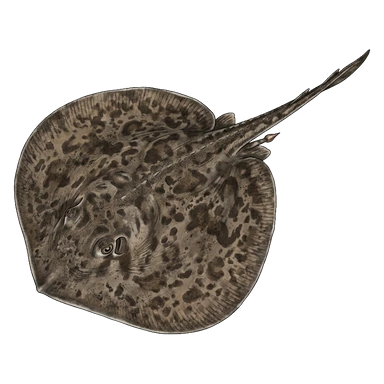
Giant freshwater stingray
 Ukuhlaba
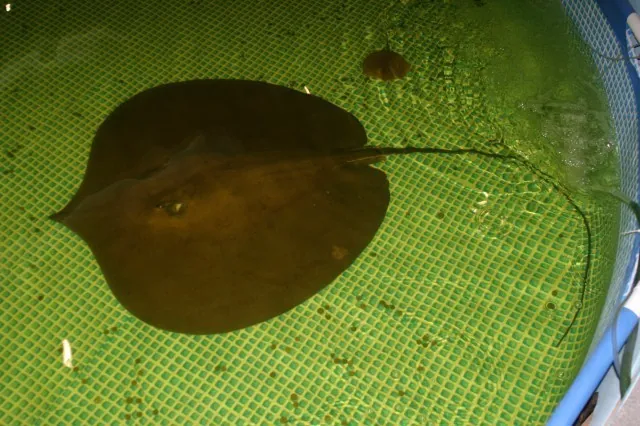
The giant freshwater stingray is a large ray that lives in big rivers and estuaries in Southeast Asia and Borneo. It is the widest freshwater fish in the world, and it is now endangered because of fishing and habitat loss. It has a long, whip-like tail with a sharp spine near the base.1



 Indlela yokusiqaphela
- Plain grayish brown on top, often with a yellowish or pinkish tint towards the fin edges1
- White underside with broad dark bands on the rear edges of the pectoral and pelvic fins1
- Thin, whip-like tail that is black behind the spine and has no fin folds1
- Sharply pointed snout that projects beyond the disc1
- A single serrated stinging spine on the upper tail near its base, up to 38 cm long1
Sidla ngokubhidaniswa no: Similar freshwater stingrays in South Asia, Southeast Asia and Australasia were once tentatively grouped with this species. Some of them, such as the Australian Urogymnus dalyensis, are now described as separate species.1
Amandla etyhefu yokuluma nokuhlaba
Ityhefu iphuma ngenaliti yokuhlaba.
Ityhefu yaso yokuluma okanye yokuhlaba yenza ntoni?
Its sting is sheathed in toxic mucus. The sting is capable of piercing bone.1
Siyingozi kangakanani ebantwini?
Ingozi ebantwini: Kubi kakhuluUkuhlatywa kufuna ugqirha. Ukufa kunqabe kakhulu.The giant freshwater stingray is not aggressive. Its sting is strong enough to pierce bone and is coated in toxic mucus, so it should be treated with care.1
 Ukuba siyahlaba
- Faka inxeba emanzini ashushu, ashushu kangangoko umntu angakwazi ukunyamezela ngaphandle kokutshiswa (wavavanye ngesandla sakho), imizuzu engama-30 ukuya kwengama-90. Fumana uncedo lwezonyango, ingakumbi kwii-stonefish nakwii-stingray.
Soloko utsalela inombolo kaxakeka kuqala (112, 000, 911). Esi sisikhokelo soncedo lokuqala ngokubanzi, asilocebiso lwezonyango. Iziseko zoncedo lokuqala
 Hlala ukhuselekile
- Ungaze uchukumise, ubambe okanye uqhule isilwanyana sasendle, nokuba sincinci, kwaye nokuba sibonakala silele okanye sifile.
- Sinike indawo. Ukuba udibana naso, hlala uzolile, buyela umva kancinci kwaye usiyeke sihambe ngendlela yaso.
- Ukuba siyakuhlaba: hlala uzolile, musa ukushukuma, tsalela inombolo kaxakeka (112, 000, 911) okanye uye esibhedlele ngokukhawuleza. Khumbula ukuba sasikhangeleka njani, ifoto iyanceda.
Asikuzingeli. Sisebenzisa ityhefu yaso ukubamba ukutya okanye ukuzikhusela, kwaye singakhetha ukuzimela. Okungakumbi malunga nokuhlala ukhuselekile
Sikhulu kangakanani?
Side kangakanani?
Sinzima kangakanani?
 ubude obulingana nezinja eziyi-5 ukusuka empumlweni ukuya emsileni
 ubude obulingana neebhanana eziyi-28 zilandelelana
 singaqubha ubude bechibi elikhulu lokuqubha (50 m) ngemizuzwana eyi-6
U-Giant freshwater stingray mkhulu kangakanani xa uthelekisa NAWE?
Zizibalo nje kwibhrawuza yakho. Akukho nto igcinwayo okanye ithunyelwa naphi na.
Sikhawuleza kangakanani?

Iinyaniso
In June 2022, a specimen caught in the Mekong River was reported as the largest strict freshwater fish ever documented, at about 300 kg.1
It is the widest freshwater fish in the world, growing up to 2.2 m across.1
Its tail spine is up to 38 cm long, the largest of any stingray species.1
Pups are nourished in the womb by a milk-like substance called histotroph, or 'uterine milk', made by the mother.1
In Cambodia, the average weight of a landed ray fell from 23.2 kg in 1980 to 6.9 kg in 2006.1
Kwiingcali zetyhefu
- Igama lenzululwazi
- Urogymnus polylepis
- Iqela
- Iintlanzi ezinetyhefu
- Usapho
- Dasyatidae2
- Ucwangco
- Myliobatiformes
- Amazwekazi
- IAsiya
- Iintsana
- It gives birth to live young. Females have litters of one to four pups, each about 30 cm across at birth.1
- Imeko yaso endle
- Endangered (IUCN overall); Critically Endangered in Thailand1
- Ingozi ebantwini
- 3 / 5: Kubi kakhulu3
Apho iinyaniso zivela khona
- Giant freshwater stingray (Wikipedia (CC BY-SA 4.0))
- Urogymnus polylepis (iNaturalist): amagama nokuhlelwa.
- Venom Wiki: inqanaba lengozi, ubungakanani obuqhelekileyo noqikelelo lwesantya zezethu. Bona indlela esizifumana ngayo: Indlela esilinganisa ngayo ingozi.
Inyaniso nganye kweli phepha inenombolo ebonisa umthombo wayo. Ukuba senze impazamo, uxolo, sithanda izilwanyana, asiyomagazini yenzululwazi. Sixelele ku-[email protected] kwaye siza kuyilungisa.
 Unomadudwane ulambile! I-Venom Wiki yiprojekthi yomntu omnye: isimahla, ayinazibhengezo kwaye ayinazilandeli. Isipho esincinci sinceda ukuyigcina ikwi-intanethi.Yondla unomadudwane
Okungakumbi kwiqela elinye: Iintlanzi ezinetyhefu
 Walking catfishIintlanzi ezinetyhefuKubuhlungu njeMusa ukuchukumisa
 Asian stinging catfishIintlanzi ezinetyhefuKufuna ugqirhaMusa ukuchukumisa
 Reef stonefishIintlanzi ezinetyhefuSinokubulalaMusa ukuchukumisa
 Red lionfishIintlanzi ezinetyhefuKufuna ugqirhaMusa ukuchukumisa
 Estuarine stonefishIintlanzi ezinetyhefuSinokubulalaMusa ukuchukumisa
 Short-tail stingrayIintlanzi ezinetyhefuSinokubulala
 Deathstalker
 Indian cobra
 Indian saw-scaled viper
 King cobra
 Puff adder
 Irhamba likaRussell