
 IAfrika
 IAsiya
 IYurophu
 uMzantsi Melika
 IOstreliya neOceania
 IAntarctica
 uLwandlekazi lwePasifiki
 uLwandlekazi lweAtlantiki
 uLwandlekazi lwaseIndiya
 uLwandlekazi lweArctic
 uLwandle lweMeditera
 uLwandle oluBomvu
 uLwandle lweKharibhiya
 uLwandle lweCoral
 uLwandle lwaseMzantsi China
 uLwandle lwePhilippines
 uLwandle lweAndaman
 uLwandle lwaseMntla (North Sea)
 uLwandle lweTimor ne-Arafura
 iBhayi yaseBengal
 iGulf yaseCalifornia
Golfodulcean poison frog
 Ityhefu esikhumbeni sasoSitya: IzinambuzaneSiyatyhefa, asinatyhefu yokuluma okanye yokuhlaba
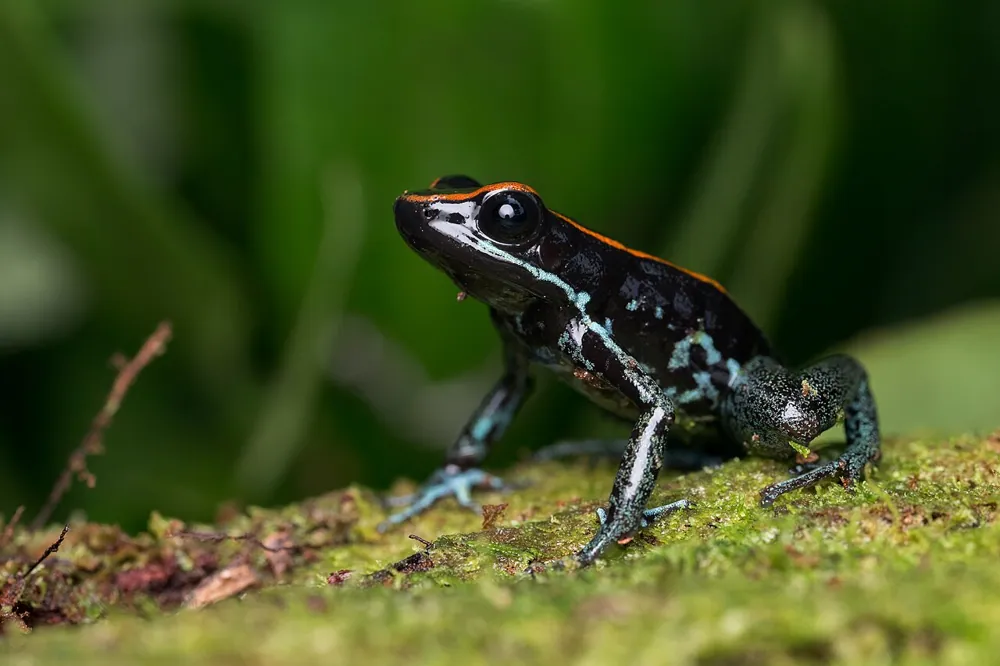
The Golfodulcean poison frog is a small, brightly marked frog that lives only in Costa Rica. Its skin contains a strong nerve poison, so it is one of the most toxic frogs in its genus, and it is a reminder that bright colours can be a warning. It lives in wet forests near streams.1

 Indlela yokusiqaphela
- The body is black, but it can look glittery because of pigments in the skin.1
- Two stripes run down the back from just above the vent to the tip of the nose. They are usually fire orange, but can be golden, yellow or green.1
- The legs are mottled blue, and the sides often have a blue or green marble pattern.1
- It is a fairly large poison frog for its genus, with a smooth, sloping back. Its shoulder blades are usually hidden under the skin, so it can look a little plump.1
- Females are typically larger than males. Adults reach about 3.5 cm long.1
Sidla ngokubhidaniswa no: The related P. bicolor and P. terribilis have visible shoulder blades under the skin, which the Golfodulcean poison frog usually lacks, so it looks smoother and rounder.1
Amandla etyhefu
Isikhumba saso siyatyhefa. Kuyingozi ukusichukumisa, ukusikhotha okanye ukusitya.
Ityhefu yaso etyhefayo (xa usichukumisa okanye usitya) yenza ntoni?
Its skin contains batrachotoxin, a neurotoxic alkaloid poison, which attacks the nerves. A large enough dose causes severe pain, then tonic-clonic seizures (violent convulsions) and paralysis.1
Siyingozi kangakanani ebantwini?
Ingozi ebantwini: KubuhlunguKunokuba buhlungu ngokwenene, kodwa phantse akusoze kube kubi kakhulu.It is highly toxic, though it is only the fourth most toxic species in the genus Phyllobates. The poison is in the skin, so the risk comes from handling the frog or getting the poison from its skin into the body.1
Senza ntoni xa soyika?
Its bright, multi-coloured body advertises its toxin as a warning to predators.1
 Ukuba umntu usichukumisile okanye usityile
- Ukuba umntu usichukumisile: hlamba izandla kakuhle kwaye ungachukumisi amehlo okanye umlomo. Ukuba umntwana okanye isilwanyana sasekhaya sisikhothile okanye sisityile: tsalela iziko lezityhefu okanye inombolo kaxakeka.
Soloko utsalela inombolo kaxakeka kuqala (112, 000, 911). Esi sisikhokelo soncedo lokuqala ngokubanzi, asilocebiso lwezonyango. Iziseko zoncedo lokuqala
 Hlala ukhuselekile
- Ungaze uchukumise, ubambe okanye uqhule isilwanyana sasendle, nokuba sincinci, kwaye nokuba sibonakala silele okanye sifile.
- Sinike indawo. Ukuba udibana naso, hlala uzolile, buyela umva kancinci kwaye usiyeke sihambe ngendlela yaso.
- Ukuba usichukumisile okanye usityile: musa ukukhuhla amehlo okanye umlomo wakho, hlamba izandla zakho kwaye ufumane uncedo lwezonyango.
Asikuzingeli. Ityhefu yaso ikhona nje ukuze kungabikho nto isityayo. Okungakumbi malunga nokuhlala ukhuselekile
Sikhulu kangakanani?
Side kangakanani?
 malunga nobude besiqhobosho sephepha
 singagqiba iimitha ezili-100 ngemizuzwana eyi-100 (owona mntu ukhawulezayo udinga i-9,6)
U-Golfodulcean poison frog mkhulu kangakanani xa uthelekisa NAWE?
Zizibalo nje kwibhrawuza yakho. Akukho nto igcinwayo okanye ithunyelwa naphi na.
Sikhawuleza kangakanani?


Iinyaniso
It is one of the few frogs whose poison is named batrachotoxin, a potent nerve toxin.1
Its climbing toe pads stick to leaves in a similar way to geckos, and it can climb out of an unsealed container.1
Male frogs carry their tadpoles on their backs, often for 1 to 2 days, to puddles, pools in palm leaves, or water-filled tree holes.1
Frogs in captivity have no toxin, which shows that their poison comes from what they eat.1
Its skin holds a large amount of poison, because it is comparatively large for a poison dart frog.1
The tadpoles become frogs after about 45 days, and the young frogs become sexually mature after ten months.1
Kwiingcali zetyhefu
- Igama lenzululwazi
- Phyllobates vittatus
- Iqela
- Amasele atyhefayo, amaxoxo nee-newt
- Usapho
- Dendrobatidae2
- Ucwangco
- Anura
- Amazwekazi
- uMntla Melika
- Iintsana
- During the breeding season, the female lays 7 to 21 eggs per clutch on leaves, about every one or two weeks, and the male guards the eggs and carries the hatched tadpoles on his back to water.1
- Ingozi ebantwini
- 2 / 5: Kubuhlungu3
Apho iinyaniso zivela khona
- Golfodulcean poison frog (Wikipedia (CC BY-SA 4.0))
- Phyllobates vittatus (iNaturalist): amagama nokuhlelwa.
- Venom Wiki: inqanaba lengozi, ubungakanani obuqhelekileyo noqikelelo lwesantya zezethu. Bona indlela esizifumana ngayo: Indlela esilinganisa ngayo ingozi.
Inyaniso nganye kweli phepha inenombolo ebonisa umthombo wayo. Ukuba senze impazamo, uxolo, sithanda izilwanyana, asiyomagazini yenzululwazi. Sixelele ku-[email protected] kwaye siza kuyilungisa.
 Unomadudwane ulambile! I-Venom Wiki yiprojekthi yomntu omnye: isimahla, ayinazibhengezo kwaye ayinazilandeli. Isipho esincinci sinceda ukuyigcina ikwi-intanethi.Yondla unomadudwane
Okungakumbi kwiqela elinye: Amasele atyhefayo, amaxoxo nee-newt
 Cane toadAmasele atyhefayo, amaxoxo nee-newtKufuna ugqirhaMusa ukuchukumisa
 Strawberry poison-dart frogAmasele atyhefayo, amaxoxo nee-newtKubuhlungu njeMusa ukuchukumisa
 California newtAmasele atyhefayo, amaxoxo nee-newtSinokubulalaMusa ukuchukumisa
 Rough-skinned newtAmasele atyhefayo, amaxoxo nee-newtSinokubulalaMusa ukuchukumisa
 Colorado River toadAmasele atyhefayo, amaxoxo nee-newtKufuna ugqirhaMusa ukuchukumisa
 Panamanian golden frogAmasele atyhefayo, amaxoxo nee-newtKufuna ugqirhaMusa ukuchukumisa
 Terciopelo
 Eastern coral snake
 Eastern diamondback rattlesnake
 Eyelash viper
 Timber rattlesnake
 Western diamondback rattlesnake