
 IAfrika
 IAsiya
 IYurophu
 uMzantsi Melika
 IOstreliya neOceania
 IAntarctica
 uLwandlekazi lwePasifiki
 uLwandlekazi lweAtlantiki
 uLwandlekazi lwaseIndiya
 uLwandlekazi lweArctic
 uLwandle lweMeditera
 uLwandle oluBomvu
 uLwandle lweKharibhiya
 uLwandle lweCoral
 uLwandle lwaseMzantsi China
 uLwandle lwePhilippines
 uLwandle lweAndaman
 uLwandle lwaseMntla (North Sea)
 uLwandle lweTimor ne-Arafura
 iBhayi yaseBengal
 iGulf yaseCalifornia
Horseshoe pit viper
 Ukuluma
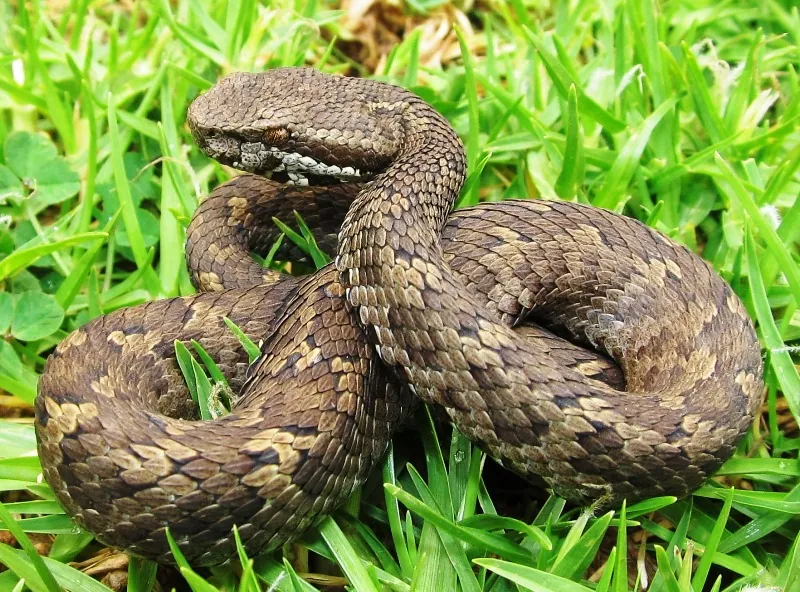
The horseshoe pit viper is a venomous snake that lives only in the Western Ghats mountains of southern India. It has a pale horseshoe-shaped mark on the back of its neck, which gives it its common name. It is special because its natural range is very small, possibly the smallest of any pit viper confirmed from India.1



 Indlela yokusiqaphela
- A pale buff, horseshoe-shaped (inverted "U") mark on the nape of the neck.1
- Pale brownish or buff body with darker grey blotches and some white streaks.1
- Small internasal scales on the snout.1
- 21 rows of smooth or weakly keeled scales along the middle of the body.1
Sidla ngokubhidaniswa no: It is often grouped with other pit vipers of peninsular India. It can be told apart by its small internasal scales, the second upper lip scale touching the loreal pit (the heat-sensing pit between eye and nostril), 21 rows of dorsal scales at midbody, and a single row of scales between the lip scales and the eye scales.1
Amandla etyhefu yokuluma nokuhlaba
Ityhefu iphuma ngamazinyo aso etyhefu okanye ngamazinyo aso xa siluma.
Siyingozi kangakanani ebantwini?
Ingozi ebantwini: Kubi kakhuluUkulunywa kufuna ugqirha. Ukufa kunqabe kakhulu. Ukuba siyaluma
- Gcina umntu engashukumi kwaye ezolile, gcina ilungu elilunyiweyo kwinqanaba lentliziyo, susa imisesane nezinto eziqinileyo, uze umse esibhedlele ngokukhawuleza.
Soloko utsalela inombolo kaxakeka kuqala (112, 000, 911). Esi sisikhokelo soncedo lokuqala ngokubanzi, asilocebiso lwezonyango. Iziseko zoncedo lokuqala
 Hlala ukhuselekile
- Ungaze uchukumise, ubambe okanye uqhule isilwanyana sasendle, nokuba sincinci, kwaye nokuba sibonakala silele okanye sifile.
- Sinike indawo. Ukuba udibana naso, hlala uzolile, buyela umva kancinci kwaye usiyeke sihambe ngendlela yaso.
- Ukuba siyakuluma: hlala uzolile, musa ukushukuma, tsalela inombolo kaxakeka (112, 000, 911) okanye uye esibhedlele ngokukhawuleza. Khumbula ukuba sasikhangeleka njani, ifoto iyanceda.
Asikuzingeli. Sisebenzisa ityhefu yaso ukubamba ukutya okanye ukuzikhusela, kwaye singakhetha ukuzimela. Okungakumbi malunga nokuhlala ukhuselekile
Sikhulu kangakanani?
Side kangakanani?
 ubude obulingana neebhanana eziyi-2 zilandelelana
 ubude obulingana neebhloko zokudlala zokwakha eziyi-12 zilandelelana
 singagqiba iimitha ezili-100 ngemizuzwana eyi-110 (owona mntu ukhawulezayo udinga i-9,6)
U-Horseshoe pit viper mkhulu kangakanani xa uthelekisa NAWE?
Zizibalo nje kwibhrawuza yakho. Akukho nto igcinwayo okanye ithunyelwa naphi na.
Sikhawuleza kangakanani?


Iinyaniso
Umqhekezi weentsomi
Intsomi: The horseshoe pit viper is found across a wide area, including parts of the Eastern Ghats.
Inyaniso: Early reports from outside the Western Ghats were misidentifications. The species is endemic to the Western Ghats, in Karnataka, Tamil Nadu and Kerala.1
Apho iinyaniso zivela khona
- Craspedocephalus strigatus (Wikipedia (CC BY-SA 4.0))
- Craspedocephalus strigatus (iNaturalist): amagama nokuhlelwa.
- Venom Wiki: inqanaba lengozi, ubungakanani obuqhelekileyo noqikelelo lwesantya zezethu. Bona indlela esizifumana ngayo: Indlela esilinganisa ngayo ingozi.
Inyaniso nganye kweli phepha inenombolo ebonisa umthombo wayo. Ukuba senze impazamo, uxolo, sithanda izilwanyana, asiyomagazini yenzululwazi. Sixelele ku-[email protected] kwaye siza kuyilungisa.
 Unomadudwane ulambile! I-Venom Wiki yiprojekthi yomntu omnye: isimahla, ayinazibhengezo kwaye ayinazilandeli. Isipho esincinci sinceda ukuyigcina ikwi-intanethi.Yondla unomadudwane
 Brown spotted pit viper
 Habu
Habu Hump-nosed viper
 Hundred-pace viper
 Malayan pit viper
 Mamushi
 Deathstalker
 Indian cobra
 Indian saw-scaled viper
 King cobra
 Puff adder
 Irhamba likaRussell