
 IAfrika
 IAsiya
 IYurophu
 uMzantsi Melika
 IOstreliya neOceania
 IAntarctica
 uLwandlekazi lwePasifiki
 uLwandlekazi lweAtlantiki
 uLwandlekazi lwaseIndiya
 uLwandlekazi lweArctic
 uLwandle lweMeditera
 uLwandle oluBomvu
 uLwandle lweKharibhiya
 uLwandle lweCoral
 uLwandle lwaseMzantsi China
 uLwandle lwePhilippines
 uLwandle lweAndaman
 uLwandle lwaseMntla (North Sea)
 uLwandle lweTimor ne-Arafura
 iBhayi yaseBengal
 iGulf yaseCalifornia
Hundred-pace viper
 Ukuluma
The hundred-pace viper is a pit viper that lives in the mountains and hills of southern China, Taiwan and northern Vietnam. It is venomous, and its bite can be dangerous, so it is important to know what it looks like. Its name comes from a well-known but exaggerated local belief about how far a bite victim can walk.1



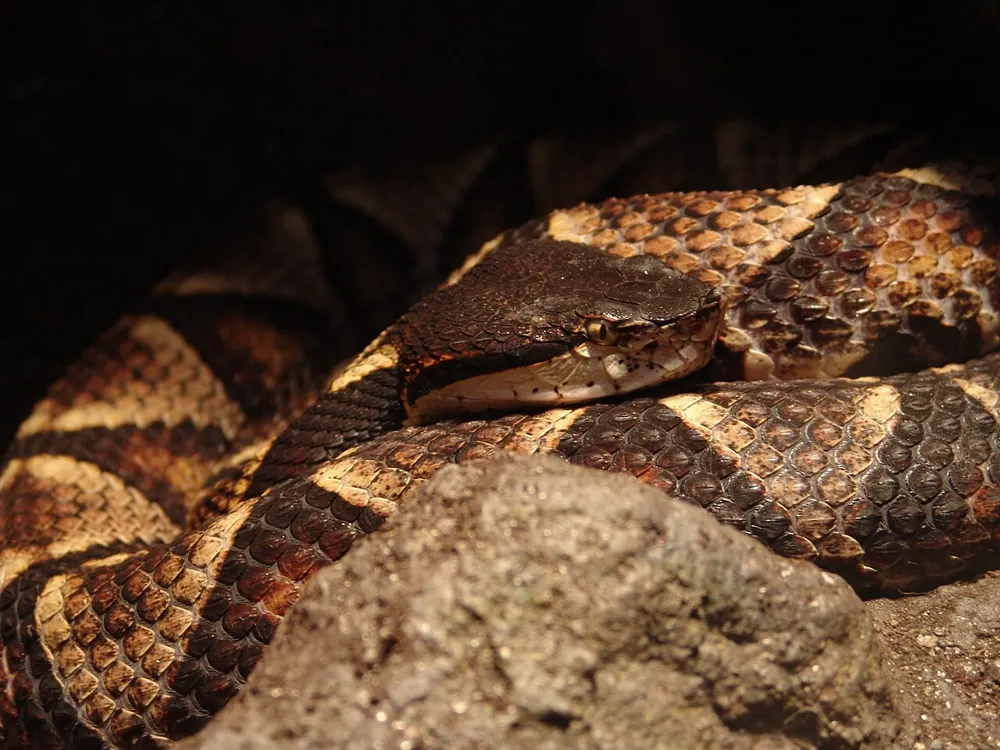
 Indlela yokusiqaphela
- Light brown or greyish brown, with a series of dark brown triangles along each side1
- About 20 light brown, squarish blotches run along the back1
- Top of the head and upper sides are black, with a black streak from the eye to the corner of the mouth1
- Large, triangular head with an upturned snout, and a very stout body1
- Young snakes are much lighter than adults but have the same pattern1
Amandla etyhefu yokuluma nokuhlaba
Ityhefu iphuma ngamazinyo aso etyhefu okanye ngamazinyo aso xa siluma.
Ityhefu yaso yokuluma okanye yokuhlaba yenza ntoni?
Its venom is a potent hemotoxin, which damages blood and tissue and is strongly haemorrhagic, meaning it causes bleeding. Bite symptoms include severe pain and bleeding that may begin almost immediately, followed by swelling, blistering, tissue death (necrosis) and ulceration. Heart palpitations may come on suddenly and relatively soon after the bite.1
Siyingozi kangakanani ebantwini?
Ingozi ebantwini: Siyingozi kakhuluSinokubulala umntu ongafumani nyango.The species is considered dangerous, and deaths are not unusual. Its large, hinged fangs can deliver large amounts of venom.1
 Iindaba ezimnandi: oogqirha banamayeza (i-antivenom) okanye unyango lwale nto.1
 Ukuba siyaluma
- Victims should be treated according to the seriousness of the bite. Cutting off or burning a bitten finger or limb is harmful and can cause further complications. An antivenom is produced in Taiwan.1
- Gcina umntu engashukumi kwaye ezolile, gcina ilungu elilunyiweyo kwinqanaba lentliziyo, susa imisesane nezinto eziqinileyo, uze umse esibhedlele ngokukhawuleza.
Soloko utsalela inombolo kaxakeka kuqala (112, 000, 911). Esi sisikhokelo soncedo lokuqala ngokubanzi, asilocebiso lwezonyango. Iziseko zoncedo lokuqala
 Hlala ukhuselekile
- Ungaze uchukumise, ubambe okanye uqhule isilwanyana sasendle, nokuba sincinci, kwaye nokuba sibonakala silele okanye sifile.
- Sinike indawo. Ukuba udibana naso, hlala uzolile, buyela umva kancinci kwaye usiyeke sihambe ngendlela yaso.
- Ukuba siyakuluma: hlala uzolile, musa ukushukuma, tsalela inombolo kaxakeka (112, 000, 911) okanye uye esibhedlele ngokukhawuleza. Khumbula ukuba sasikhangeleka njani, ifoto iyanceda.
Asikuzingeli. Sisebenzisa ityhefu yaso ukubamba ukutya okanye ukuzikhusela, kwaye singakhetha ukuzimela. Okungakumbi malunga nokuhlala ukhuselekile
Sikhulu kangakanani?
Side kangakanani?
 ubude obulingana neekati zasekhaya eziyi-3 ukusuka empumlweni ukuya emsileni
 ubude obulingana neebhanana eziyi-9 zilandelelana
 singagqiba iimitha ezili-100 ngemizuzwana eyi-95 (owona mntu ukhawulezayo udinga i-9,6)
U-Hundred-pace viper mkhulu kangakanani xa uthelekisa NAWE?
Zizibalo nje kwibhrawuza yakho. Akukho nto igcinwayo okanye ithunyelwa naphi na.
Sikhawuleza kangakanani?


Iinyaniso
Its popular name, hundred-pacer, is said to come from a belief that a bitten victim can walk only 100 steps before dying.1
A protein from its venom, called ACTX-6, has been shown to cause cell death in isolated cancer cells.1
Its venom is widely used in research. In mice, it attacks the kidneys and the mice die.1
It is one of the few pit vipers that lays eggs. It can keep eggs inside during early incubation, which shortens the time they need to develop after being laid.1
The venom has been used in traditional Chinese medicine for centuries to make antivenin for treating snakebites.1
For the Paiwan people of Taiwan, the viper is the parent of their hero Aljis, and the viper symbol is used on their homes to show power.1
Umqhekezi weentsomi
Intsomi: A person bitten by a hundred-pace viper can only walk 100 steps before dying.
Inyaniso: This belief is an exaggeration. The species is still dangerous, and deaths are not unusual. Believing the myth has led people to amputate or burn bitten fingers or limbs, which causes further harm.1
Apho iinyaniso zivela khona
- Deinagkistrodon (Wikipedia (CC BY-SA 4.0))
- Deinagkistrodon acutus (iNaturalist): amagama nokuhlelwa.
- Venom Wiki: inqanaba lengozi, ubungakanani obuqhelekileyo noqikelelo lwesantya zezethu. Bona indlela esizifumana ngayo: Indlela esilinganisa ngayo ingozi.
Inyaniso nganye kweli phepha inenombolo ebonisa umthombo wayo. Ukuba senze impazamo, uxolo, sithanda izilwanyana, asiyomagazini yenzululwazi. Sixelele ku-[email protected] kwaye siza kuyilungisa.
 Unomadudwane ulambile! I-Venom Wiki yiprojekthi yomntu omnye: isimahla, ayinazibhengezo kwaye ayinazilandeli. Isipho esincinci sinceda ukuyigcina ikwi-intanethi.Yondla unomadudwane
 Brown spotted pit viper
 Habu
Habu Hump-nosed viper
 Malayan pit viper
 Mamushi
 Mangshan pit viper
 Deathstalker
 Indian cobra
 Indian saw-scaled viper
 King cobra
 Puff adder
 Irhamba likaRussell