
 IAfrika
 IAsiya
 IYurophu
 uMzantsi Melika
 IOstreliya neOceania
 IAntarctica
 uLwandlekazi lwePasifiki
 uLwandlekazi lweAtlantiki
 uLwandlekazi lwaseIndiya
 uLwandlekazi lweArctic
 uLwandle lweMeditera
 uLwandle oluBomvu
 uLwandle lweKharibhiya
 uLwandle lweCoral
 uLwandle lwaseMzantsi China
 uLwandle lwePhilippines
 uLwandle lweAndaman
 uLwandle lwaseMntla (North Sea)
 uLwandle lweTimor ne-Arafura
 iBhayi yaseBengal
 iGulf yaseCalifornia
Largespot river stingray
 Ukuhlaba
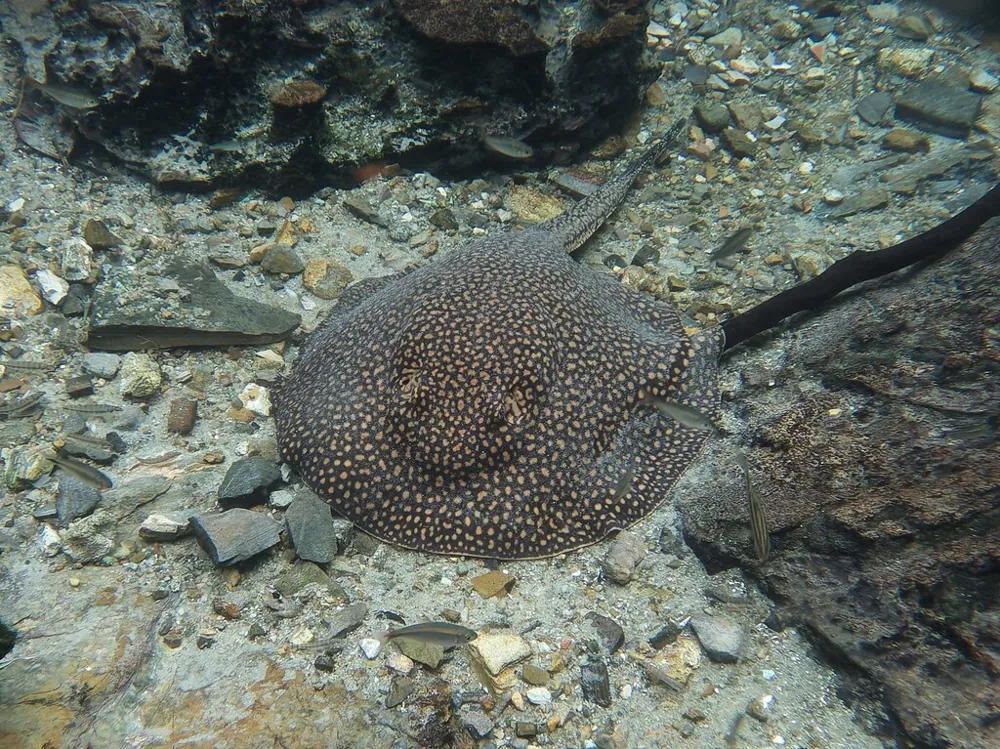
The largespot river stingray is a freshwater stingray with a flat, round body covered in dense spots. It lives in the rivers of tropical and subtropical South America, mainly the Paraná-Paraguay river basin and parts of the upper Amazon. It is sometimes kept in aquariums, but it needs a very large tank.1
 Indlela yokusiqaphela
- It is densely spotted on its upper side.1
- The exact colour and pattern vary a lot between individuals, and many intermediate patterns exist.1
- The disc (the flat body) reaches a width of up to 52 cm.1
- Its total length, including the tail, reaches up to 89 cm.1
Sidla ngokubhidaniswa no: The so-called 'tiger stingray' has often been mistaken for this species. It is a separate species, P. tigrina, which was only scientifically described in 2011.1
Amandla etyhefu yokuluma nokuhlaba
Ityhefu iphuma ngenaliti yokuhlaba.
Siyingozi kangakanani ebantwini?
Ingozi ebantwini: Kubi kakhuluUkuhlatywa kufuna ugqirha. Ukufa kunqabe kakhulu. Ukuba siyahlaba
- Faka inxeba emanzini ashushu, ashushu kangangoko umntu angakwazi ukunyamezela ngaphandle kokutshiswa (wavavanye ngesandla sakho), imizuzu engama-30 ukuya kwengama-90. Fumana uncedo lwezonyango, ingakumbi kwii-stonefish nakwii-stingray.
Soloko utsalela inombolo kaxakeka kuqala (112, 000, 911). Esi sisikhokelo soncedo lokuqala ngokubanzi, asilocebiso lwezonyango. Iziseko zoncedo lokuqala
 Hlala ukhuselekile
- Ungaze uchukumise, ubambe okanye uqhule isilwanyana sasendle, nokuba sincinci, kwaye nokuba sibonakala silele okanye sifile.
- Sinike indawo. Ukuba udibana naso, hlala uzolile, buyela umva kancinci kwaye usiyeke sihambe ngendlela yaso.
- Ukuba siyakuhlaba: hlala uzolile, musa ukushukuma, tsalela inombolo kaxakeka (112, 000, 911) okanye uye esibhedlele ngokukhawuleza. Khumbula ukuba sasikhangeleka njani, ifoto iyanceda.
Asikuzingeli. Sisebenzisa ityhefu yaso ukubamba ukutya okanye ukuzikhusela, kwaye singakhetha ukuzimela. Okungakumbi malunga nokuhlala ukhuselekile
Sikhulu kangakanani?
Side kangakanani?
 ubude obulingana neekati zasekhaya eziyi-2 ukusuka empumlweni ukuya emsileni
 ubude obulingana neebhanana eziyi-5 zilandelelana
 singaqubha ubude bechibi elikhulu lokuqubha (50 m) ngemizuzwana eyi-11
U-Largespot river stingray mkhulu kangakanani xa uthelekisa NAWE?
Zizibalo nje kwibhrawuza yakho. Akukho nto igcinwayo okanye ithunyelwa naphi na.
Sikhawuleza kangakanani?

Iinyaniso
Its natural range was once cut off from the upper Paraná basin by the Guaíra Falls. After the Itaipu Dam was built, the falls disappeared, which let this species and several others spread into that area.1
Its spotted pattern is so variable that one pattern was once described as a separate species, P. castexi, and another as P. menchacai. All of these are now treated as variants of this species.1
It is sometimes kept in aquariums, but it needs a very large tank because of its size.1
Umqhekezi weentsomi
Intsomi: The 'tiger stingray' is the same animal as the largespot river stingray.
Inyaniso: The tiger stingray is a separate species, P. tigrina, which was only scientifically described in 2011. It was earlier mistaken for P. menchacai, which is a name for this species.1
Apho iinyaniso zivela khona
- Potamotrygon falkneri (Wikipedia (CC BY-SA 4.0))
- Potamotrygon falkneri (iNaturalist): amagama nokuhlelwa.
- Venom Wiki: inqanaba lengozi, ubungakanani obuqhelekileyo noqikelelo lwesantya zezethu. Bona indlela esizifumana ngayo: Indlela esilinganisa ngayo ingozi.
Inyaniso nganye kweli phepha inenombolo ebonisa umthombo wayo. Ukuba senze impazamo, uxolo, sithanda izilwanyana, asiyomagazini yenzululwazi. Sixelele ku-[email protected] kwaye siza kuyilungisa.
 Unomadudwane ulambile! I-Venom Wiki yiprojekthi yomntu omnye: isimahla, ayinazibhengezo kwaye ayinazilandeli. Isipho esincinci sinceda ukuyigcina ikwi-intanethi.Yondla unomadudwane
Okungakumbi kwiqela elinye: Iintlanzi ezinetyhefu
 Ocellate river stingrayIintlanzi ezinetyhefuKufuna ugqirha
 Xingu River rayIintlanzi ezinetyhefuKufuna ugqirha
 Discus rayIintlanzi ezinetyhefuKufuna ugqirha
 Smooth back river stingrayIintlanzi ezinetyhefuKufuna ugqirha
 Amazon toadfishIintlanzi ezinetyhefuKubuhlungu njeMusa ukuchukumisa
 Reef stonefishIintlanzi ezinetyhefuSinokubulalaMusa ukuchukumisa
 Golden poison frog
 Terciopelo
 Brazilian wandering spider
 Eyelash viper
 Golden lancehead
 South American bushmaster