
 IAfrika
 IAsiya
 IYurophu
 uMzantsi Melika
 IOstreliya neOceania
 IAntarctica
 uLwandlekazi lwePasifiki
 uLwandlekazi lweAtlantiki
 uLwandlekazi lwaseIndiya
 uLwandlekazi lweArctic
 uLwandle lweMeditera
 uLwandle oluBomvu
 uLwandle lweKharibhiya
 uLwandle lweCoral
 uLwandle lwaseMzantsi China
 uLwandle lwePhilippines
 uLwandle lweAndaman
 uLwandle lwaseMntla (North Sea)
 uLwandle lweTimor ne-Arafura
 iBhayi yaseBengal
 iGulf yaseCalifornia
Northeastern Brazilian scorpion
 Ukuhlaba
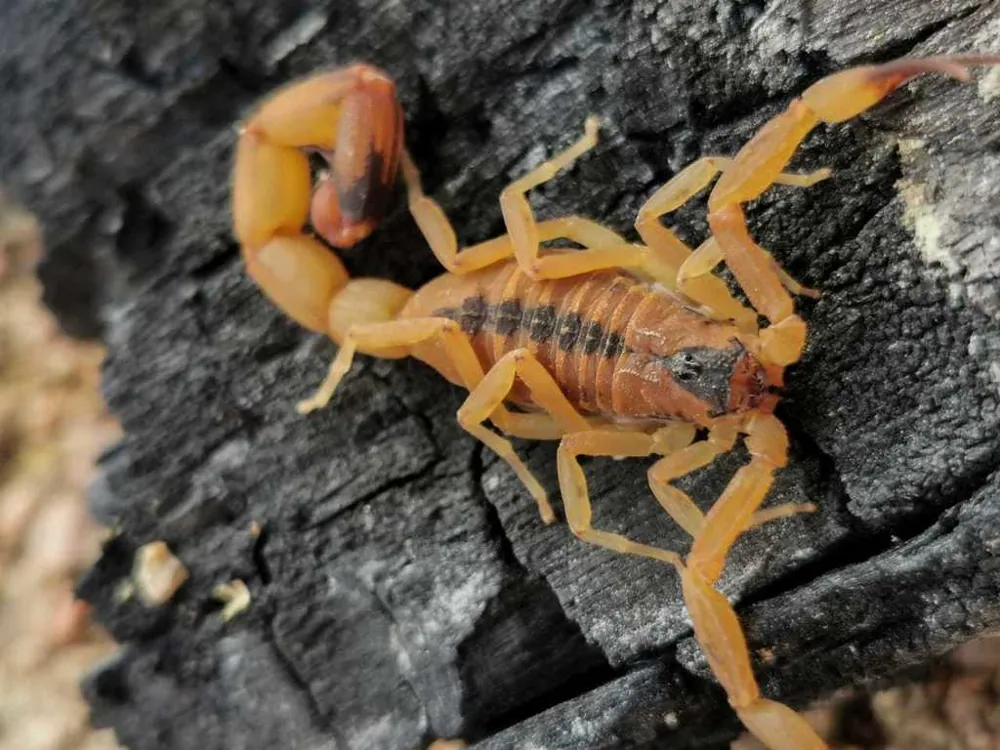
The Northeastern Brazilian scorpion is a venomous scorpion that lives in northeastern Brazil. It is golden-tan or yellowish-brown and grows to about the length of a finger. Its sting can cause serious symptoms, so it should be left alone.1

 Indlela yokusiqaphela
Amandla etyhefu yokuluma nokuhlaba
Ityhefu iphuma ngenaliti yokuhlaba.
Ityhefu yaso yokuluma okanye yokuhlaba yenza ntoni?
The venom contains the neurotoxins Tst1 and Tst26, which act on the nerves. Lab tests on mice give an LD50 of 0.575 mg/kg, a measure of how strong a venom is, which is significant. Reported symptoms include local pain, numbness, swelling, burning and itching, plus sweating, headache, vomiting, nausea, tremors, agitation, dizziness, low blood pressure and difficulty breathing.1
Siyingozi kangakanani ebantwini?
Ingozi ebantwini: Kubi kakhuluUkuhlatywa kufuna ugqirha. Ukufa kunqabe kakhulu.A study in Bahia state, Brazil, recorded 237 people stung by this species between January 1982 and December 1995. Symptoms were recorded for only 90 of them, so the full picture is unclear.1
 Ukuba siyahlaba
- Put an ice pack on the sting to cool it. Go to hospital and ask to be checked for serious complications such as acute kidney injury and pancreatitis. Venom extraction kits were tested and found not to work; they can cause more damage to the wound because of the suction.1
- Pholisa indawo ehlatyiweyo ngepakethi yomkhenkce kwaye ugcine umntu engashukumi. Fumana uncedo lwezonyango ngokukhawuleza, ingakumbi kubantwana: abanye oonomadudwane bayabulala kubantwana.
Soloko utsalela inombolo kaxakeka kuqala (112, 000, 911). Esi sisikhokelo soncedo lokuqala ngokubanzi, asilocebiso lwezonyango. Iziseko zoncedo lokuqala
 Hlala ukhuselekile
- Ungaze uchukumise, ubambe okanye uqhule isilwanyana sasendle, nokuba sincinci, kwaye nokuba sibonakala silele okanye sifile.
- Sinike indawo. Ukuba udibana naso, hlala uzolile, buyela umva kancinci kwaye usiyeke sihambe ngendlela yaso.
- Ukuba siyakuhlaba: hlala uzolile, musa ukushukuma, tsalela inombolo kaxakeka (112, 000, 911) okanye uye esibhedlele ngokukhawuleza. Khumbula ukuba sasikhangeleka njani, ifoto iyanceda.
Asikuzingeli. Sisebenzisa ityhefu yaso ukubamba ukutya okanye ukuzikhusela, kwaye singakhetha ukuzimela. Okungakumbi malunga nokuhlala ukhuselekile
Sikhulu kangakanani?
Side kangakanani?
 ubude obulingana neebhloko zokudlala zokwakha eziyi-2 zilandelelana
 singagqiba iimitha ezili-100 ngemizuzwana eyi-260 (owona mntu ukhawulezayo udinga i-9,6)
U-Northeastern Brazilian scorpion mkhulu kangakanani xa uthelekisa NAWE?
Zizibalo nje kwibhrawuza yakho. Akukho nto igcinwayo okanye ithunyelwa naphi na.
Sikhawuleza kangakanani?


Iinyaniso
Females can reproduce without a male, a process called facultative parthenogenesis.1
It does not need to drink water, because it gets moisture from its prey.1
Its venom contains two neurotoxins, Tst1 and Tst26, which affect the nerves.1
Females can have as many as 16 young in one brood, with an average of 8.1
It takes about a year for this scorpion to mature into an adult, which makes it a fast-growing species.1
Kwiingcali zetyhefu
- Igama lenzululwazi
- Tityus stigmurus
- Iqela
- Oonomadudwane
- Usapho
- Buthidae2
- Ucwangco
- Scorpiones
- Amazwekazi
- uMzantsi Melika
- Iintsana
- Females give birth to live young, usually 2 to 16 at a time, with an average of 8. Pregnancy typically lasts about 3 months, and can be as long as 4 to 5 months.1
- Ingozi ebantwini
- 3 / 5: Kubi kakhulu3
Apho iinyaniso zivela khona
- Tityus stigmurus (Wikipedia (CC BY-SA 4.0))
- Tityus stigmurus (iNaturalist): amagama nokuhlelwa.
- Venom Wiki: inqanaba lengozi, ubungakanani obuqhelekileyo noqikelelo lwesantya zezethu. Bona indlela esizifumana ngayo: Indlela esilinganisa ngayo ingozi.
Inyaniso nganye kweli phepha inenombolo ebonisa umthombo wayo. Ukuba senze impazamo, uxolo, sithanda izilwanyana, asiyomagazini yenzululwazi. Sixelele ku-[email protected] kwaye siza kuyilungisa.
 Unomadudwane ulambile! I-Venom Wiki yiprojekthi yomntu omnye: isimahla, ayinazibhengezo kwaye ayinazilandeli. Isipho esincinci sinceda ukuyigcina ikwi-intanethi.Yondla unomadudwane
 Brazilian yellow scorpion
 Amazonian black scorpion
 Caracas scorpion
 Panamanian black scorpion
 Zulia scorpion
 Amazon forest scorpion
 Golden poison frog
 Terciopelo
 Brazilian wandering spider
 Eyelash viper
 Golden lancehead
 South American bushmaster