
 IAfrika
 IAsiya
 IYurophu
 uMzantsi Melika
 IOstreliya neOceania
 IAntarctica
 uLwandlekazi lwePasifiki
 uLwandlekazi lweAtlantiki
 uLwandlekazi lwaseIndiya
 uLwandlekazi lweArctic
 uLwandle lweMeditera
 uLwandle oluBomvu
 uLwandle lweKharibhiya
 uLwandle lweCoral
 uLwandle lwaseMzantsi China
 uLwandle lwePhilippines
 uLwandle lweAndaman
 uLwandle lwaseMntla (North Sea)
 uLwandle lweTimor ne-Arafura
 iBhayi yaseBengal
 iGulf yaseCalifornia
Paraguayan three-striped scorpion
 Ukuhlaba
This is a scorpion from South America, also called the Brazilian red house scorpion. It lives in Brazil, Argentina, Paraguay and Uruguay, and it is often found in people's homes. Its sting can cause serious symptoms, so it is important to know what it looks like.1

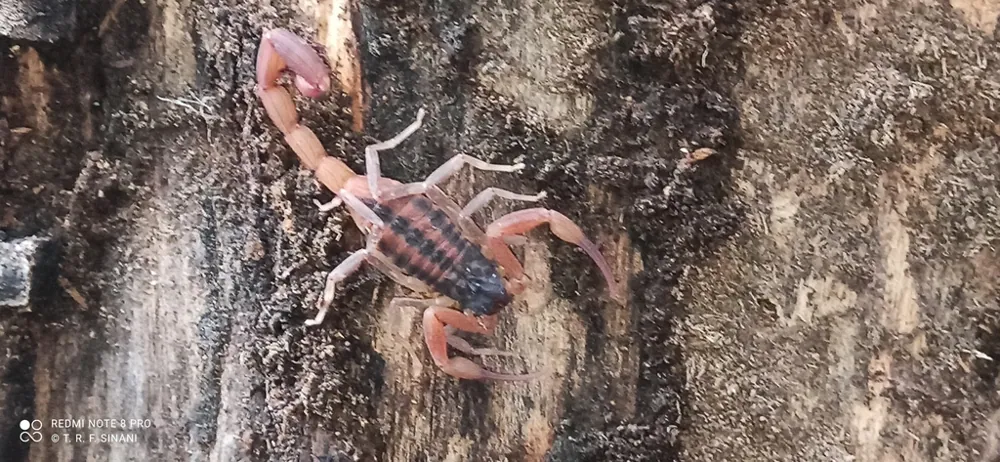
 Indlela yokusiqaphela
- The back of the body is yellow or reddish-yellow.1
- The legs, pedipalps (the front limbs used like tweezers) and tail are pale yellow or yellow-brown.1
- The legs and pedipalps may have dark segmented marks.1
- Young scorpions are reddish, with dark spots on the legs.1
- It is nocturnal, so it is mostly active at night.1
Amandla etyhefu yokuluma nokuhlaba
Ityhefu iphuma ngenaliti yokuhlaba.
Ityhefu yaso yokuluma okanye yokuhlaba yenza ntoni?
The venom causes pain in most cases, and swelling, burning, redness and itching around the sting are also common. Neurological symptoms include tingling, cramps, excitement and headache. Other reported symptoms include pale skin, a fast heartbeat, difficulty breathing, low blood pressure, an irregular heartbeat and chest pain, along with low body temperature in some cases. Vomiting, nausea and sweating can also occur.1
Siyingozi kangakanani ebantwini?
Ingozi ebantwini: Kubi kakhuluUkuhlatywa kufuna ugqirha. Ukufa kunqabe kakhulu.It is the main cause of more serious scorpion accidents in Argentina. It is not usually aggressive. How severe a sting is depends on the age of the person stung and the amount of venom injected.1
Senza ntoni xa soyika?
It can sting to defend itself when it is handled, stepped on, or hidden in clothing when someone is getting dressed.1
 Ukuba siyahlaba
- Pholisa indawo ehlatyiweyo ngepakethi yomkhenkce kwaye ugcine umntu engashukumi. Fumana uncedo lwezonyango ngokukhawuleza, ingakumbi kubantwana: abanye oonomadudwane bayabulala kubantwana.
Soloko utsalela inombolo kaxakeka kuqala (112, 000, 911). Esi sisikhokelo soncedo lokuqala ngokubanzi, asilocebiso lwezonyango. Iziseko zoncedo lokuqala
 Hlala ukhuselekile
- Ungaze uchukumise, ubambe okanye uqhule isilwanyana sasendle, nokuba sincinci, kwaye nokuba sibonakala silele okanye sifile.
- Sinike indawo. Ukuba udibana naso, hlala uzolile, buyela umva kancinci kwaye usiyeke sihambe ngendlela yaso.
- Ukuba siyakuhlaba: hlala uzolile, musa ukushukuma, tsalela inombolo kaxakeka (112, 000, 911) okanye uye esibhedlele ngokukhawuleza. Khumbula ukuba sasikhangeleka njani, ifoto iyanceda.
Asikuzingeli. Sisebenzisa ityhefu yaso ukubamba ukutya okanye ukuzikhusela, kwaye singakhetha ukuzimela. Okungakumbi malunga nokuhlala ukhuselekile
Sikhulu kangakanani?
Side kangakanani?
 ubude obulingana neebhloko zokudlala zokwakha eziyi-2 zilandelelana
 singagqiba iimitha ezili-100 ngemizuzwana eyi-260 (owona mntu ukhawulezayo udinga i-9,6)
U-Paraguayan three-striped scorpion mkhulu kangakanani xa uthelekisa NAWE?
Zizibalo nje kwibhrawuza yakho. Akukho nto igcinwayo okanye ithunyelwa naphi na.
Sikhawuleza kangakanani?


Iinyaniso
In Argentina it is the species behind most of the more serious scorpion stings.1
It uses its pedipalps like tweezers to hold prey before it stings.1
It is found only in South America, where it is common in houses.1
It hides in small gaps such as cracks, pipes, under floors and behind baseboards.1
Its young are reddish with dark spots on their legs, unlike the yellow-brown adults.1
Apho iinyaniso zivela khona
- Tityus trivittatus (Wikipedia (CC BY-SA 4.0))
- Tityus trivittatus (iNaturalist): amagama nokuhlelwa.
- Venom Wiki: inqanaba lengozi, ubungakanani obuqhelekileyo noqikelelo lwesantya zezethu. Bona indlela esizifumana ngayo: Indlela esilinganisa ngayo ingozi.
Inyaniso nganye kweli phepha inenombolo ebonisa umthombo wayo. Ukuba senze impazamo, uxolo, sithanda izilwanyana, asiyomagazini yenzululwazi. Sixelele ku-[email protected] kwaye siza kuyilungisa.
 Unomadudwane ulambile! I-Venom Wiki yiprojekthi yomntu omnye: isimahla, ayinazibhengezo kwaye ayinazilandeli. Isipho esincinci sinceda ukuyigcina ikwi-intanethi.Yondla unomadudwane
 Brazilian yellow scorpion
 Amazonian black scorpion
 Caracas scorpion
 Panamanian black scorpion
 Zulia scorpion
 Amazon forest scorpion
 Golden poison frog
 Terciopelo
 Brazilian wandering spider
 Eyelash viper
 Golden lancehead
 South American bushmaster