
 IAfrika
 IAsiya
 IYurophu
 uMzantsi Melika
 IOstreliya neOceania
 IAntarctica
 uLwandlekazi lwePasifiki
 uLwandlekazi lweAtlantiki
 uLwandlekazi lwaseIndiya
 uLwandlekazi lweArctic
 uLwandle lweMeditera
 uLwandle oluBomvu
 uLwandle lweKharibhiya
 uLwandle lweCoral
 uLwandle lwaseMzantsi China
 uLwandle lwePhilippines
 uLwandle lweAndaman
 uLwandle lwaseMntla (North Sea)
 uLwandle lweTimor ne-Arafura
 iBhayi yaseBengal
 iGulf yaseCalifornia
Sidewinder
 Ukuluma
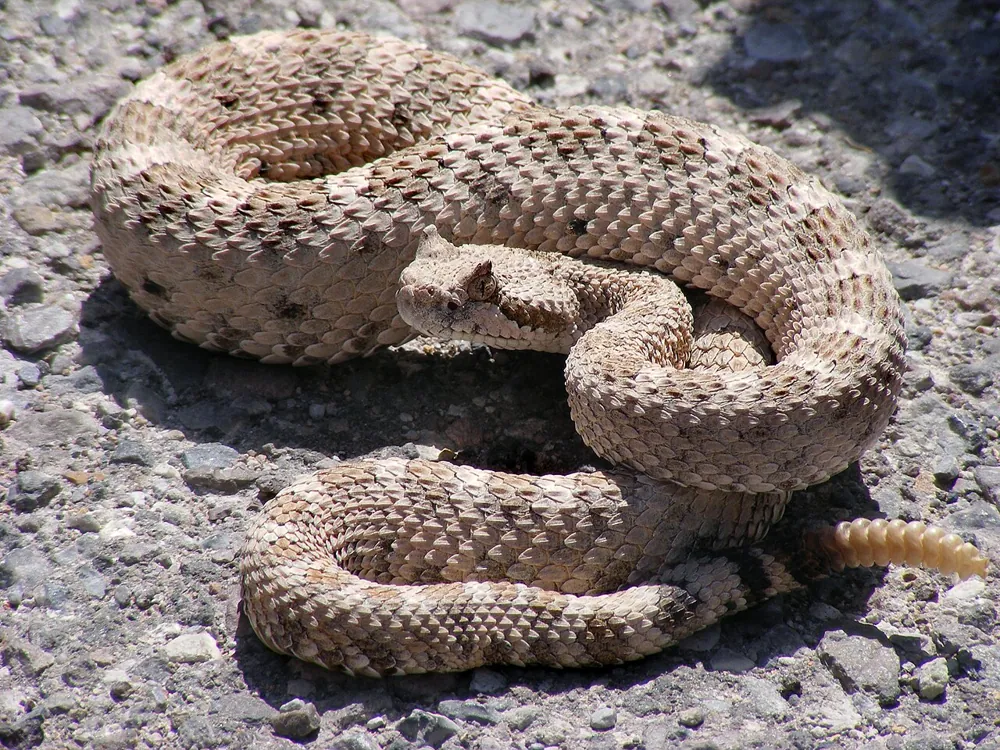
The sidewinder is a small rattlesnake that lives in the deserts of the south-western United States and north-western Mexico. It gets its name from the unusual sideways way it moves over loose sand. It is venomous, but its venom is weaker than that of many other rattlesnakes.1



 Indlela yokusiqaphela
- Small, measuring 43 to 80 cm in total length including the tail.1
- Raised scales above the eyes give it horns.1
- The ground colour may be cream, buff, yellowish-brown, pink or ash grey, with 28 to 47 darker blotches along the back.1
- It moves with a sidewinding motion, leaving a J-shaped track in the sand with the tip of the hook pointing in the direction of travel.1
- Females are larger than males, which is unusual among United States rattlesnakes.1
Amandla etyhefu yokuluma nokuhlaba
Ityhefu iphuma ngamazinyo aso etyhefu okanye ngamazinyo aso xa siluma.
Ityhefu yaso yokuluma okanye yokuhlaba yenza ntoni?
The venom causes pain, swelling and bruising, and can create bleeding blisters. Symptoms can include nausea, dizziness, chills, blood clotting disorders and shock. In one recorded case, a bitten man's whole arm was badly swollen and very painful within about 2.5 hours.1
Siyingozi kangakanani ebantwini?
Ingozi ebantwini: Kubi kakhuluUkulunywa kufuna ugqirha. Ukufa kunqabe kakhulu.Its venom is weaker than that of many other rattlesnakes, and its venom glands are smaller, so it is less dangerous than its larger relatives. Any rattlesnake bite can still be fatal and should be taken seriously.1
 Iindaba ezimnandi: oogqirha banamayeza (i-antivenom) okanye unyango lwale nto.1
 Ukuba siyaluma
- Seek medical attention immediately after any rattlesnake bite. Consult a local expert or regional poison control centre before giving antivenom.1
- Gcina umntu engashukumi kwaye ezolile, gcina ilungu elilunyiweyo kwinqanaba lentliziyo, susa imisesane nezinto eziqinileyo, uze umse esibhedlele ngokukhawuleza.
Soloko utsalela inombolo kaxakeka kuqala (112, 000, 911). Esi sisikhokelo soncedo lokuqala ngokubanzi, asilocebiso lwezonyango. Iziseko zoncedo lokuqala
 Hlala ukhuselekile
- Ungaze uchukumise, ubambe okanye uqhule isilwanyana sasendle, nokuba sincinci, kwaye nokuba sibonakala silele okanye sifile.
- Sinike indawo. Ukuba udibana naso, hlala uzolile, buyela umva kancinci kwaye usiyeke sihambe ngendlela yaso.
- Ukuba siyakuluma: hlala uzolile, musa ukushukuma, tsalela inombolo kaxakeka (112, 000, 911) okanye uye esibhedlele ngokukhawuleza. Khumbula ukuba sasikhangeleka njani, ifoto iyanceda.
Asikuzingeli. Sisebenzisa ityhefu yaso ukubamba ukutya okanye ukuzikhusela, kwaye singakhetha ukuzimela. Okungakumbi malunga nokuhlala ukhuselekile
Sikhulu kangakanani?
Side kangakanani?
 ubude obulingana neekati zasekhaya eziyi-1,5 ukusuka empumlweni ukuya emsileni
 ubude obulingana neebhanana eziyi-4 zilandelelana
 singagqiba iimitha ezili-100 ngemizuzwana eyi-12 (owona mntu ukhawulezayo udinga i-9,6)
U-Sidewinder mkhulu kangakanani xa uthelekisa NAWE?
Zizibalo nje kwibhrawuza yakho. Akukho nto igcinwayo okanye ithunyelwa naphi na.
Sikhawuleza kangakanani?

Iinyaniso
The AIM-9 Sidewinder missile was named after this snake, because both use infrared signals to track their targets.1
Juveniles and adults use different hunting methods. Juveniles lure lizards with fast tail movements that look like a moth or slower ones that look like a caterpillar.1
The raised scales above its eyes may shade the eyes or stop sand drifting over them. When the snake strikes against a burrow roof, pressure on these horns folds them down, which is thought to protect the eyes.1
Newborn sidewinders huddle together in a burrow for their first week or so, plugging the entrance during the day. Their combined body heat keeps the group at an average of about 32 °C, which is warm enough for shedding.1
Sidewinding is also used by other desert snakes, such as the horned adder and Peringuey's adder, and by robots that copy this movement.1
Kwiingcali zetyhefu
- Igama lenzululwazi
- Crotalus cerastes
- Iqela
- Ii-rattlesnake
- Usapho
- Viperidae2
- Ucwangco
- Squamata
- Amazwekazi
- uMntla Melika
- Iintsana
- It gives birth to live young, usually five to 18 per litter, with an average of about 10.1
- Ixesha lobomi
- malunga neminyaka eyi-131
- Imeko yaso endle
- Least Concern1
- Ingozi ebantwini
- 3 / 5: Kubi kakhulu3
Apho iinyaniso zivela khona
- Crotalus cerastes (Wikipedia (CC BY-SA 4.0))
- Crotalus cerastes (iNaturalist): amagama nokuhlelwa.
- Venom Wiki: inqanaba lengozi, ubungakanani obuqhelekileyo noqikelelo lwesantya zezethu. Bona indlela esizifumana ngayo: Indlela esilinganisa ngayo ingozi.
Inyaniso nganye kweli phepha inenombolo ebonisa umthombo wayo. Ukuba senze impazamo, uxolo, sithanda izilwanyana, asiyomagazini yenzululwazi. Sixelele ku-[email protected] kwaye siza kuyilungisa.
 Unomadudwane ulambile! I-Venom Wiki yiprojekthi yomntu omnye: isimahla, ayinazibhengezo kwaye ayinazilandeli. Isipho esincinci sinceda ukuyigcina ikwi-intanethi.Yondla unomadudwane
 Eastern diamondback rattlesnake
 Timber rattlesnake
 Western diamondback rattlesnake
 Mojave rattlesnake
 Aruba rattlesnake
 Black-tailed rattlesnake
 Terciopelo
 Eastern coral snake
 Eyelash viper
 Arizona bark scorpion
 Brown recluse
 Cane toad