
 IAfrika
 IAsiya
 IYurophu
 uMzantsi Melika
 IOstreliya neOceania
 IAntarctica
 uLwandlekazi lwePasifiki
 uLwandlekazi lweAtlantiki
 uLwandlekazi lwaseIndiya
 uLwandlekazi lweArctic
 uLwandle lweMeditera
 uLwandle oluBomvu
 uLwandle lweKharibhiya
 uLwandle lweCoral
 uLwandle lwaseMzantsi China
 uLwandle lwePhilippines
 uLwandle lweAndaman
 uLwandle lwaseMntla (North Sea)
 uLwandle lweTimor ne-Arafura
 iBhayi yaseBengal
 iGulf yaseCalifornia
Skeleton tarantula
 Ukuluma
The skeleton tarantula is a large, hairy spider from South America. It lives mostly on the forest floor in the lowland forests of northern Brazil, French Guiana and Suriname. It is known for its skeleton-like leg markings and for being fast and ready to defend itself.1



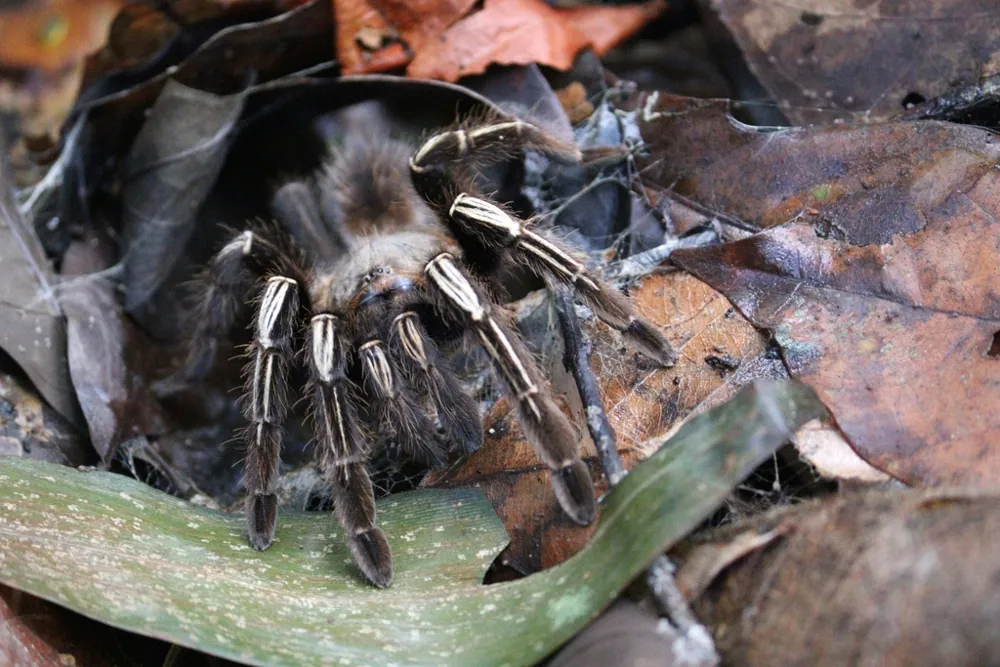
 Indlela yokusiqaphela
- Black legs with yellowish, skeleton-like striping1
- Small, brown abdomen1
- Coffee-coloured or golden carapace (the hard shell covering the front of the body)1
- Leg span of about 11 to 12 cm, though females can reach 15 cm1
Sidla ngokubhidaniswa no: Aphonopelma seemani has leg striping similar to this spider's. The skeleton tarantula's striping is more yellowish.1
Amandla etyhefu yokuluma nokuhlaba
Ityhefu iphuma ngamazinyo aso etyhefu okanye ngamazinyo aso xa siluma.
Siyingozi kangakanani ebantwini?
Ingozi ebantwini: KuthambileNjengokuhlatywa yinyosi okanye ngaphantsi. Phantse asinangozi ebantwini.Senza ntoni xa soyika?
When threatened, it brushes urticating hairs off its palps (the small leg-like organs near the mouth) by rubbing them against its chelicerae (jaw parts). It will also rise up and show its fangs.1
 Ukuba siyaluma
- Hlamba indawo elunyiweyo uze uyipholise. Fumana uncedo lwezonyango ukuba iintlungu zinamandla okanye umntu uziva engaphilanga kakuhle.
Soloko utsalela inombolo kaxakeka kuqala (112, 000, 911). Esi sisikhokelo soncedo lokuqala ngokubanzi, asilocebiso lwezonyango. Iziseko zoncedo lokuqala
 Hlala ukhuselekile
- Ungaze uchukumise, ubambe okanye uqhule isilwanyana sasendle, nokuba sincinci, kwaye nokuba sibonakala silele okanye sifile.
- Sinike indawo. Ukuba udibana naso, hlala uzolile, buyela umva kancinci kwaye usiyeke sihambe ngendlela yaso.
- Ukuba siyakuluma: hlala uzolile, musa ukushukuma, tsalela inombolo kaxakeka (112, 000, 911) okanye uye esibhedlele ngokukhawuleza. Khumbula ukuba sasikhangeleka njani, ifoto iyanceda.
Asikuzingeli. Sisebenzisa ityhefu yaso ukubamba ukutya okanye ukuzikhusela, kwaye singakhetha ukuzimela. Okungakumbi malunga nokuhlala ukhuselekile
Sikhulu kangakanani?
Side kangakanani?
 ubude obulingana neebhloko zokudlala zokwakha eziyi-5 zilandelelana
 singagqiba iimitha ezili-100 ngemizuzwana eyi-220 (owona mntu ukhawulezayo udinga i-9,6)
U-Skeleton tarantula mkhulu kangakanani xa uthelekisa NAWE?
Zizibalo nje kwibhrawuza yakho. Akukho nto igcinwayo okanye ithunyelwa naphi na.
Sikhawuleza kangakanani?


Iinyaniso
Its urticating hairs grow on its palps, not on its abdomen as they do in most New World tarantulas.1
It is a fast and aggressive species that will readily rise up and present its fangs to a predator.1
It builds a heavily webbed burrow under the topsoil, or among branches, rocks and other forest floor debris.1
Most members of its subfamily live in trees, but this species lives mainly on or near the forest floor.1
Apho iinyaniso zivela khona
- Skeleton tarantula (Wikipedia (CC BY-SA 4.0))
- Ephebopus murinus (iNaturalist): amagama nokuhlelwa.
- Venom Wiki: inqanaba lengozi, ubungakanani obuqhelekileyo noqikelelo lwesantya zezethu. Bona indlela esizifumana ngayo: Indlela esilinganisa ngayo ingozi.
Inyaniso nganye kweli phepha inenombolo ebonisa umthombo wayo. Ukuba senze impazamo, uxolo, sithanda izilwanyana, asiyomagazini yenzululwazi. Sixelele ku-[email protected] kwaye siza kuyilungisa.
 Unomadudwane ulambile! I-Venom Wiki yiprojekthi yomntu omnye: isimahla, ayinazibhengezo kwaye ayinazilandeli. Isipho esincinci sinceda ukuyigcina ikwi-intanethi.Yondla unomadudwane
Okungakumbi kwiqela elinye: Ii-tarantula nee-funnel-web
 Goliath birdeaterIi-tarantula nee-funnel-webKubuhlungu nje
 Brazilian salmon pink birdeaterIi-tarantula nee-funnel-webAsinangozi
 Chilean rose tarantulaIi-tarantula nee-funnel-webAsinangozi
 Greenbottle blue tarantulaIi-tarantula nee-funnel-webAsinangozi
 Pinktoe tarantulaIi-tarantula nee-funnel-webAsinangozi
 Brazilian funnel-web spiderIi-tarantula nee-funnel-webKufuna ugqirha
 Golden poison frog
 Terciopelo
 Brazilian wandering spider
 Eyelash viper
 Golden lancehead
 South American bushmaster