
 IAfrika
 IAsiya
 IYurophu
 uMzantsi Melika
 IOstreliya neOceania
 IAntarctica
 uLwandlekazi lwePasifiki
 uLwandlekazi lweAtlantiki
 uLwandlekazi lwaseIndiya
 uLwandlekazi lweArctic
 uLwandle lweMeditera
 uLwandle oluBomvu
 uLwandle lweKharibhiya
 uLwandle lweCoral
 uLwandle lwaseMzantsi China
 uLwandle lwePhilippines
 uLwandle lweAndaman
 uLwandle lwaseMntla (North Sea)
 uLwandle lweTimor ne-Arafura
 iBhayi yaseBengal
 iGulf yaseCalifornia
Splash-backed poison frog
 Ityhefu esikhumbeni sasoSiyatyhefa, asinatyhefu yokuluma okanye yokuhlaba
The splash-backed poison frog is a fairly large, brightly coloured frog from the rainforests of the southern Amazon Basin in Brazil. It is poisonous, not venomous, which means its skin is harmful to touch or eat rather than injecting venom with a bite. Its colours vary a great deal, which has made it an interesting case for scientists studying bright colours in poisonous frogs.1
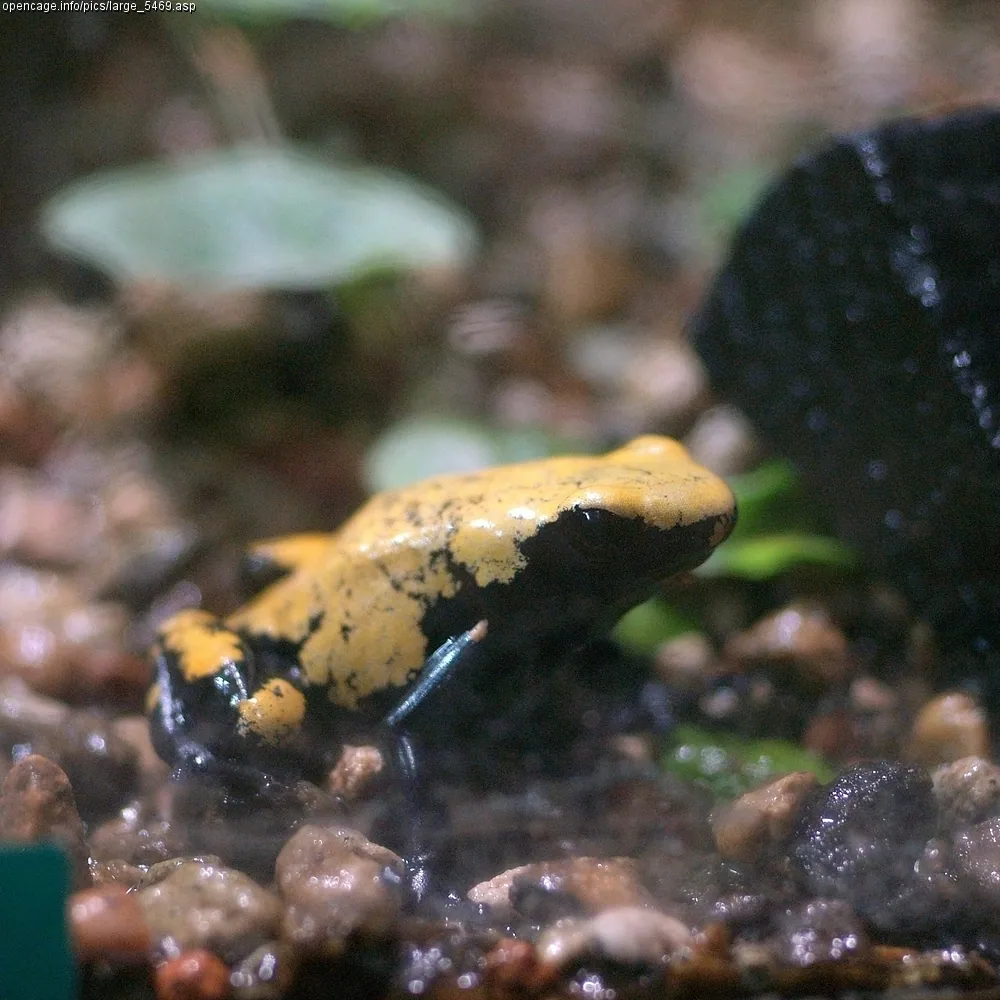
 Indlela yokusiqaphela
- The best-known form is black below and yellow, orange or red above.1
- Its colour is very variable. Some have whitish-mint or light blue upperparts, and some have a mottled or spotted pattern on top.1
- Some individuals are almost all whitish, yellow-orange or black. Captive keepers call the whitish ones 'moonshine'.1
- A relatively large poison dart frog, with a snout-vent length of up to 42 mm.1
Amandla etyhefu
Isikhumba saso siyatyhefa. Kuyingozi ukusichukumisa, ukusikhotha okanye ukusitya.
Siyingozi kangakanani ebantwini?
Ingozi ebantwini: KubuhlunguKunokuba buhlungu ngokwenene, kodwa phantse akusoze kube kubi kakhulu. Ukuba umntu usichukumisile okanye usityile
- Ukuba umntu usichukumisile: hlamba izandla kakuhle kwaye ungachukumisi amehlo okanye umlomo. Ukuba umntwana okanye isilwanyana sasekhaya sisikhothile okanye sisityile: tsalela iziko lezityhefu okanye inombolo kaxakeka.
Soloko utsalela inombolo kaxakeka kuqala (112, 000, 911). Esi sisikhokelo soncedo lokuqala ngokubanzi, asilocebiso lwezonyango. Iziseko zoncedo lokuqala
 Hlala ukhuselekile
- Ungaze uchukumise, ubambe okanye uqhule isilwanyana sasendle, nokuba sincinci, kwaye nokuba sibonakala silele okanye sifile.
- Sinike indawo. Ukuba udibana naso, hlala uzolile, buyela umva kancinci kwaye usiyeke sihambe ngendlela yaso.
- Ukuba usichukumisile okanye usityile: musa ukukhuhla amehlo okanye umlomo wakho, hlamba izandla zakho kwaye ufumane uncedo lwezonyango.
Asikuzingeli. Ityhefu yaso ikhona nje ukuze kungabikho nto isityayo. Okungakumbi malunga nokuhlala ukhuselekile
Sikhulu kangakanani?
Side kangakanani?
 mfutshane kunomnwe wakho omncinci
 singagqiba iimitha ezili-100 ngemizuzwana eyi-97 (owona mntu ukhawulezayo udinga i-9,6)
U-Splash-backed poison frog mkhulu kangakanani xa uthelekisa NAWE?
Zizibalo nje kwibhrawuza yakho. Akukho nto igcinwayo okanye ithunyelwa naphi na.
Sikhawuleza kangakanani?


Iinyaniso
Bright colour in poisonous frogs is often thought to warn predators away, but studies of this frog suggest the colour may matter more for recognising each other and for choosing mates.1
Adults carry their tadpoles to water, and scientists believe Brazil nut husks may be among the places they use.1
Its colours vary so much that some forms were once thought to be separate species, but genetic tests found almost no difference between them.1
The two most different-looking colour forms have largely the same poison profile.1
It is relatively common and regularly bred in captivity, but wild populations are still at risk from illegal collection.1
Umqhekezi weentsomi
Intsomi: Bright colours on a poisonous frog always warn predators that it will poison them if they try to eat it.
Inyaniso: That is a longstanding interpretation, but studies of this frog suggest its colour may have more to do with recognising others of its kind and sexual selection than with deterring predators.1
Kwiingcali zetyhefu
- Igama lenzululwazi
- Adelphobates galactonotus
- Iqela
- Amasele atyhefayo, amaxoxo nee-newt
- Usapho
- Dendrobatidae2
- Ucwangco
- Anura
- Amazwekazi
- uMzantsi Melika
- Iintsana
- Eggs are laid on the ground. After they hatch, the adults carry the tadpoles to water, possibly including water collected in Brazil nut husks.1
- Imeko yaso endle
- Least Concern1
- Ingozi ebantwini
- 2 / 5: Kubuhlungu3
Apho iinyaniso zivela khona
- Adelphobates galactonotus (Wikipedia (CC BY-SA 4.0))
- Adelphobates galactonotus (iNaturalist): amagama nokuhlelwa.
- Venom Wiki: inqanaba lengozi, ubungakanani obuqhelekileyo noqikelelo lwesantya zezethu. Bona indlela esizifumana ngayo: Indlela esilinganisa ngayo ingozi.
Inyaniso nganye kweli phepha inenombolo ebonisa umthombo wayo. Ukuba senze impazamo, uxolo, sithanda izilwanyana, asiyomagazini yenzululwazi. Sixelele ku-[email protected] kwaye siza kuyilungisa.
 Unomadudwane ulambile! I-Venom Wiki yiprojekthi yomntu omnye: isimahla, ayinazibhengezo kwaye ayinazilandeli. Isipho esincinci sinceda ukuyigcina ikwi-intanethi.Yondla unomadudwane
Okungakumbi kwiqela elinye: Amasele atyhefayo, amaxoxo nee-newt
 Golden poison frogAmasele atyhefayo, amaxoxo nee-newtSiyabulalaMusa ukuchukumisa
 Cane toadAmasele atyhefayo, amaxoxo nee-newtKufuna ugqirhaMusa ukuchukumisa
 Dyeing poison dart frogAmasele atyhefayo, amaxoxo nee-newtKubuhlungu njeMusa ukuchukumisa
 Black-legged poison frogAmasele atyhefayo, amaxoxo nee-newtSinokubulalaMusa ukuchukumisa
 Bruno's casque-headed frogAmasele atyhefayo, amaxoxo nee-newtKufuna ugqirhaMusa ukuchukumisa
 Harlequin poison frogAmasele atyhefayo, amaxoxo nee-newtKufuna ugqirhaMusa ukuchukumisa
 Terciopelo
 Brazilian wandering spider
 Eyelash viper
 Golden lancehead
 South American bushmaster
 Peruvian giant centipede