
 IAfrika
 IAsiya
 IYurophu
 uMzantsi Melika
 IOstreliya neOceania
 IAntarctica
 uLwandlekazi lwePasifiki
 uLwandlekazi lweAtlantiki
 uLwandlekazi lwaseIndiya
 uLwandlekazi lweArctic
 uLwandle lweMeditera
 uLwandle oluBomvu
 uLwandle lweKharibhiya
 uLwandle lweCoral
 uLwandle lwaseMzantsi China
 uLwandle lwePhilippines
 uLwandle lweAndaman
 uLwandle lwaseMntla (North Sea)
 uLwandle lweTimor ne-Arafura
 iBhayi yaseBengal
 iGulf yaseCalifornia
Sri Lankan green pit viper
 Ukuluma
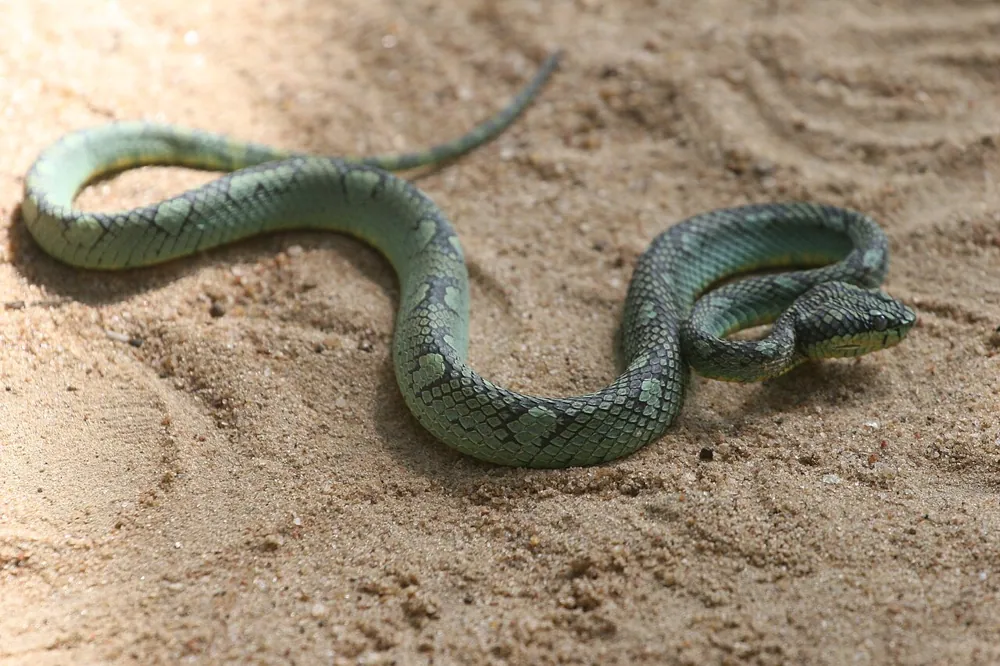
The Sri Lankan green pit viper is a venomous snake that lives only on the island of Sri Lanka. It spends much of its time up in trees and low shrubs, where its green colouring helps it blend in. Its bite is dangerous, so it is important to know what it looks like.1



 Indlela yokusiqaphela
- Usually green with a black, variegated (broken, mixed) pattern on the body1
- A black line usually runs along the side of the head, and the tail is black1
- Males often have a blue tinge, while females are mostly green1
- Bulky, cylindrical body with a flattened, triangular head that is clearly separate from the neck1
- Pit between the eye and nostril on each side of the head1
Amandla etyhefu yokuluma nokuhlaba
Ityhefu iphuma ngamazinyo aso etyhefu okanye ngamazinyo aso xa siluma.
Ityhefu yaso yokuluma okanye yokuhlaba yenza ntoni?
Its venom is mainly haemotoxic, meaning it damages blood and tissue. Bite victims feel severe pain and swelling, and blisters can form, with some tissue dying around the wound. The pain can last for a few days. Drooping eyelids (ptosis) and swollen lymph glands can also occur, and in some victims kidney failure and heart rhythm problems have been reported.1
Siyingozi kangakanani ebantwini?
Ingozi ebantwini: Kubi kakhuluUkulunywa kufuna ugqirha. Ukufa kunqabe kakhulu.Deaths from this snake have not been reported. Some bite victims do develop serious kidney and heart problems.1
Senza ntoni xa soyika?
It is not usually defensive, but if disturbed it vibrates its tail tip, forms an S-shaped loop with its front body, and lashes out to bite, seldom hissing first.1
 Ukuba siyaluma
- Gcina umntu engashukumi kwaye ezolile, gcina ilungu elilunyiweyo kwinqanaba lentliziyo, susa imisesane nezinto eziqinileyo, uze umse esibhedlele ngokukhawuleza.
Soloko utsalela inombolo kaxakeka kuqala (112, 000, 911). Esi sisikhokelo soncedo lokuqala ngokubanzi, asilocebiso lwezonyango. Iziseko zoncedo lokuqala
 Hlala ukhuselekile
- Ungaze uchukumise, ubambe okanye uqhule isilwanyana sasendle, nokuba sincinci, kwaye nokuba sibonakala silele okanye sifile.
- Sinike indawo. Ukuba udibana naso, hlala uzolile, buyela umva kancinci kwaye usiyeke sihambe ngendlela yaso.
- Ukuba siyakuluma: hlala uzolile, musa ukushukuma, tsalela inombolo kaxakeka (112, 000, 911) okanye uye esibhedlele ngokukhawuleza. Khumbula ukuba sasikhangeleka njani, ifoto iyanceda.
Asikuzingeli. Sisebenzisa ityhefu yaso ukubamba ukutya okanye ukuzikhusela, kwaye singakhetha ukuzimela. Okungakumbi malunga nokuhlala ukhuselekile
Sikhulu kangakanani?
Side kangakanani?
 ubude obulingana neekati zasekhaya eziyi-2,5 ukusuka empumlweni ukuya emsileni
 ubude obulingana neebhanana eziyi-7 zilandelelana
 singagqiba iimitha ezili-100 ngemizuzwana eyi-100 (owona mntu ukhawulezayo udinga i-9,6)
U-Sri Lankan green pit viper mkhulu kangakanani xa uthelekisa NAWE?
Zizibalo nje kwibhrawuza yakho. Akukho nto igcinwayo okanye ithunyelwa naphi na.
Sikhawuleza kangakanani?


Iinyaniso
Females are much larger than males, growing up to 130 cm, while males reach about 60 to 75 cm.1
It gives birth to live young, which is unusual for pit vipers, rather than laying eggs.1
It has a short, prehensile tail that it uses to grip tree branches, which suits its tree-living lifestyle.1
In the morning it climbs to the tops of trees to bask in the sun and warm its body.1
Apho iinyaniso zivela khona
- Craspedocephalus trigonocephalus (Wikipedia (CC BY-SA 4.0))
- Craspedocephalus trigonocephalus (iNaturalist): amagama nokuhlelwa.
- Venom Wiki: inqanaba lengozi, ubungakanani obuqhelekileyo noqikelelo lwesantya zezethu. Bona indlela esizifumana ngayo: Indlela esilinganisa ngayo ingozi.
Inyaniso nganye kweli phepha inenombolo ebonisa umthombo wayo. Ukuba senze impazamo, uxolo, sithanda izilwanyana, asiyomagazini yenzululwazi. Sixelele ku-[email protected] kwaye siza kuyilungisa.
 Unomadudwane ulambile! I-Venom Wiki yiprojekthi yomntu omnye: isimahla, ayinazibhengezo kwaye ayinazilandeli. Isipho esincinci sinceda ukuyigcina ikwi-intanethi.Yondla unomadudwane
 Brown spotted pit viper
 Habu
Habu Hump-nosed viper
 Hundred-pace viper
 Malayan pit viper
 Mamushi
 Deathstalker
 Indian cobra
 Indian saw-scaled viper
 King cobra
 Puff adder
 Irhamba likaRussell