
 Áfíríkà
 Éṣíà
Éṣíà Yúróòpù
 Gúúsù Amẹ́ríkà
 Ọsirélíà àti Òṣéáníà
 Antáktíkà
 Òkun Pàsífíìkì
 Òkun Àtìláńtíìkì
 Òkun Íńdíà
 Òkun Áktíkì
 Òkun Mẹditaréníà
 Òkun Pupa
 Òkun Káríbíànù
 Òkun Coral
 Òkun Gúúsù Ṣáínà
 Òkun Fílípínì
 Òkun Andaman
 Òkun Àríwá
 Òkun Tímọ̀ àti Òkun Àráfúrà
 Ìyawọlẹ̀ Òkun Bẹ̀ngál
 Ìyawọlẹ̀ Òkun Kalifọ́níà
Aerial yellowjacket
 Ìtani
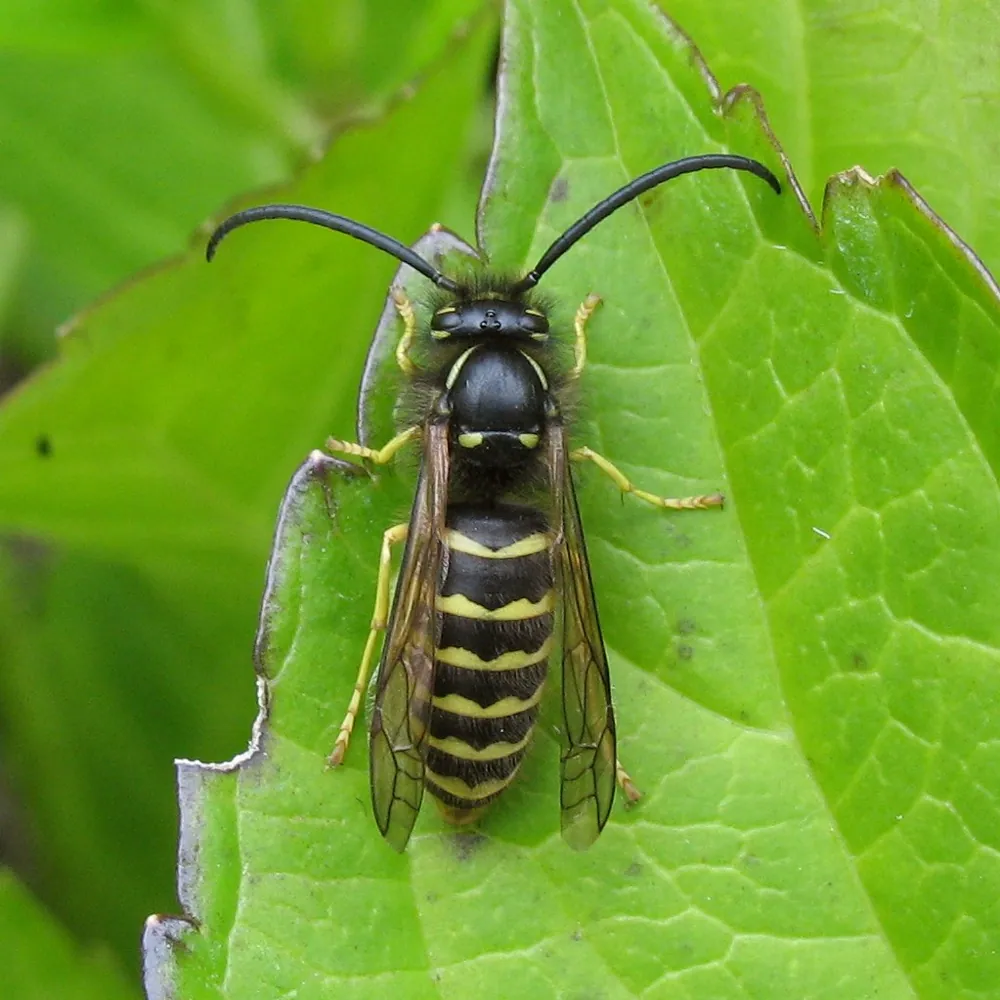
ÌtaniThe aerial yellowjacket is a yellow and black wasp that lives across Canada and the United States. It builds grey paper nests, often high in trees, and it can deliver a sting. Its nests can be found on buildings in towns and cities.1



 Bí o ṣe lè dá a mọ̀
- Yellow in colour, with bands on the abdomen (the rear part of the body)1
- No black markings on the ocular sinus (the area of the face around the eye)1
- Queens have large black spots on the abdomen, with smaller spots towards the front1
- Males have larger antennae and an abdomen that ends in a flat, fuzzy tip instead of a pointed sting1
- Nests are made of dull grey paper, with 1 to 6 combs1
A sábà máa ń ṣì í mọ̀ sí: It is often confused with other yellow wasps in its genus, such as Dolichovespula adulterina. The aerial yellowjacket can be told apart by the lack of black markings in the ocular sinus.1
Agbára oró
Oró ń jáde láti inú ohun ìtani.
Báwo ló ṣe léwu tó fún ènìyàn?
Ewu fún ènìyàn: Ó ń dunniÓ lè dunni gan-an, ṣùgbọ́n kì í fẹ́rẹ̀ẹ́ le rárá.Kí ni ó máa ń ṣe nígbà tí ẹ̀rù bá bà á?
When a nest is threatened, workers can spray venom out of their sting, which releases an alarm pheromone that draws other wasps into attack.1
 Bí ó bá ta ni
- Ha ẹ̀gún ìtani oyin jáde kí o sì tu ibẹ̀ lára.
- Bí ẹni náà bá ń mí pẹ̀lú ìṣòro, tí ojú tàbí ọ̀fun rẹ̀ wú, tàbí tí ó ń fẹ́ dákú, pàjáwìrì àléjì ni: pe nọ́ńbà pàjáwìrì rẹ kí o sì lo kálámù abẹ́rẹ́ adrenaline rẹ̀ (auto-injector) bí ó bá ní ọ̀kan.
Máa kọ́kọ́ pe nọ́ńbà pàjáwìrì rẹ nígbà gbogbo (112, 000, 911). Èyí jẹ́ ìtọ́sọ́nà ìtọ́jú àkọ́kọ́ gbogbogbò, kì í ṣe ìmọ̀ràn ìṣègùn. Ìpìlẹ̀ ìtọ́jú àkọ́kọ́
 Wà láìléwu
- Má ṣe fọwọ́ kan, mú tàbí yọ ẹranko igbó lẹ́nu láéláé, kódà bí ó bá kéré, kódà bí ó bá dà bí ẹni pé ó ń sùn tàbí ó ti kú.
- Fún un ní àyè. Bí o bá pàdé ọ̀kan, farabalẹ̀, sẹ́yìn díẹ̀díẹ̀ kí o sì jẹ́ kí ó máa bá ọ̀nà rẹ̀ lọ.
- Bí ọ̀kan bá ta ọ́: farabalẹ̀, má ṣe mira, pe nọ́ńbà pàjáwìrì rẹ (112, 000, 911) tàbí lọ sí ilé ìwòsàn kíákíá. Rántí bí ó ṣe rí, fọ́tò máa ń ṣèrànwọ́.
Kò wá ọ kiri láti ṣe ọ́ léṣe. Ó ń lo oró rẹ̀ láti mú oúnjẹ tàbí láti dáàbò bo ara rẹ̀, ó sì fẹ́ràn láti farapamọ́ jù. Sí i nípa wíwà láìléwu
Báwo ló ṣe tóbi tó?
Báwo ló ṣe gùn tó?
 ó kúrú ju ọmọdínrín ìka rẹ lọ
 lè fò kọjá gbogbo pápá bọ́ọ̀lù ní ìṣẹ́jú-àáyá 16
Báwo ni Aerial yellowjacket ṣe tóbi tó tí a bá fi wé ÌWỌ?
Ìṣirò nìkan nínú bráwúsà rẹ. A kò fi ohunkóhun pamọ́, a kò sì fi ránṣẹ́ sí ibikíbi.
Báwo ló ṣe yára tó?


Òtítọ́
Unlike many of its relatives, this wasp is known to spray venom out of its sting, a behaviour seen in workers from large colonies.1
Female bee moths (Aphomia sociella) sometimes lay their eggs in these nests, and their larvae can destroy large parts of the nest as they feed.1
Because nests are built high in trees, birds and other wasps are among the few predators that reach them. Skunks, opossums, raccoons and bears sometimes raid low or badly placed nests for the nutrient-rich larvae.1
Small colonies can behave unpredictably and erratically when defending their nest.1
Colonies usually last about a year before they die out as winter arrives.1
Fún àwọn amòye oró
- Orúkọ sáyẹ́ǹsì
- Dolichovespula arenaria
- Ẹgbẹ́
- Oyin, agbọ́n àti agbọ́n ńlá
- Ìdílé
- Vespidae2
- Ètò
- Hymenoptera
- Àwọn kọ́ńtínẹ́ńtì
- Àríwá Amẹ́ríkà
- Àwọn ọmọ
- A queen starts a new colony each spring by building a small paper nest and laying eggs. The larvae grow into workers, and the colony peaks in summer.1
- Ewu fún ènìyàn
- 2 / 5: Ó ń dunni3
Ibi tí àwọn òtítọ́ ti wá
- Dolichovespula arenaria (Wikipedia (CC BY-SA 4.0))
- Dolichovespula arenaria (iNaturalist): orúkọ àti ìpínsísọ̀rí.
- Venom Wiki: ìpele ewu, ìtóbi déédé àti àfojúbù ìyára jẹ́ tiwa. Wo bí a ṣe ń ṣírò wọn: Bí a ṣe ń díwọ̀n ewu.
Gbogbo òtítọ́ ojú-ìwé yìí ní nọ́ńbà tó tọ́ka sí orísun rẹ̀. Bí a bá ṣe àṣìṣe, má bínú, olólùfẹ́ ẹranko ni wá, kì í ṣe ìwé ìròyìn sáyẹ́ǹsì. Sọ fún wa ní [email protected] a ó sì tún un ṣe.
 Ebi ń pa àkekèé! Iṣẹ́ akanṣe ẹnì kan ṣoṣo ni Venom Wiki: ọ̀fẹ́ ni, kò sí ìpolówó, kò sì sí olùtọpinpin. Ẹ̀bùn kékeré ń ràn án lọ́wọ́ láti wà lórí íńtánẹ́ẹ̀tì.Bọ́ àkekèé
Sí i láti inú ẹgbẹ́ kan náà: Oyin, agbọ́n àti agbọ́n ńlá
 Tarantula hawkOyin, agbọ́n àti agbọ́n ńláÓ kàn ń dunni
 Executioner waspOyin, agbọ́n àti agbọ́n ńláÓ nílò dókítà
 Warrior waspOyin, agbọ́n àti agbọ́n ńláÓ nílò dókítà
 Bald-faced hornetOyin, agbọ́n àti agbọ́n ńláÓ kàn ń dunni
 Cow killer velvet antOyin, agbọ́n àti agbọ́n ńláÓ kàn ń dunni
 Eastern cicada killerOyin, agbọ́n àti agbọ́n ńláAláìléwu
 Terciopelo
 Eastern coral snake
 Eastern diamondback rattlesnake
 Eyelash viper
 Timber rattlesnake
 Western diamondback rattlesnake
.jpg)