
 Áfíríkà
 Éṣíà
Éṣíà Yúróòpù
 Gúúsù Amẹ́ríkà
 Ọsirélíà àti Òṣéáníà
 Antáktíkà
 Òkun Pàsífíìkì
 Òkun Àtìláńtíìkì
 Òkun Íńdíà
 Òkun Áktíkì
 Òkun Mẹditaréníà
 Òkun Pupa
 Òkun Káríbíànù
 Òkun Coral
 Òkun Gúúsù Ṣáínà
 Òkun Fílípínì
 Òkun Andaman
 Òkun Àríwá
 Òkun Tímọ̀ àti Òkun Àráfúrà
 Ìyawọlẹ̀ Òkun Bẹ̀ngál
 Ìyawọlẹ̀ Òkun Kalifọ́níà
Eastern cicada killer
 Ìtani
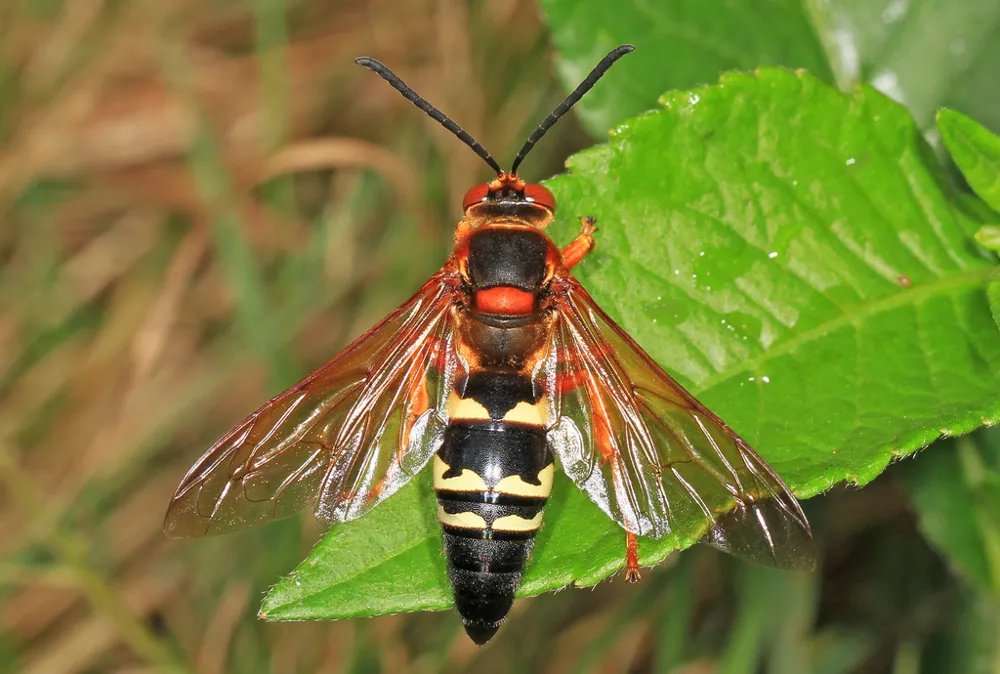
ÌtaniThe eastern cicada killer is a large wasp that hunts cicadas, the loud insects that buzz in summer trees. It lives in the Eastern and Midwest United States and further south into Mexico and Central America. Females are not aggressive and rarely sting, so the sight of them flying over lawns is usually harmless.1


 Bí o ṣe lè dá a mọ̀
- Large, at 1.5 to 5.0 cm long1
- Hairy thorax with reddish and black areas1
- Black to reddish brown abdomen marked with light yellow stripes1
- Brownish wings1
- Females are somewhat larger than males1
A sábà máa ń ṣì í mọ̀ sí: Its colours resemble some yellowjacket and hornet species, and European hornets are often mistaken for it. European hornets are about 3.5 cm long, so they are smaller than the largest cicada killers.1
Agbára oró
Oró ń jáde láti inú ohun ìtani.
Kí ni oró rẹ̀ máa ń ṣe?
The female's sting paralyses cicadas so that they can be stored as food for the young.1
Báwo ló ṣe léwu tó fún ènìyàn?
Ewu fún ènìyàn: Fúyẹ́Bí ìtani oyin tàbí kò tó bẹ́ẹ̀. Kò fẹ́rẹ̀ẹ́ léwu fún ènìyàn.Females are not aggressive and rarely sting unless they are grasped roughly, stepped on with bare feet, or caught in clothing. One author who was stung said the sting felt like not much more than a pinprick. Males cannot sting.1
Kí ni ó máa ń ṣe nígbà tí ẹ̀rù bá bà á?
Females sting only if handled roughly. Males may jab with a sharp spine on the tip of the abdomen if handled roughly, but they usually fly away when swatted at.1
 Bí ó bá ta ni
- Ha ẹ̀gún ìtani oyin jáde kí o sì tu ibẹ̀ lára.
- Bí ẹni náà bá ń mí pẹ̀lú ìṣòro, tí ojú tàbí ọ̀fun rẹ̀ wú, tàbí tí ó ń fẹ́ dákú, pàjáwìrì àléjì ni: pe nọ́ńbà pàjáwìrì rẹ kí o sì lo kálámù abẹ́rẹ́ adrenaline rẹ̀ (auto-injector) bí ó bá ní ọ̀kan.
Máa kọ́kọ́ pe nọ́ńbà pàjáwìrì rẹ nígbà gbogbo (112, 000, 911). Èyí jẹ́ ìtọ́sọ́nà ìtọ́jú àkọ́kọ́ gbogbogbò, kì í ṣe ìmọ̀ràn ìṣègùn. Ìpìlẹ̀ ìtọ́jú àkọ́kọ́
 Wà láìléwu
- Má ṣe fọwọ́ kan, mú tàbí yọ ẹranko igbó lẹ́nu láéláé, kódà bí ó bá kéré, kódà bí ó bá dà bí ẹni pé ó ń sùn tàbí ó ti kú.
- Fún un ní àyè. Bí o bá pàdé ọ̀kan, farabalẹ̀, sẹ́yìn díẹ̀díẹ̀ kí o sì jẹ́ kí ó máa bá ọ̀nà rẹ̀ lọ.
- Bí ọ̀kan bá ta ọ́: farabalẹ̀, má ṣe mira, pe nọ́ńbà pàjáwìrì rẹ (112, 000, 911) tàbí lọ sí ilé ìwòsàn kíákíá. Rántí bí ó ṣe rí, fọ́tò máa ń ṣèrànwọ́.
Kò wá ọ kiri láti ṣe ọ́ léṣe. Ó ń lo oró rẹ̀ láti mú oúnjẹ tàbí láti dáàbò bo ara rẹ̀, ó sì fẹ́ràn láti farapamọ́ jù. Sí i nípa wíwà láìléwu
Báwo ló ṣe tóbi tó?
Báwo ló ṣe gùn tó?
 ó kúrú ju ọmọdínrín ìka rẹ lọ
 lè fò kọjá gbogbo pápá bọ́ọ̀lù ní ìṣẹ́jú-àáyá 9.7
Báwo ni Eastern cicada killer ṣe tóbi tó tí a bá fi wé ÌWỌ?
Ìṣirò nìkan nínú bráwúsà rẹ. A kò fi ohunkóhun pamọ́, a kò sì fi ránṣẹ́ sí ibikíbi.
Báwo ló ṣe yára tó?


Òtítọ́
A female often carries a cicada up into a tree before flying to her burrow, because the cicada can weigh more than twice as much as she does.1
Males are seen in groups and may lock together in midair combat until one breaks away.1
Cicada killers may help trees by reducing the number of cicadas that feed on them.1
The parasitic velvet ant wasp, also called the cow-killer wasp, often lays its egg in cicada killer nest cells.1
A single burrow may eventually have 10 or more nest cells.1
Olùfọ́ àròsọ
Àròsọ: Male cicada killers are dangerous and will sting people.
Òtítọ́: Males only grapple with other insects and cannot sting. They investigate things that move near them because they are looking for females.1
Fún àwọn amòye oró
- Orúkọ sáyẹ́ǹsì
- Sphecius speciosus
- Ẹgbẹ́
- Oyin, agbọ́n àti agbọ́n ńlá
- Ìdílé
- Crabronidae2
- Ètò
- Hymenoptera
- Àwọn kọ́ńtínẹ́ńtì
- Àríwá Amẹ́ríkà
- Àwọn ọmọ
- Each female lays one egg on a cicada inside a nest cell, and the egg hatches in one or two days. Males receive one cicada per egg and females receive two or sometimes three.1
- Ewu fún ènìyàn
- 1 / 5: Fúyẹ́3
Ibi tí àwọn òtítọ́ ti wá
- Sphecius speciosus (Wikipedia (CC BY-SA 4.0))
- Sphecius speciosus (iNaturalist): orúkọ àti ìpínsísọ̀rí.
- Venom Wiki: ìpele ewu, ìtóbi déédé àti àfojúbù ìyára jẹ́ tiwa. Wo bí a ṣe ń ṣírò wọn: Bí a ṣe ń díwọ̀n ewu.
Gbogbo òtítọ́ ojú-ìwé yìí ní nọ́ńbà tó tọ́ka sí orísun rẹ̀. Bí a bá ṣe àṣìṣe, má bínú, olólùfẹ́ ẹranko ni wá, kì í ṣe ìwé ìròyìn sáyẹ́ǹsì. Sọ fún wa ní [email protected] a ó sì tún un ṣe.
 Ebi ń pa àkekèé! Iṣẹ́ akanṣe ẹnì kan ṣoṣo ni Venom Wiki: ọ̀fẹ́ ni, kò sí ìpolówó, kò sì sí olùtọpinpin. Ẹ̀bùn kékeré ń ràn án lọ́wọ́ láti wà lórí íńtánẹ́ẹ̀tì.Bọ́ àkekèé
Sí i láti inú ẹgbẹ́ kan náà: Oyin, agbọ́n àti agbọ́n ńlá
 Tarantula hawkOyin, agbọ́n àti agbọ́n ńláÓ kàn ń dunni
 Executioner waspOyin, agbọ́n àti agbọ́n ńláÓ nílò dókítà
 Warrior waspOyin, agbọ́n àti agbọ́n ńláÓ nílò dókítà
 Bald-faced hornetOyin, agbọ́n àti agbọ́n ńláÓ kàn ń dunni
 Cow killer velvet antOyin, agbọ́n àti agbọ́n ńláÓ kàn ń dunni
 Aerial yellowjacketOyin, agbọ́n àti agbọ́n ńláÓ kàn ń dunni
 Terciopelo
 Eastern coral snake
 Eastern diamondback rattlesnake
 Eyelash viper
 Timber rattlesnake
 Western diamondback rattlesnake