
 Áfíríkà
 Éṣíà
Éṣíà Yúróòpù
 Gúúsù Amẹ́ríkà
 Ọsirélíà àti Òṣéáníà
 Antáktíkà
 Òkun Pàsífíìkì
 Òkun Àtìláńtíìkì
 Òkun Íńdíà
 Òkun Áktíkì
 Òkun Mẹditaréníà
 Òkun Pupa
 Òkun Káríbíànù
 Òkun Coral
 Òkun Gúúsù Ṣáínà
 Òkun Fílípínì
 Òkun Andaman
 Òkun Àríwá
 Òkun Tímọ̀ àti Òkun Àráfúrà
 Ìyawọlẹ̀ Òkun Bẹ̀ngál
 Ìyawọlẹ̀ Òkun Kalifọ́níà
Armadillo wasp
 Ìtani
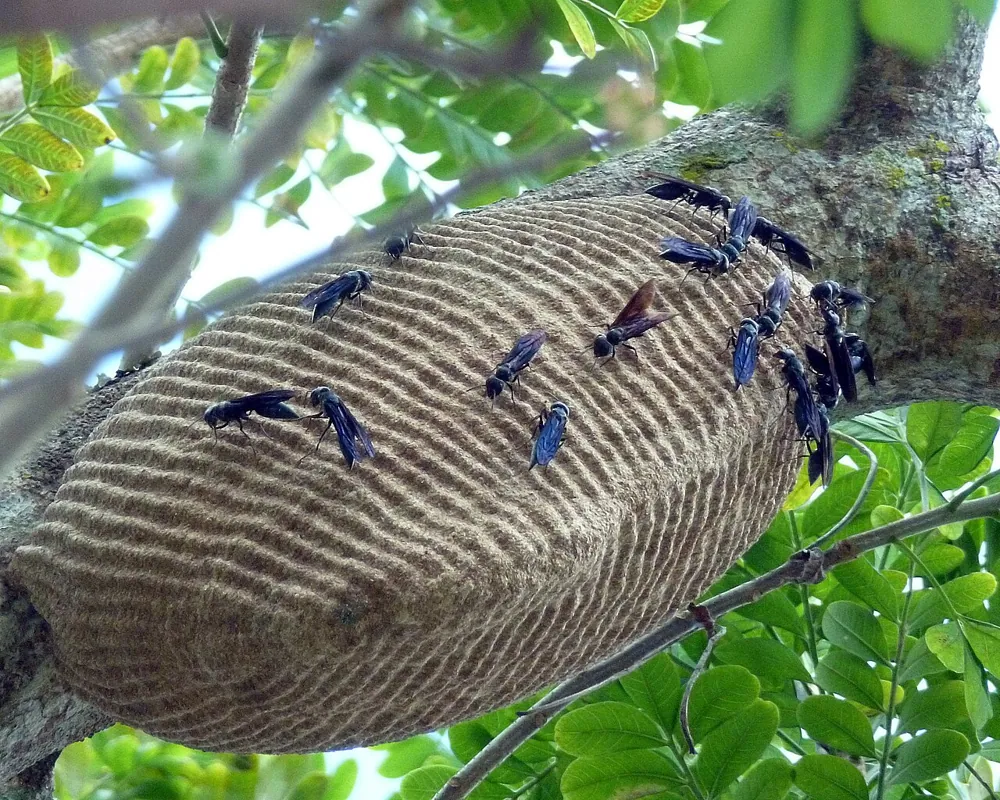
ÌtaniThe armadillo wasp is a social wasp with a metallic blue-black body. It builds its nests on tree trunks in tropical South America. It is known for its painful sting, and it also visits flowers and helps pollinate plants.1


 Bí o ṣe lè dá a mọ̀
- Medium-sized wasp with a blueish-black body1
- Body can look metallic in certain light1
- Dark, almost black wings1
- Head has a projecting vertex (a raised ridge on the top of the head)1
- Less dense small markings (punctation) on the first abdominal segment than S. chalibea and S. virginea1
A sábà máa ń ṣì í mọ̀ sí: Other Synoeca wasps, especially its sister species S. cyanea and S. septentrionalis, which also have less punctation on the first abdominal segment. S. chalibea and S. virginea have denser punctation on that segment, so this is one way to tell them apart.1
Agbára oró
Oró ń jáde láti inú ohun ìtani.
Kí ni oró rẹ̀ máa ń ṣe?
Its sting injects serotonin, a chemical also known as a neurotransmitter. Serotonin is a vasoconstrictor, meaning it narrows blood vessels, which could potentially be lethal to small animals. In people, it causes severe pain.1
Báwo ló ṣe léwu tó fún ènìyàn?
Ewu fún ènìyàn: Ó le gan-anÌtani nílò dókítà. Ikú kò wọ́pọ̀ rárá.Its sting is painful. The wasp only stings in defence, not to attack. Stings can leave the wasp's barbed stinger in the skin, and the wasp dies afterwards.1
Kí ni ó máa ń ṣe nígbà tí ẹ̀rù bá bà á?
When a colony is threatened, workers perform buzzing runs, shaking from side to side and contacting other members, which warns the colony to swarm. Individual wasps may also sting, and the stinger stays in the victim.1
 Bí ó bá ta ni
- Ha ẹ̀gún ìtani oyin jáde kí o sì tu ibẹ̀ lára.
- Bí ẹni náà bá ń mí pẹ̀lú ìṣòro, tí ojú tàbí ọ̀fun rẹ̀ wú, tàbí tí ó ń fẹ́ dákú, pàjáwìrì àléjì ni: pe nọ́ńbà pàjáwìrì rẹ kí o sì lo kálámù abẹ́rẹ́ adrenaline rẹ̀ (auto-injector) bí ó bá ní ọ̀kan.
Máa kọ́kọ́ pe nọ́ńbà pàjáwìrì rẹ nígbà gbogbo (112, 000, 911). Èyí jẹ́ ìtọ́sọ́nà ìtọ́jú àkọ́kọ́ gbogbogbò, kì í ṣe ìmọ̀ràn ìṣègùn. Ìpìlẹ̀ ìtọ́jú àkọ́kọ́
 Wà láìléwu
- Má ṣe fọwọ́ kan, mú tàbí yọ ẹranko igbó lẹ́nu láéláé, kódà bí ó bá kéré, kódà bí ó bá dà bí ẹni pé ó ń sùn tàbí ó ti kú.
- Fún un ní àyè. Bí o bá pàdé ọ̀kan, farabalẹ̀, sẹ́yìn díẹ̀díẹ̀ kí o sì jẹ́ kí ó máa bá ọ̀nà rẹ̀ lọ.
- Bí ọ̀kan bá ta ọ́: farabalẹ̀, má ṣe mira, pe nọ́ńbà pàjáwìrì rẹ (112, 000, 911) tàbí lọ sí ilé ìwòsàn kíákíá. Rántí bí ó ṣe rí, fọ́tò máa ń ṣèrànwọ́.
Kò wá ọ kiri láti ṣe ọ́ léṣe. Ó ń lo oró rẹ̀ láti mú oúnjẹ tàbí láti dáàbò bo ara rẹ̀, ó sì fẹ́ràn láti farapamọ́ jù. Sí i nípa wíwà láìléwu
Báwo ló ṣe tóbi tó?
Báwo ló ṣe gùn tó?
 ó gùn tó pínì ìwé (paper clip)
 lè fò kọjá gbogbo pápá bọ́ọ̀lù ní ìṣẹ́jú-àáyá 14
Báwo ni Armadillo wasp ṣe tóbi tó tí a bá fi wé ÌWỌ?
Ìṣirò nìkan nínú bráwúsà rẹ. A kò fi ohunkóhun pamọ́, a kò sì fi ránṣẹ́ sí ibikíbi.
Báwo ló ṣe yára tó?


Òtítọ́
When the wasp stings, its barbed stinger stays in the victim, and the wasp dies. This is called sting autotomy.1
The sting also releases alarm pheromones, which mark the target as a threat for the colony to deal with if it returns.1
Some older workers, over 21 days old, may eat large larvae and pupae before leaving the nest. This is called brood cannibalism.1
Queens are chosen through ritual dominance displays, in which potential queens face off, sometimes bending their abdomens.1
Colonies swarm together as a group. Scouts lay down scent trails so the other wasps can follow them to a new nest site.1
Scouts release scent from a special gland called the Richards' gland while they drag their body along the trail.1
Ibi tí àwọn òtítọ́ ti wá
- Synoeca surinama (Wikipedia (CC BY-SA 4.0))
- Synoeca surinama (iNaturalist): orúkọ àti ìpínsísọ̀rí.
- Venom Wiki: ìpele ewu, ìtóbi déédé àti àfojúbù ìyára jẹ́ tiwa. Wo bí a ṣe ń ṣírò wọn: Bí a ṣe ń díwọ̀n ewu.
Gbogbo òtítọ́ ojú-ìwé yìí ní nọ́ńbà tó tọ́ka sí orísun rẹ̀. Bí a bá ṣe àṣìṣe, má bínú, olólùfẹ́ ẹranko ni wá, kì í ṣe ìwé ìròyìn sáyẹ́ǹsì. Sọ fún wa ní [email protected] a ó sì tún un ṣe.
 Ebi ń pa àkekèé! Iṣẹ́ akanṣe ẹnì kan ṣoṣo ni Venom Wiki: ọ̀fẹ́ ni, kò sí ìpolówó, kò sì sí olùtọpinpin. Ẹ̀bùn kékeré ń ràn án lọ́wọ́ láti wà lórí íńtánẹ́ẹ̀tì.Bọ́ àkekèé
Sí i láti inú ẹgbẹ́ kan náà: Oyin, agbọ́n àti agbọ́n ńlá
 Tarantula hawkOyin, agbọ́n àti agbọ́n ńláÓ kàn ń dunni
 Executioner waspOyin, agbọ́n àti agbọ́n ńláÓ nílò dókítà
 Warrior waspOyin, agbọ́n àti agbọ́n ńláÓ nílò dókítà
 Giant tarantula hawkOyin, agbọ́n àti agbọ́n ńláÓ kàn ń dunni
 Paulista waspOyin, agbọ́n àti agbọ́n ńláÓ kàn ń dunni
 Red paper waspOyin, agbọ́n àti agbọ́n ńláÓ kàn ń dunni
 Golden poison frog
 Terciopelo
 Brazilian wandering spider
 Eyelash viper
 Golden lancehead
 South American bushmaster