
 Áfíríkà
 Éṣíà
Éṣíà Yúróòpù
 Gúúsù Amẹ́ríkà
 Ọsirélíà àti Òṣéáníà
 Antáktíkà
 Òkun Pàsífíìkì
 Òkun Àtìláńtíìkì
 Òkun Íńdíà
 Òkun Áktíkì
 Òkun Mẹditaréníà
 Òkun Pupa
 Òkun Káríbíànù
 Òkun Coral
 Òkun Gúúsù Ṣáínà
 Òkun Fílípínì
 Òkun Andaman
 Òkun Àríwá
 Òkun Tímọ̀ àti Òkun Àráfúrà
 Ìyawọlẹ̀ Òkun Bẹ̀ngál
 Ìyawọlẹ̀ Òkun Kalifọ́níà
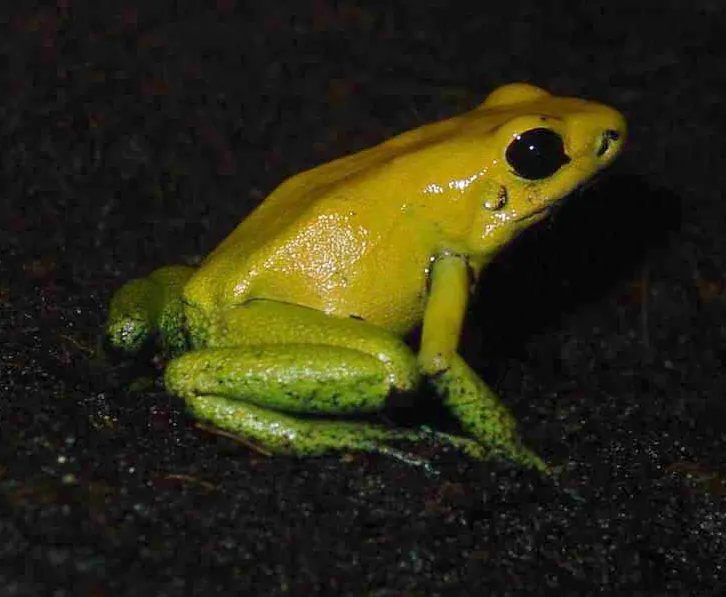
Black-legged poison frog
 Májèlé nínú awọ rẹ̀
The black-legged poison frog is a small, brightly coloured frog from the rainforests of Colombia. It is one of the most toxic dart frogs in the world, and its skin can kill a person. It is also an endangered species, so it matters for conservation.1


 Bí o ṣe lè dá a mọ̀
- The body is earthy orange to pure yellow.1
- The forelimbs and hindlegs are black or dark blue.1
- It is one of the largest poison dart frogs, but it is smaller and more slender than the golden poison frog.1
- Juveniles are brown or black and become more vibrant as they mature.1
- It is active in the daytime and moves across the forest floor in quick hops.1
A sábà máa ń ṣì í mọ̀ sí: It is often mistaken for the golden poison frog (Phyllobates terribilis), which looks similar. The black-legged poison frog is smaller, more slender and less poisonous. Juvenile golden poison frogs can also look like it. It also resembles the 'netted' colour form of D. leucomelas.1
Agbára májèlé
Awọ rẹ̀ ní májèlé. Ó léwu láti fọwọ́ kàn án, lá a tàbí jẹ ẹ́.
Kí ni májèlé rẹ̀ máa ń ṣe?
This frog is poisonous rather than venomous, because its toxin comes out through its skin. The toxin is batrachotoxin, a neurotoxin that attacks the nerves. It stops nerve signals from getting through, which causes paralysis, heart failure and breathing failure. There are no known treatments or antidotes for it.1
Báwo ló ṣe léwu tó fún ènìyàn?
Ewu fún ènìyàn: Ó léwu gan-anÓ lè pa ènìyàn tí kò bá rí ìtọ́jú.It is one of the few frogs confirmed to have killed humans. Between 2 and 200 micrograms of its toxin is enough to kill a person. Its toxin is weaker than that of the golden poison frog.1
Kí ni ó máa ń ṣe nígbà tí ẹ̀rù bá bà á?
Its bright colours warn predators that it is poisonous, and its skin releases toxins through pores.1
 Bí ẹnìkan bá fọwọ́ kàn án tàbí jẹ ẹ́
- Bí ẹnìkan bá fọwọ́ kan ọ̀kan: fọ ọwọ́ dáadáa, má sì fọwọ́ kan ojú tàbí ẹnu. Bí ọmọdé tàbí ẹran ọ̀sìn bá lá ọ̀kan tàbí jẹ ẹ́: pe ibùdó ìmọ̀ràn májèlé tàbí nọ́ńbà pàjáwìrì.
Máa kọ́kọ́ pe nọ́ńbà pàjáwìrì rẹ nígbà gbogbo (112, 000, 911). Èyí jẹ́ ìtọ́sọ́nà ìtọ́jú àkọ́kọ́ gbogbogbò, kì í ṣe ìmọ̀ràn ìṣègùn. Ìpìlẹ̀ ìtọ́jú àkọ́kọ́
 Wà láìléwu
- Má ṣe fọwọ́ kan, mú tàbí yọ ẹranko igbó lẹ́nu láéláé, kódà bí ó bá kéré, kódà bí ó bá dà bí ẹni pé ó ń sùn tàbí ó ti kú.
- Fún un ní àyè. Bí o bá pàdé ọ̀kan, farabalẹ̀, sẹ́yìn díẹ̀díẹ̀ kí o sì jẹ́ kí ó máa bá ọ̀nà rẹ̀ lọ.
- Bí o bá fọwọ́ kàn án tàbí jẹ ẹ́: má ṣe fọwọ́ pa ojú tàbí ẹnu rẹ, fọ ọwọ́ rẹ kí o sì wá ìrànlọ́wọ́ ìṣègùn.
Kò wá ọ kiri láti ṣe ọ́ léṣe. Májèlé rẹ̀ wà níbẹ̀ kìkì kí ohunkóhun má baà jẹ ẹ́. Sí i nípa wíwà láìléwu
Báwo ló ṣe tóbi tó?
Báwo ló ṣe gùn tó?
 ó kúrú ju ọmọdínrín ìka rẹ lọ
 lè sáré mítà 100 ní ìṣẹ́jú-àáyá 95 (ènìyàn tó yára jùlọ nílò 9.6)
Báwo ni Black-legged poison frog ṣe tóbi tó tí a bá fi wé ÌWỌ?
Ìṣirò nìkan nínú bráwúsà rẹ. A kò fi ohunkóhun pamọ́, a kò sì fi ránṣẹ́ sí ibikíbi.
Báwo ló ṣe yára tó?


Òtítọ́
Some Chocó people in Colombia use the poison from these frogs to tip hunting darts for blowguns.1
The male carries the tadpoles on his back. Some of the toxin rubs off onto them, so a predator that eats one would be poisoned.1
The frog cannot make its own toxin. It gets the chemicals it needs from its diet and its surroundings.1
Unlike most frogs, which are active at night, this frog is active during the daytime. Its bright colours are easier to see then, which helps warn predators.1
The male's high-pitched trill attracts females. Brighter males are more attractive, and their colour can help them win mates.1
Olùfọ́ àròsọ
Àròsọ: That it is the most toxic dart frog in the world.
Òtítọ́: It is the second most toxic dart frog. The golden poison frog is more toxic.1
Fún àwọn amòye oró
- Orúkọ sáyẹ́ǹsì
- Phyllobates bicolor
- Ẹgbẹ́
- Àkèré onímájèlé, ọ̀pọ̀lọ́ àti newt
- Ìdílé
- Dendrobatidae2
- Ètò
- Anura
- Àwọn kọ́ńtínẹ́ńtì
- Gúúsù Amẹ́ríkà
- Àwọn ọmọ
- The eggs are fertilised outside the body, and a parent protects them until they hatch. The male then carries the tadpoles on his back to water.1
- Bí ó ṣe ń ṣe nínú igbó
- Endangered1
- Ewu fún ènìyàn
- 4 / 5: Ó léwu gan-an3
Ibi tí àwọn òtítọ́ ti wá
- Phyllobates bicolor (Wikipedia (CC BY-SA 4.0))
- Phyllobates bicolor (iNaturalist): orúkọ àti ìpínsísọ̀rí.
- Venom Wiki: ìpele ewu, ìtóbi déédé àti àfojúbù ìyára jẹ́ tiwa. Wo bí a ṣe ń ṣírò wọn: Bí a ṣe ń díwọ̀n ewu.
Gbogbo òtítọ́ ojú-ìwé yìí ní nọ́ńbà tó tọ́ka sí orísun rẹ̀. Bí a bá ṣe àṣìṣe, má bínú, olólùfẹ́ ẹranko ni wá, kì í ṣe ìwé ìròyìn sáyẹ́ǹsì. Sọ fún wa ní [email protected] a ó sì tún un ṣe.
 Ebi ń pa àkekèé! Iṣẹ́ akanṣe ẹnì kan ṣoṣo ni Venom Wiki: ọ̀fẹ́ ni, kò sí ìpolówó, kò sì sí olùtọpinpin. Ẹ̀bùn kékeré ń ràn án lọ́wọ́ láti wà lórí íńtánẹ́ẹ̀tì.Bọ́ àkekèé
Sí i láti inú ẹgbẹ́ kan náà: Àkèré onímájèlé, ọ̀pọ̀lọ́ àti newt
 Golden poison frogÀkèré onímájèlé, ọ̀pọ̀lọ́ àti newtApaniMá ṣe fọwọ́ kàn án
 Cane toadÀkèré onímájèlé, ọ̀pọ̀lọ́ àti newtÓ nílò dókítàMá ṣe fọwọ́ kàn án
 Dyeing poison dart frogÀkèré onímájèlé, ọ̀pọ̀lọ́ àti newtÓ kàn ń dunniMá ṣe fọwọ́ kàn án
 Bruno's casque-headed frogÀkèré onímájèlé, ọ̀pọ̀lọ́ àti newtÓ nílò dókítàMá ṣe fọwọ́ kàn án
 Harlequin poison frogÀkèré onímájèlé, ọ̀pọ̀lọ́ àti newtÓ nílò dókítàMá ṣe fọwọ́ kàn án
 Giant leaf frogÀkèré onímájèlé, ọ̀pọ̀lọ́ àti newtÓ kàn ń dunniMá ṣe fọwọ́ kàn án
 Terciopelo
 Brazilian wandering spider
 Eyelash viper
 Golden lancehead
 South American bushmaster
 Peruvian giant centipede