
 Áfíríkà
 Éṣíà
Éṣíà Yúróòpù
 Gúúsù Amẹ́ríkà
 Ọsirélíà àti Òṣéáníà
 Antáktíkà
 Òkun Pàsífíìkì
 Òkun Àtìláńtíìkì
 Òkun Íńdíà
 Òkun Áktíkì
 Òkun Mẹditaréníà
 Òkun Pupa
 Òkun Káríbíànù
 Òkun Coral
 Òkun Gúúsù Ṣáínà
 Òkun Fílípínì
 Òkun Andaman
 Òkun Àríwá
 Òkun Tímọ̀ àti Òkun Àráfúrà
 Ìyawọlẹ̀ Òkun Bẹ̀ngál
 Ìyawọlẹ̀ Òkun Kalifọ́níà
Black mamba
 Ìbùjẹ
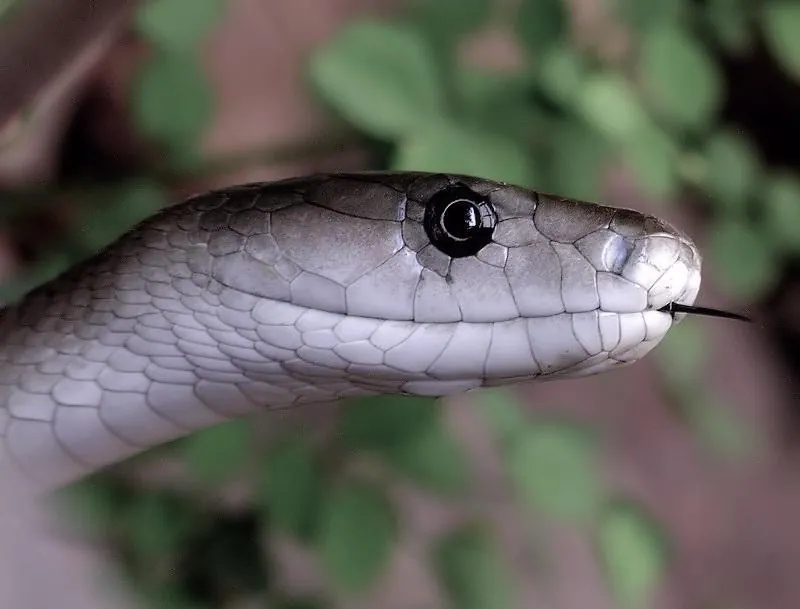
ÌbùjẹThe black mamba is a long, fast, highly venomous snake that lives in parts of sub-Saharan Africa. It can climb trees as well as move across the ground. It is one of the most feared snakes in Africa because its venom acts quickly.1


 Bí o ṣe lè dá a mọ̀
- Long, slender body with a coffin-shaped head and a slight brow ridge1
- Body colour is usually olive, yellowish-brown, khaki or grey, rarely black1
- Greyish-white underbelly1
- Inside of the mouth is dark bluish-grey to nearly black, shown when threatened1
- Young snakes are paler, typically grey or olive green, and darken with age1
A sábà máa ń ṣì í mọ̀ sí: It is often confused with the eastern green mamba, its closest relative. The two were once grouped together as one species before being separated.1
Agbára oró
Oró ń jáde láti inú eyín oró tàbí eyín rẹ̀ nígbà tí ó bá bùjẹ.
Kí ni oró rẹ̀ máa ń ṣe?
Its venom is mainly neurotoxic, meaning it attacks the nerves. Symptoms often start within ten minutes of a bite. The venom is frequently fatal unless antivenom is given.1
Báwo ló ṣe léwu tó fún ènìyàn?
Ewu fún ènìyàn: ApaniỌ̀kan lára àwọn ẹranko tó léwu jùlọ ní ayé.It attacks people only when threatened or cornered. A survey in South Africa from 1957 to 1979 recorded 2,553 venomous snakebites, of which 75 were confirmed as black mamba bites. The World Health Organization classes it as a snake of medical importance.1
 Ìròyìn ayọ̀: àwọn dókítà ní oògùn (antivenom) tàbí ìtọ́jú fún èyí.1
Kí ni ó máa ń ṣe nígbà tí ẹ̀rù bá bà á?
When threatened, it opens its inky-black mouth, spreads a narrow neck flap, hisses and may strike several times in quick succession.1
 Bí ó bá bùjẹ
- Antivenom is the treatment for a black mamba bite, so get to a hospital as fast as possible.1
- Jẹ́ kí ẹni náà wà láìmira kí ó sì farabalẹ̀, yọ òrùka àti àwọn nǹkan tó há, kí ẹ sì lọ sí ilé ìwòsàn kíákíá: oògùn apa-oró (antivenom) ni ìtọ́jú rẹ̀.
Máa kọ́kọ́ pe nọ́ńbà pàjáwìrì rẹ nígbà gbogbo (112, 000, 911). Èyí jẹ́ ìtọ́sọ́nà ìtọ́jú àkọ́kọ́ gbogbogbò, kì í ṣe ìmọ̀ràn ìṣègùn. Ìpìlẹ̀ ìtọ́jú àkọ́kọ́
 Wà láìléwu
- Má ṣe fọwọ́ kan, mú tàbí yọ ẹranko igbó lẹ́nu láéláé, kódà bí ó bá kéré, kódà bí ó bá dà bí ẹni pé ó ń sùn tàbí ó ti kú.
- Fún un ní àyè. Bí o bá pàdé ọ̀kan, farabalẹ̀, sẹ́yìn díẹ̀díẹ̀ kí o sì jẹ́ kí ó máa bá ọ̀nà rẹ̀ lọ.
- Bí ọ̀kan bá bù ọ́ jẹ: farabalẹ̀, má ṣe mira, pe nọ́ńbà pàjáwìrì rẹ (112, 000, 911) tàbí lọ sí ilé ìwòsàn kíákíá. Rántí bí ó ṣe rí, fọ́tò máa ń ṣèrànwọ́.
Kò wá ọ kiri láti ṣe ọ́ léṣe. Ó ń lo oró rẹ̀ láti mú oúnjẹ tàbí láti dáàbò bo ara rẹ̀, ó sì fẹ́ràn láti farapamọ́ jù. Sí i nípa wíwà láìléwu
Báwo ló ṣe tóbi tó?
Báwo ló ṣe gùn tó?
Báwo ló ṣe wúwo tó?
 ó gùn tó ajá 4 láti imú dé ìrù
 ó gùn tó ọ̀gẹ̀dẹ̀ 25 tí a tò tẹ̀léra
 ó wúwo tó ológbò ilé
 lè sáré mítà 100 ní ìṣẹ́jú-àáyá 22 (ènìyàn tó yára jùlọ nílò 9.6)
Báwo ni Black mamba ṣe tóbi tó tí a bá fi wé ÌWỌ?
Ìṣirò nìkan nínú bráwúsà rẹ. A kò fi ohunkóhun pamọ́, a kò sì fi ránṣẹ́ sí ibikíbi.
Báwo ló ṣe yára tó?

Òtítọ́
It is the second-longest venomous snake in the world, after the king cobra. It is the longest venomous snake in Africa.1
It can lift as much as 40% of its body length off the ground, so bites can land on the upper body.1
Honey badgers and mongooses have some resistance to its venom, and they sometimes hunt mambas.1
Its digestive system can fully digest a meal in eight to ten hours.1
Its fangs can be up to 6.5 mm long.1
Its name in some tribal languages means "dassie catcher", because it sometimes hunts the rock hyrax, also called a dassie.1
Olùfọ́ àròsọ
Àròsọ: The black mamba is black, and it is always aggressive.
Òtítọ́: Its skin is usually grey, olive or brown. The name comes from the dark inside of its mouth. It usually avoids people and attacks only when threatened or cornered.1
Fún àwọn amòye oró
- Orúkọ sáyẹ́ǹsì
- Dendroaspis polylepis
- Ẹgbẹ́
- Ṣèbé, mamba àti krait
- Ìdílé
- Elapidae2
- Ètò
- Squamata
- Àwọn kọ́ńtínẹ́ńtì
- Áfíríkà
- Àwọn ọmọ
- It lays eggs. A female lays a clutch of 6 to 17 eggs, and the young are 40 to 60 cm long when they hatch.1
- Ọjọ́ ayé
- nǹkan bí ọdún 111
- Bí ó ṣe ń ṣe nínú igbó
- Least Concern1
- Ewu fún ènìyàn
- 5 / 5: Apani3
Ibi tí àwọn òtítọ́ ti wá
- Black mamba (Wikipedia (CC BY-SA 4.0))
- Dendroaspis polylepis (iNaturalist): orúkọ àti ìpínsísọ̀rí.
- Venom Wiki: ìpele ewu, ìtóbi déédé àti àfojúbù ìyára jẹ́ tiwa. Wo bí a ṣe ń ṣírò wọn: Bí a ṣe ń díwọ̀n ewu.
Gbogbo òtítọ́ ojú-ìwé yìí ní nọ́ńbà tó tọ́ka sí orísun rẹ̀. Bí a bá ṣe àṣìṣe, má bínú, olólùfẹ́ ẹranko ni wá, kì í ṣe ìwé ìròyìn sáyẹ́ǹsì. Sọ fún wa ní [email protected] a ó sì tún un ṣe.
 Ebi ń pa àkekèé! Iṣẹ́ akanṣe ẹnì kan ṣoṣo ni Venom Wiki: ọ̀fẹ́ ni, kò sí ìpolówó, kò sì sí olùtọpinpin. Ẹ̀bùn kékeré ń ràn án lọ́wọ́ láti wà lórí íńtánẹ́ẹ̀tì.Bọ́ àkekèé
 Egyptian cobra
 Cape cobra
 Eastern green mamba
 Jameson's mamba
 Western green mamba
 Ashe's spitting cobra
 Deathstalker
 Puff adder
 Boomslang
 Fat-tailed scorpion
 Gaboon viper
 Western honey bee