
 Áfíríkà
 Éṣíà
Éṣíà Yúróòpù
 Gúúsù Amẹ́ríkà
 Ọsirélíà àti Òṣéáníà
 Antáktíkà
 Òkun Pàsífíìkì
 Òkun Àtìláńtíìkì
 Òkun Íńdíà
 Òkun Áktíkì
 Òkun Mẹditaréníà
 Òkun Pupa
 Òkun Káríbíànù
 Òkun Coral
 Òkun Gúúsù Ṣáínà
 Òkun Fílípínì
 Òkun Andaman
 Òkun Àríwá
 Òkun Tímọ̀ àti Òkun Àráfúrà
 Ìyawọlẹ̀ Òkun Bẹ̀ngál
 Ìyawọlẹ̀ Òkun Kalifọ́níà
Puff adder
 Ìbùjẹ
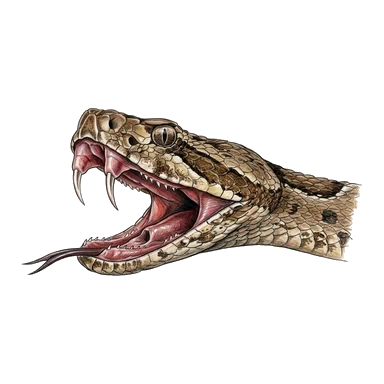
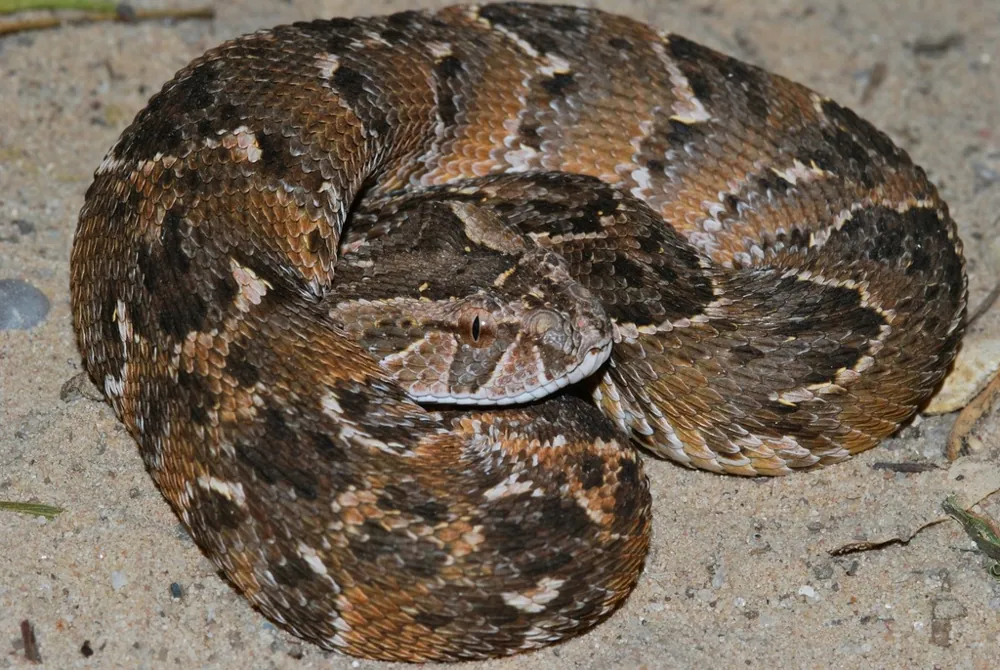
ÌbùjẹThe puff adder is a large, stout viper that lives across most of Africa and parts of the Arabian Peninsula. It is one of the most dangerous snakes in Africa because it lives in places where many people live and work, and it has very potent venom. Its camouflage hides it well, so it is easy to step near without seeing it.1
 Bí o ṣe lè dá a mọ̀
- Stout, heavy body. Usually about 1.0 m long including the tail.1
- Two dark bands across the top of the head, and two dark bars running from each eye down the sides of the head.1
- Back is straw yellow, light brown, orange or reddish brown, with 18–22 dark brown to black chevron-shaped bands running down the back and tail.1
- In some populations, the body is heavily flecked with brown and black, giving a dusty-brown or blackish look.1
- Males from highland East Africa and the Western Cape of South Africa often have a striking yellow-and-black pattern.1
Agbára oró
Oró ń jáde láti inú eyín oró tàbí eyín rẹ̀ nígbà tí ó bá bùjẹ.
Kí ni oró rẹ̀ máa ń ṣe?
Its venom is cytotoxic, which means it destroys body tissue. Bites cause severe pain, swelling, bleeding under the skin and, in serious cases, tissue death that can spread and lead to gangrene. Other symptoms include shock, nausea, vomiting, dizziness and periods of semi-consciousness. Death can occur in about 25 hours from a dose of around 100 mg, and deaths usually come 2–4 days after a bite from complications.1
Báwo ló ṣe léwu tó fún ènìyàn?
Ewu fún ènìyàn: ApaniỌ̀kan lára àwọn ẹranko tó léwu jùlọ ní ayé.It is responsible for more snakebite deaths in Africa than any other African snake. This is due to its wide range, common presence near people, large size, potent venom and aggressive temperament. Deaths are uncommon in untreated cases, but severe bites can be fatal, with one report giving a 52% mortality rate. Most deaths are linked to poor medical care.1
Kí ni ó máa ń ṣe nígbà tí ẹ̀rù bá bà á?
When disturbed, it hisses loudly and continuously, coils tightly with the front of its body in a taut S shape, and may back away towards cover before striking suddenly and fast.1
 Bí ó bá bùjẹ
- Jẹ́ kí ẹni náà wà láìmira kí ó sì farabalẹ̀, jẹ́ kí apá tàbí ẹsẹ̀ tí ó bù jẹ wà ní ìpele ọkàn, yọ òrùka àti àwọn nǹkan tó há, kí ẹ sì lọ sí ilé ìwòsàn kíákíá.
Máa kọ́kọ́ pe nọ́ńbà pàjáwìrì rẹ nígbà gbogbo (112, 000, 911). Èyí jẹ́ ìtọ́sọ́nà ìtọ́jú àkọ́kọ́ gbogbogbò, kì í ṣe ìmọ̀ràn ìṣègùn. Ìpìlẹ̀ ìtọ́jú àkọ́kọ́
 Wà láìléwu
- Má ṣe fọwọ́ kan, mú tàbí yọ ẹranko igbó lẹ́nu láéláé, kódà bí ó bá kéré, kódà bí ó bá dà bí ẹni pé ó ń sùn tàbí ó ti kú.
- Fún un ní àyè. Bí o bá pàdé ọ̀kan, farabalẹ̀, sẹ́yìn díẹ̀díẹ̀ kí o sì jẹ́ kí ó máa bá ọ̀nà rẹ̀ lọ.
- Bí ọ̀kan bá bù ọ́ jẹ: farabalẹ̀, má ṣe mira, pe nọ́ńbà pàjáwìrì rẹ (112, 000, 911) tàbí lọ sí ilé ìwòsàn kíákíá. Rántí bí ó ṣe rí, fọ́tò máa ń ṣèrànwọ́.
Kò wá ọ kiri láti ṣe ọ́ léṣe. Ó ń lo oró rẹ̀ láti mú oúnjẹ tàbí láti dáàbò bo ara rẹ̀, ó sì fẹ́ràn láti farapamọ́ jù. Sí i nípa wíwà láìléwu
Báwo ló ṣe tóbi tó?
Báwo ló ṣe gùn tó?
Báwo ló ṣe wúwo tó?
 ó gùn tó ológbò ilé 4 láti imú dé ìrù
 ó gùn tó ọ̀gẹ̀dẹ̀ 11 tí a tò tẹ̀léraó wúwo tó ológbò ilé
 lè sáré mítà 100 ní ìṣẹ́jú-àáyá 97 (ènìyàn tó yára jùlọ nílò 9.6)
Báwo ni Puff adder ṣe tóbi tó tí a bá fi wé ÌWỌ?
Ìṣirò nìkan nínú bráwúsà rẹ. A kò fi ohunkóhun pamọ́, a kò sì fi ránṣẹ́ sí ibikíbi.
Báwo ló ṣe yára tó?


Òtítọ́
A female in a Czech zoo gave birth to 156 young, the largest litter recorded for any snake species.1
Its fangs are long and can penetrate deeply, and the force of its strike can kill prey by physical trauma alone.1
A large adult can produce between 150 and 350 mg of venom at a time, with a maximum of 750 mg.1
Dogs and meerkats, which hunt by scent, find it hard to detect because of a form of olfactory crypsis, meaning it hides its scent.1
It is one of the most toxic vipers based on LD50 (the dose that kills half of test animals in a study).1
It is a good swimmer and climber, and one specimen was found 4.6 m above the ground in a dense tree.1
Olùfọ́ àròsọ
Àròsọ: Puff adders are fast, aggressive snakes that chase people.
Òtítọ́: They are normally sluggish and rely on camouflage for protection. They strike when disturbed, but they do not usually pursue people.1
Ibi tí àwọn òtítọ́ ti wá
- Puff adder (Wikipedia (CC BY-SA 4.0))
- Bitis arietans (iNaturalist): orúkọ àti ìpínsísọ̀rí.
- Venom Wiki: ìpele ewu, ìtóbi déédé àti àfojúbù ìyára jẹ́ tiwa. Wo bí a ṣe ń ṣírò wọn: Bí a ṣe ń díwọ̀n ewu.
Gbogbo òtítọ́ ojú-ìwé yìí ní nọ́ńbà tó tọ́ka sí orísun rẹ̀. Bí a bá ṣe àṣìṣe, má bínú, olólùfẹ́ ẹranko ni wá, kì í ṣe ìwé ìròyìn sáyẹ́ǹsì. Sọ fún wa ní [email protected] a ó sì tún un ṣe.
 Ebi ń pa àkekèé! Iṣẹ́ akanṣe ẹnì kan ṣoṣo ni Venom Wiki: ọ̀fẹ́ ni, kò sí ìpolówó, kò sì sí olùtọpinpin. Ẹ̀bùn kékeré ń ràn án lọ́wọ́ láti wà lórí íńtánẹ́ẹ̀tì.Bọ́ àkekèé
 Indian saw-scaled viper
 Paramọlẹ Russell
 Gaboon viper
 Common European adder
 Eastern Russell's viper
 Northeast African carpet viper
 Black mamba
 Deathstalker
 Egyptian cobra
 Boomslang
 Fat-tailed scorpion
 Western honey bee