
 Áfíríkà
 Éṣíà
Éṣíà Yúróòpù
 Gúúsù Amẹ́ríkà
 Ọsirélíà àti Òṣéáníà
 Antáktíkà
 Òkun Pàsífíìkì
 Òkun Àtìláńtíìkì
 Òkun Íńdíà
 Òkun Áktíkì
 Òkun Mẹditaréníà
 Òkun Pupa
 Òkun Káríbíànù
 Òkun Coral
 Òkun Gúúsù Ṣáínà
 Òkun Fílípínì
 Òkun Andaman
 Òkun Àríwá
 Òkun Tímọ̀ àti Òkun Àráfúrà
 Ìyawọlẹ̀ Òkun Bẹ̀ngál
 Ìyawọlẹ̀ Òkun Kalifọ́níà
Fat-tailed scorpion
 Ìtani
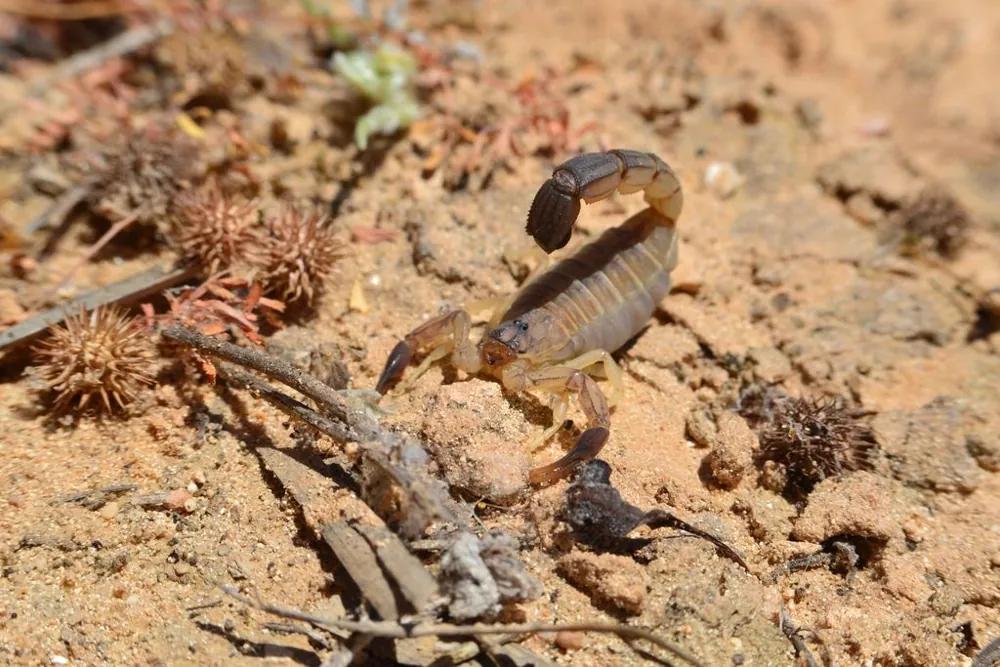
ÌtaniThe fat-tailed scorpion is a hardy desert scorpion from North Africa. It can survive powerful sandstorms without digging a burrow. Its venom is among the most dangerous of any scorpion in the world, so it is important to know it by sight and keep well away from it.1



 Bí o ṣe lè dá a mọ̀
- It is a medium-sized scorpion that can grow up to 10 centimetres long.1
- It has a very thick, powerful tail.1
- Stripes run along the sides of its dome-shaped body.1
- Its armour is covered in tiny dome-shaped granules.1
- It is active at night and hides by day.1
A sábà máa ń ṣì í mọ̀ sí: Generally similar scorpions from the Middle East and India were once thought to be this species. Recent studies treat them as different species.1
Agbára oró
Oró ń jáde láti inú ohun ìtani.
Kí ni oró rẹ̀ máa ń ṣe?
Its venom is very potent and is mainly made of neurotoxins (which attack the nerves), cardiotoxins (which harm the heart) and myotoxins (which damage muscle). It also contains hemotoxins, which affect the blood. Deaths in people usually occur through heart and breathing failure, and sometimes through bleeding in the brain, organ damage or shock.1
Báwo ló ṣe léwu tó fún ènìyàn?
Ewu fún ènìyàn: Ó léwu gan-anÓ lè pa ènìyàn tí kò bá rí ìtọ́jú.It is one of the world's most dangerous scorpions, due to the strength of its venom and its aggressive temperament. It claims several lives each year.1
 Bí ó bá ta ni
- Fi àpò yìnyín tu ibi tí ó ti ta ni lára, kí o sì jẹ́ kí ẹni náà wà láìmira. Wá ìrànlọ́wọ́ ìṣègùn kíákíá, pàápàá fún àwọn ọmọdé: àwọn àkekèé kan lè pa ọmọdé.
Máa kọ́kọ́ pe nọ́ńbà pàjáwìrì rẹ nígbà gbogbo (112, 000, 911). Èyí jẹ́ ìtọ́sọ́nà ìtọ́jú àkọ́kọ́ gbogbogbò, kì í ṣe ìmọ̀ràn ìṣègùn. Ìpìlẹ̀ ìtọ́jú àkọ́kọ́
 Wà láìléwu
- Má ṣe fọwọ́ kan, mú tàbí yọ ẹranko igbó lẹ́nu láéláé, kódà bí ó bá kéré, kódà bí ó bá dà bí ẹni pé ó ń sùn tàbí ó ti kú.
- Fún un ní àyè. Bí o bá pàdé ọ̀kan, farabalẹ̀, sẹ́yìn díẹ̀díẹ̀ kí o sì jẹ́ kí ó máa bá ọ̀nà rẹ̀ lọ.
- Bí ọ̀kan bá ta ọ́: farabalẹ̀, má ṣe mira, pe nọ́ńbà pàjáwìrì rẹ (112, 000, 911) tàbí lọ sí ilé ìwòsàn kíákíá. Rántí bí ó ṣe rí, fọ́tò máa ń ṣèrànwọ́.
Kò wá ọ kiri láti ṣe ọ́ léṣe. Ó ń lo oró rẹ̀ láti mú oúnjẹ tàbí láti dáàbò bo ara rẹ̀, ó sì fẹ́ràn láti farapamọ́ jù. Sí i nípa wíwà láìléwu
Báwo ló ṣe tóbi tó?
Báwo ló ṣe gùn tó?
 ó gùn tó bíríkì ìṣeré 3 tí a tò sí ìlà kan
 lè sáré mítà 100 ní ìṣẹ́jú-àáyá 180 (ènìyàn tó yára jùlọ nílò 9.6)
Báwo ni Fat-tailed scorpion ṣe tóbi tó tí a bá fi wé ÌWỌ?
Ìṣirò nìkan nínú bráwúsà rẹ. A kò fi ohunkóhun pamọ́, a kò sì fi ránṣẹ́ sí ibikíbi.
Báwo ló ṣe yára tó?


Òtítọ́
It can withstand sandstorms strong enough to strip paint off steel, and it does not dig burrows to shelter from them.1
Researchers have considered copying this surface texture for use on aeroplanes and helicopters.1
Its armour has dome-shaped granules about 10 micrometres high, and scientists think this texture helps protect it from sand.1
The lethal dose (LD50) of its venom is 0.32 mg per kg when injected under the skin.1
Its venom contains a toxin called AaTX1, which was first found in this species.1
Olùfọ́ àròsọ
Àròsọ: The fat-tailed scorpion lives across the Middle East and as far east as India.
Òtítọ́: Older data suggested a wider range, but more recent studies have discredited this. It is found in North Africa.1
Ibi tí àwọn òtítọ́ ti wá
- Androctonus australis (Wikipedia (CC BY-SA 4.0))
- Androctonus australis (iNaturalist): orúkọ àti ìpínsísọ̀rí.
- Venom Wiki: ìpele ewu, ìtóbi déédé àti àfojúbù ìyára jẹ́ tiwa. Wo bí a ṣe ń ṣírò wọn: Bí a ṣe ń díwọ̀n ewu.
Gbogbo òtítọ́ ojú-ìwé yìí ní nọ́ńbà tó tọ́ka sí orísun rẹ̀. Bí a bá ṣe àṣìṣe, má bínú, olólùfẹ́ ẹranko ni wá, kì í ṣe ìwé ìròyìn sáyẹ́ǹsì. Sọ fún wa ní [email protected] a ó sì tún un ṣe.
 Ebi ń pa àkekèé! Iṣẹ́ akanṣe ẹnì kan ṣoṣo ni Venom Wiki: ọ̀fẹ́ ni, kò sí ìpolówó, kò sì sí olùtọpinpin. Ẹ̀bùn kékeré ń ràn án lọ́wọ́ láti wà lórí íńtánẹ́ẹ̀tì.Bọ́ àkekèé
 Deathstalker
 Emperor scorpion
 Arabian fat-tailed scorpion
 Transvaal thick-tailed scorpion
 European yellow-tailed scorpion
 Flat rock scorpion
 Black mamba
 Egyptian cobra
 Puff adder
 Boomslang
 Gaboon viper
 Western honey bee