
 Áfíríkà
 Éṣíà
Éṣíà Yúróòpù
 Gúúsù Amẹ́ríkà
 Ọsirélíà àti Òṣéáníà
 Antáktíkà
 Òkun Pàsífíìkì
 Òkun Àtìláńtíìkì
 Òkun Íńdíà
 Òkun Áktíkì
 Òkun Mẹditaréníà
 Òkun Pupa
 Òkun Káríbíànù
 Òkun Coral
 Òkun Gúúsù Ṣáínà
 Òkun Fílípínì
 Òkun Andaman
 Òkun Àríwá
 Òkun Tímọ̀ àti Òkun Àráfúrà
 Ìyawọlẹ̀ Òkun Bẹ̀ngál
 Ìyawọlẹ̀ Òkun Kalifọ́níà
Egyptian cobra
 Ìbùjẹ
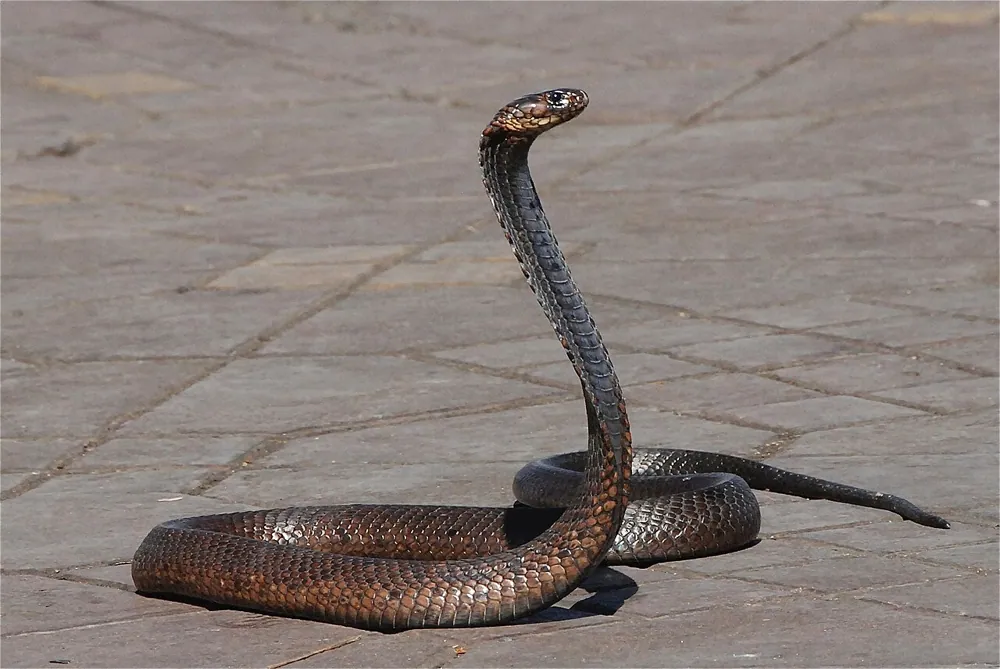
ÌbùjẹThe Egyptian cobra is one of the most venomous snakes in Northern Africa. It lives across much of North Africa and the savannas of West Africa, and it often lives close to people, sometimes entering villages and houses. Its bite is dangerous, so it is important to know what it looks like.1



 Bí o ṣe lè dá a mọ̀
- Its large, flattened head is slightly distinct from its neck, and it can spread a hood like other cobras.1
- Most individuals are some shade of brown, often with a tear-drop mark below the eye.1
- Some are copper-red or grey-brown, and those from Morocco are almost entirely black.1
- The belly is mostly creamy white, yellow brown, grey, blue grey, dark brown or black, often with dark spots.1
- It is a large snake, with an average length of roughly 1.4 metres.1
Agbára oró
Oró ń jáde láti inú eyín oró tàbí eyín rẹ̀ nígbà tí ó bá bùjẹ.
Kí ni oró rẹ̀ máa ń ṣe?
Its venom is mainly made of neurotoxins, which attack the nerves, and cytotoxins, which damage cells. The venom stops nerve signals reaching the muscles, and in later stages it also affects the heart and lungs, which can lead to death from respiratory failure. A bite causes local pain, severe swelling, bruising, blistering and tissue death, and may also cause headache, vomiting, dizziness, convulsions or paralysis.1
Báwo ló ṣe léwu tó fún ènìyàn?
Ewu fún ènìyàn: ApaniỌ̀kan lára àwọn ẹranko tó léwu jùlọ ní ayé.The venom is strong enough to kill a person. A single bite can release an average of 175 to 300 mg of venom. Its venom is slow-acting and does not always cause death. Venom from northern African populations, especially from Egypt, Tunisia, Algeria and Libya, is more potent than venom from southern and western populations.1
 Ìròyìn ayọ̀: àwọn dókítà ní oògùn (antivenom) tàbí ìtọ́jú fún èyí.1
Kí ni ó máa ń ṣe nígbà tí ẹ̀rù bá bà á?
When approached, it usually tries to escape, but if threatened it rises up with its hood spread and strikes.1
 Bí ó bá bùjẹ
- Get to a hospital fast: antivenom is the treatment. In a 2018 case, a bitten man was evacuated to Egypt, treated with antivenom and made a full recovery.1
- Jẹ́ kí ẹni náà wà láìmira kí ó sì farabalẹ̀, yọ òrùka àti àwọn nǹkan tó há, kí ẹ sì lọ sí ilé ìwòsàn kíákíá: oògùn apa-oró (antivenom) ni ìtọ́jú rẹ̀.
Máa kọ́kọ́ pe nọ́ńbà pàjáwìrì rẹ nígbà gbogbo (112, 000, 911). Èyí jẹ́ ìtọ́sọ́nà ìtọ́jú àkọ́kọ́ gbogbogbò, kì í ṣe ìmọ̀ràn ìṣègùn. Ìpìlẹ̀ ìtọ́jú àkọ́kọ́
 Wà láìléwu
- Má ṣe fọwọ́ kan, mú tàbí yọ ẹranko igbó lẹ́nu láéláé, kódà bí ó bá kéré, kódà bí ó bá dà bí ẹni pé ó ń sùn tàbí ó ti kú.
- Fún un ní àyè. Bí o bá pàdé ọ̀kan, farabalẹ̀, sẹ́yìn díẹ̀díẹ̀ kí o sì jẹ́ kí ó máa bá ọ̀nà rẹ̀ lọ.
- Bí ọ̀kan bá bù ọ́ jẹ: farabalẹ̀, má ṣe mira, pe nọ́ńbà pàjáwìrì rẹ (112, 000, 911) tàbí lọ sí ilé ìwòsàn kíákíá. Rántí bí ó ṣe rí, fọ́tò máa ń ṣèrànwọ́.
Kò wá ọ kiri láti ṣe ọ́ léṣe. Ó ń lo oró rẹ̀ láti mú oúnjẹ tàbí láti dáàbò bo ara rẹ̀, ó sì fẹ́ràn láti farapamọ́ jù. Sí i nípa wíwà láìléwu
Báwo ló ṣe tóbi tó?
Báwo ló ṣe gùn tó?
 ó gùn tó ajá 2.5 láti imú dé ìrù
 ó gùn tó ọ̀gẹ̀dẹ̀ 14 tí a tò tẹ̀léra
 lè sáré mítà 100 ní ìṣẹ́jú-àáyá 44 (ènìyàn tó yára jùlọ nílò 9.6)
Báwo ni Egyptian cobra ṣe tóbi tó tí a bá fi wé ÌWỌ?
Ìṣirò nìkan nínú bráwúsà rẹ. A kò fi ohunkóhun pamọ́, a kò sì fi ránṣẹ́ sí ibikíbi.
Báwo ló ṣe yára tó?


Òtítọ́
Most ancient sources blame an Egyptian cobra for the death of Cleopatra and her two handmaidens, though recent researchers have questioned this.1
Ancient Egyptian pharaohs wore a stylised cobra, the uraeus, on their diadem as a symbol of sovereignty.1
In 2006, a pet cobra escaped in Toronto and forced the evacuation of a house for more than five months.1
In 2011, a venomous female cobra went missing from the Bronx Zoo and was found in a dark corner of the reptile house six days later. Staff named her "Mia", for "missing in action".1
It is often found in water, and there are records of it swimming in the Mediterranean Sea.1
Olùfọ́ àròsọ
Àròsọ: Egyptian cobras spit venom, like some other African cobras.
Òtítọ́: This species does not spit venom. It delivers its venom by biting.1
Ibi tí àwọn òtítọ́ ti wá
- Egyptian cobra (Wikipedia (CC BY-SA 4.0))
- Naja haje (iNaturalist): orúkọ àti ìpínsísọ̀rí.
- Venom Wiki: ìpele ewu, ìtóbi déédé àti àfojúbù ìyára jẹ́ tiwa. Wo bí a ṣe ń ṣírò wọn: Bí a ṣe ń díwọ̀n ewu.
Gbogbo òtítọ́ ojú-ìwé yìí ní nọ́ńbà tó tọ́ka sí orísun rẹ̀. Bí a bá ṣe àṣìṣe, má bínú, olólùfẹ́ ẹranko ni wá, kì í ṣe ìwé ìròyìn sáyẹ́ǹsì. Sọ fún wa ní [email protected] a ó sì tún un ṣe.
 Ebi ń pa àkekèé! Iṣẹ́ akanṣe ẹnì kan ṣoṣo ni Venom Wiki: ọ̀fẹ́ ni, kò sí ìpolówó, kò sì sí olùtọpinpin. Ẹ̀bùn kékeré ń ràn án lọ́wọ́ láti wà lórí íńtánẹ́ẹ̀tì.Bọ́ àkekèé
 Black mamba
 Cape cobra
 Eastern green mamba
 Jameson's mamba
 Western green mamba
 Ashe's spitting cobra
 Deathstalker
 Puff adder
 Boomslang
 Fat-tailed scorpion
 Gaboon viper
 Western honey bee