
 Áfíríkà
 Éṣíà
Éṣíà Yúróòpù
 Gúúsù Amẹ́ríkà
 Ọsirélíà àti Òṣéáníà
 Antáktíkà
 Òkun Pàsífíìkì
 Òkun Àtìláńtíìkì
 Òkun Íńdíà
 Òkun Áktíkì
 Òkun Mẹditaréníà
 Òkun Pupa
 Òkun Káríbíànù
 Òkun Coral
 Òkun Gúúsù Ṣáínà
 Òkun Fílípínì
 Òkun Andaman
 Òkun Àríwá
 Òkun Tímọ̀ àti Òkun Àráfúrà
 Ìyawọlẹ̀ Òkun Bẹ̀ngál
 Ìyawọlẹ̀ Òkun Kalifọ́níà
Bold jumping spider
 Ìbùjẹ
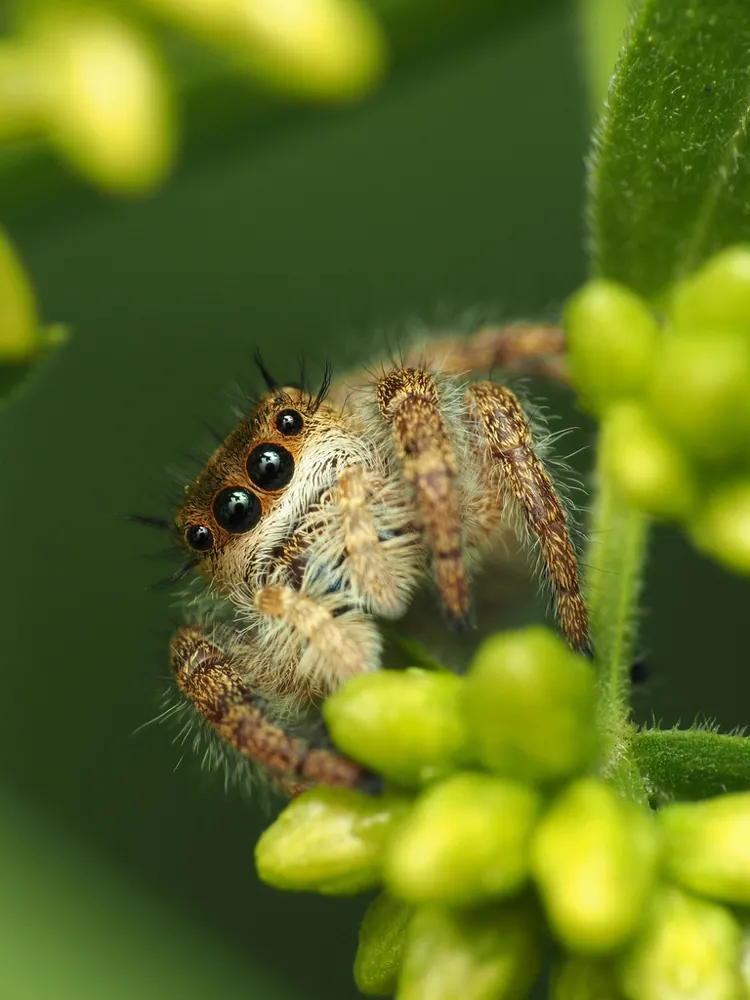
ÌbùjẹThe bold jumping spider is a small spider that hunts by sight, leaping onto its prey instead of catching it in a web. It is common across North America and is often found near people, in gardens, fields and on fence posts. It matters because it eats many crop pests.1


 Bí o ṣe lè dá a mọ̀
- A large, usually triangular white spot in the centre of the abdomen, with two smaller spots below it.1
- Iridescent green chelicerae (the front mouthparts).1
- White banding with fringes on the legs and pedipalps, which is more prominent in males.1
- Males have more striking markings than females and tufts of hair over their eyes.1
- Large forward-facing eyes, as with all jumping spiders.1
A sábà máa ń ṣì í mọ̀ sí: Phidippus regius has a similar abdominal pattern and lives in the same area of the southeastern United States. In the bold jumper the pale spots near the rear are more linear, while in P. regius they are more oval. The bold jumper also has pairs of matte black patches on its abdomen, which P. regius lacks.1
Agbára oró
Oró ń jáde láti inú eyín oró tàbí eyín rẹ̀ nígbà tí ó bá bùjẹ.
Kí ni oró rẹ̀ máa ń ṣe?
Bold jumpers use venom to immobilise their prey after biting it with their fangs.1
Báwo ló ṣe léwu tó fún ènìyàn?
Ewu fún ènìyàn: Fúyẹ́Bí ìtani oyin tàbí kò tó bẹ́ẹ̀. Kò fẹ́rẹ̀ẹ́ léwu fún ènìyàn.Bites from this spider are rare. A bite may happen if the spider feels threatened or is mishandled. If it is handled, it generally does not bite.1
Kí ni ó máa ń ṣe nígbà tí ẹ̀rù bá bà á?
When threatened, they flee by jumping down and away or by hiding in small crevices.1
 Bí ó bá bùjẹ
- Fọ ibi ìbùjẹ náà kí o sì fi àpò yìnyín lé e fún ìrora. Wá ìrànlọ́wọ́ ìṣègùn bí ìrora bá le, tí ó ń tàn kálẹ̀, tàbí tí ara ẹni náà kò bá yá.
Máa kọ́kọ́ pe nọ́ńbà pàjáwìrì rẹ nígbà gbogbo (112, 000, 911). Èyí jẹ́ ìtọ́sọ́nà ìtọ́jú àkọ́kọ́ gbogbogbò, kì í ṣe ìmọ̀ràn ìṣègùn. Ìpìlẹ̀ ìtọ́jú àkọ́kọ́
 Wà láìléwu
- Má ṣe fọwọ́ kan, mú tàbí yọ ẹranko igbó lẹ́nu láéláé, kódà bí ó bá kéré, kódà bí ó bá dà bí ẹni pé ó ń sùn tàbí ó ti kú.
- Fún un ní àyè. Bí o bá pàdé ọ̀kan, farabalẹ̀, sẹ́yìn díẹ̀díẹ̀ kí o sì jẹ́ kí ó máa bá ọ̀nà rẹ̀ lọ.
- Bí ọ̀kan bá bù ọ́ jẹ: farabalẹ̀, má ṣe mira, pe nọ́ńbà pàjáwìrì rẹ (112, 000, 911) tàbí lọ sí ilé ìwòsàn kíákíá. Rántí bí ó ṣe rí, fọ́tò máa ń ṣèrànwọ́.
Kò wá ọ kiri láti ṣe ọ́ léṣe. Ó ń lo oró rẹ̀ láti mú oúnjẹ tàbí láti dáàbò bo ara rẹ̀, ó sì fẹ́ràn láti farapamọ́ jù. Sí i nípa wíwà láìléwu
Báwo ló ṣe tóbi tó?
Báwo ló ṣe gùn tó?
 ó kúrú ju ọmọdínrín ìka rẹ lọ
Báwo ni Bold jumping spider ṣe tóbi tó tí a bá fi wé ÌWỌ?
Ìṣirò nìkan nínú bráwúsà rẹ. A kò fi ohunkóhun pamọ́, a kò sì fi ránṣẹ́ sí ibikíbi.
Báwo ló ṣe yára tó?


Òtítọ́
Bold jumpers have some of the best eyesight of any spider. Their vision is widely regarded as the best among all spiders.1
Their four pairs of eyes give them nearly 360° of visual coverage around the head.1
Bold jumpers sometimes invade the webs of other spiders to steal insects that have been caught, or to attack the spiders themselves.1
Bold jumpers can change their behaviour after watching other spiders, which is rare among spiders.1
Females choose mates by watching the male's leg and body movements during his courtship dance.1
Spiderlings often spread to new places by ballooning, a way of travelling on silk threads in the wind.1
Olùfọ́ àròsọ
Àròsọ: Like most spiders, jumping spiders catch their prey in webs.
Òtítọ́: Bold jumpers do not build webs to catch prey. They hunt actively by sight and leap onto their victims.1
Ibi tí àwọn òtítọ́ ti wá
- Phidippus audax (Wikipedia (CC BY-SA 4.0))
- Phidippus audax (iNaturalist): orúkọ àti ìpínsísọ̀rí.
- Venom Wiki: ìpele ewu, ìtóbi déédé àti àfojúbù ìyára jẹ́ tiwa. Wo bí a ṣe ń ṣírò wọn: Bí a ṣe ń díwọ̀n ewu.
Gbogbo òtítọ́ ojú-ìwé yìí ní nọ́ńbà tó tọ́ka sí orísun rẹ̀. Bí a bá ṣe àṣìṣe, má bínú, olólùfẹ́ ẹranko ni wá, kì í ṣe ìwé ìròyìn sáyẹ́ǹsì. Sọ fún wa ní [email protected] a ó sì tún un ṣe.
 Ebi ń pa àkekèé! Iṣẹ́ akanṣe ẹnì kan ṣoṣo ni Venom Wiki: ọ̀fẹ́ ni, kò sí ìpolówó, kò sì sí olùtọpinpin. Ẹ̀bùn kékeré ń ràn án lọ́wọ́ láti wà lórí íńtánẹ́ẹ̀tì.Bọ́ àkekèé
 Brown recluse
 Southern black widow
 Northern black widow
 Western black widow
 Golden silk orb-weaver
 Central American wandering spider
 Terciopelo
 Eastern coral snake
 Eastern diamondback rattlesnake
 Eyelash viper
 Timber rattlesnake
 Western diamondback rattlesnake