
 Áfíríkà
 Éṣíà
Éṣíà Yúróòpù
 Gúúsù Amẹ́ríkà
 Ọsirélíà àti Òṣéáníà
 Antáktíkà
 Òkun Pàsífíìkì
 Òkun Àtìláńtíìkì
 Òkun Íńdíà
 Òkun Áktíkì
 Òkun Mẹditaréníà
 Òkun Pupa
 Òkun Káríbíànù
 Òkun Coral
 Òkun Gúúsù Ṣáínà
 Òkun Fílípínì
 Òkun Andaman
 Òkun Àríwá
 Òkun Tímọ̀ àti Òkun Àráfúrà
 Ìyawọlẹ̀ Òkun Bẹ̀ngál
 Ìyawọlẹ̀ Òkun Kalifọ́níà
Bootlace worm
 Májèlé nínú awọ rẹ̀Oúnjẹ rẹ̀: ẸranOnímájèlé, kì í ṣe olóró
The bootlace worm is a ribbon worm that can be one of the longest animals known, with typical specimens measuring 5 to 15 metres. It lives along the coasts of northern Europe, including Britain, Norway and Denmark. Its thick, toxic mucus is its main defence.1
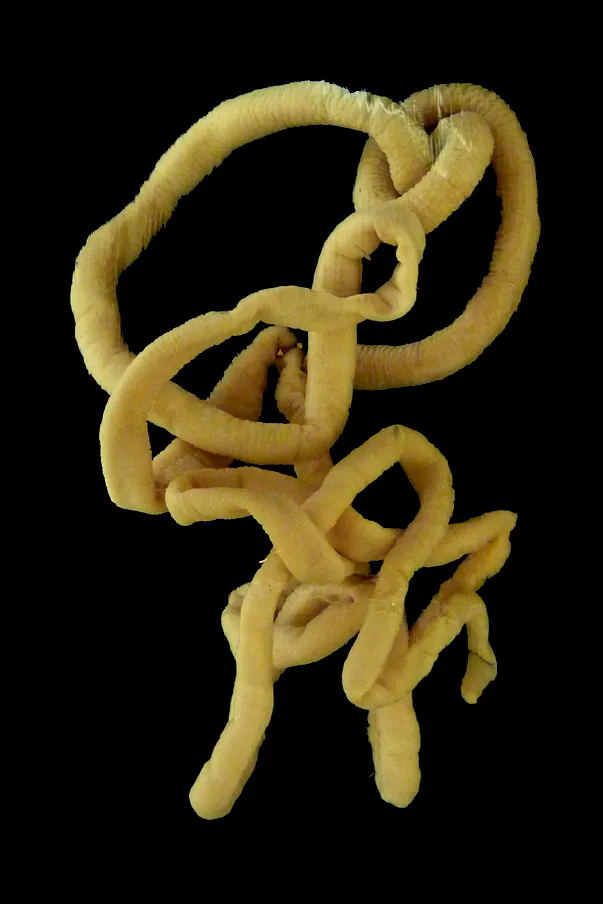
 Bí o ṣe lè dá a mọ̀
Agbára májèlé
Awọ rẹ̀ ní májèlé. Ó léwu láti fọwọ́ kàn án, lá a tàbí jẹ ẹ́.
Kí ni májèlé rẹ̀ máa ń ṣe?
The bootlace worm does not bite or sting, so it is poisonous rather than venomous. Its mucus contains a relatively strong neurotoxin, which attacks the nerves. The mucus is highly toxic, but tests showed low toxicity in human cells.1
Báwo ló ṣe léwu tó fún ènìyàn?
Ewu fún ènìyàn: Fúyẹ́Bí ìtani oyin tàbí kò tó bẹ́ẹ̀. Kò fẹ́rẹ̀ẹ́ léwu fún ènìyàn.No human injuries or deaths from this worm are known. Its mucus is highly toxic, so it is best not to touch it.1
Kí ni ó máa ń ṣe nígbà tí ẹ̀rù bá bà á?
When handled, it releases large amounts of thick, toxic mucus, which it uses to deter predators.1
 Bí ẹnìkan bá fọwọ́ kàn án tàbí jẹ ẹ́
- Fi ọgbẹ́ náà sínú omi gbígbóná, tó gbóná tó bí ẹni náà ṣe lè fara dà á láìjóná, kí o sì wá ìrànlọ́wọ́ ìṣègùn láti yọ ẹ̀gún náà. Má ṣe gbẹ́ wọn jáde fúnra rẹ.
Máa kọ́kọ́ pe nọ́ńbà pàjáwìrì rẹ nígbà gbogbo (112, 000, 911). Èyí jẹ́ ìtọ́sọ́nà ìtọ́jú àkọ́kọ́ gbogbogbò, kì í ṣe ìmọ̀ràn ìṣègùn. Ìpìlẹ̀ ìtọ́jú àkọ́kọ́
 Wà láìléwu
- Má ṣe fọwọ́ kan, mú tàbí yọ ẹranko igbó lẹ́nu láéláé, kódà bí ó bá kéré, kódà bí ó bá dà bí ẹni pé ó ń sùn tàbí ó ti kú.
- Fún un ní àyè. Bí o bá pàdé ọ̀kan, farabalẹ̀, sẹ́yìn díẹ̀díẹ̀ kí o sì jẹ́ kí ó máa bá ọ̀nà rẹ̀ lọ.
- Bí o bá fọwọ́ kàn án tàbí jẹ ẹ́: má ṣe fọwọ́ pa ojú tàbí ẹnu rẹ, fọ ọwọ́ rẹ kí o sì wá ìrànlọ́wọ́ ìṣègùn.
Kò wá ọ kiri láti ṣe ọ́ léṣe. Májèlé rẹ̀ wà níbẹ̀ kìkì kí ohunkóhun má baà jẹ ẹ́. Sí i nípa wíwà láìléwu
Níbo ní ayé?
Báwo ló ṣe tóbi tó?
Báwo ló ṣe gùn tó?
 ó gùn tó ọkọ̀ ayọ́kẹ́lẹ́ 7 tí a tò sí ìlà kan
Báwo ni Bootlace worm ṣe tóbi tó tí a bá fi wé ÌWỌ?
Ìṣirò nìkan nínú bráwúsà rẹ. A kò fi ohunkóhun pamọ́, a kò sì fi ránṣẹ́ sí ibikíbi.
Báwo ló ṣe yára tó?


Òtítọ́
In 1864, a specimen more than 55 metres long washed ashore after a severe storm near St Andrews, Scotland. It was longer than the lion's mane jellyfish.1
The bootlace worm is one of the longest known animals, and individuals have been recorded at up to 30 metres.1
Its mucus kills crabs and cockroaches in tests, and it could be used as an agricultural insecticide.1
Its body is very flexible and can stretch far beyond its usual length.1
Olùfọ́ àròsọ
Àròsọ: The bootlace worm regularly grows to over 55 metres long.
Òtítọ́: Reports of worms over 55 metres may be animals that were stretched. Ribbon worm bodies are flexible, so measurements should be treated with caution. Individuals are known to reach up to 30 metres.1
Ibi tí àwọn òtítọ́ ti wá
- Lineus longissimus (Wikipedia (CC BY-SA 4.0))
- Lineus longissimus (iNaturalist): orúkọ àti ìpínsísọ̀rí.
- Venom Wiki: ìpele ewu, ìtóbi déédé àti àfojúbù ìyára jẹ́ tiwa. Wo bí a ṣe ń ṣírò wọn: Bí a ṣe ń díwọ̀n ewu.
Gbogbo òtítọ́ ojú-ìwé yìí ní nọ́ńbà tó tọ́ka sí orísun rẹ̀. Bí a bá ṣe àṣìṣe, má bínú, olólùfẹ́ ẹranko ni wá, kì í ṣe ìwé ìròyìn sáyẹ́ǹsì. Sọ fún wa ní [email protected] a ó sì tún un ṣe.
 Ebi ń pa àkekèé! Iṣẹ́ akanṣe ẹnì kan ṣoṣo ni Venom Wiki: ọ̀fẹ́ ni, kò sí ìpolówó, kò sì sí olùtọpinpin. Ẹ̀bùn kékeré ń ràn án lọ́wọ́ láti wà lórí íńtánẹ́ẹ̀tì.Bọ́ àkekèé
Sí i láti inú ẹgbẹ́ kan náà: Sea urchin, ẹja ìràwọ̀ àti kòkòrò inú òkun
 Crown-of-thorns starfishSea urchin, ẹja ìràwọ̀ àti kòkòrò inú òkunÓ nílò dókítàMá ṣe fọwọ́ kàn án
 Flower urchinSea urchin, ẹja ìràwọ̀ àti kòkòrò inú òkunÓ lè pani
 Fire urchinSea urchin, ẹja ìràwọ̀ àti kòkòrò inú òkunÓ nílò dókítàMá ṣe fọwọ́ kàn án
 Bearded firewormSea urchin, ẹja ìràwọ̀ àti kòkòrò inú òkunÓ kàn ń dunniMá ṣe fọwọ́ kàn án
 Black long-spined urchinSea urchin, ẹja ìràwọ̀ àti kòkòrò inú òkunÓ kàn ń dunniMá ṣe fọwọ́ kàn án
 BloodwormSea urchin, ẹja ìràwọ̀ àti kòkòrò inú òkunÓ kàn ń dunni
Ó tún ń gbé ní: Òkun Àtìláńtíìkì
 Hawksbill sea turtleÀwọn ẹranko onímájèlé mìírànÓ lè pani
 Portuguese man o' warJellyfish àti àwọn ẹ̀dá òkun tó ń ta niÓ nílò dókítàMá ṣe fọwọ́ kàn án
 Blue sea dragonÌgbín cone àti octopusÓ kàn ń dunni
 Greenland sharkÀwọn ẹranko onímájèlé mìírànÓ kàn ń dunni
 Lion's mane jellyfishJellyfish àti àwọn ẹ̀dá òkun tó ń ta niÓ kàn ń dunniMá ṣe fọwọ́ kàn án
 Common octopusÌgbín cone àti octopusAláìléwu