
 Áfíríkà
 Éṣíà
Éṣíà Yúróòpù
 Gúúsù Amẹ́ríkà
 Ọsirélíà àti Òṣéáníà
 Antáktíkà
 Òkun Pàsífíìkì
 Òkun Àtìláńtíìkì
 Òkun Íńdíà
 Òkun Áktíkì
 Òkun Mẹditaréníà
 Òkun Pupa
 Òkun Káríbíànù
 Òkun Coral
 Òkun Gúúsù Ṣáínà
 Òkun Fílípínì
 Òkun Andaman
 Òkun Àríwá
 Òkun Tímọ̀ àti Òkun Àráfúrà
 Ìyawọlẹ̀ Òkun Bẹ̀ngál
 Ìyawọlẹ̀ Òkun Kalifọ́níà
Clinging jellyfish
 Okùn-ọwọ́ tó ń ta ni (tentacles)
The clinging jellyfish is a small jellyfish, with a bell only 1 to 3 cm across. It lives in shallow coastal waters across much of the Northern Hemisphere. Its sting can be strong in some areas, so it is worth knowing what it looks like.1



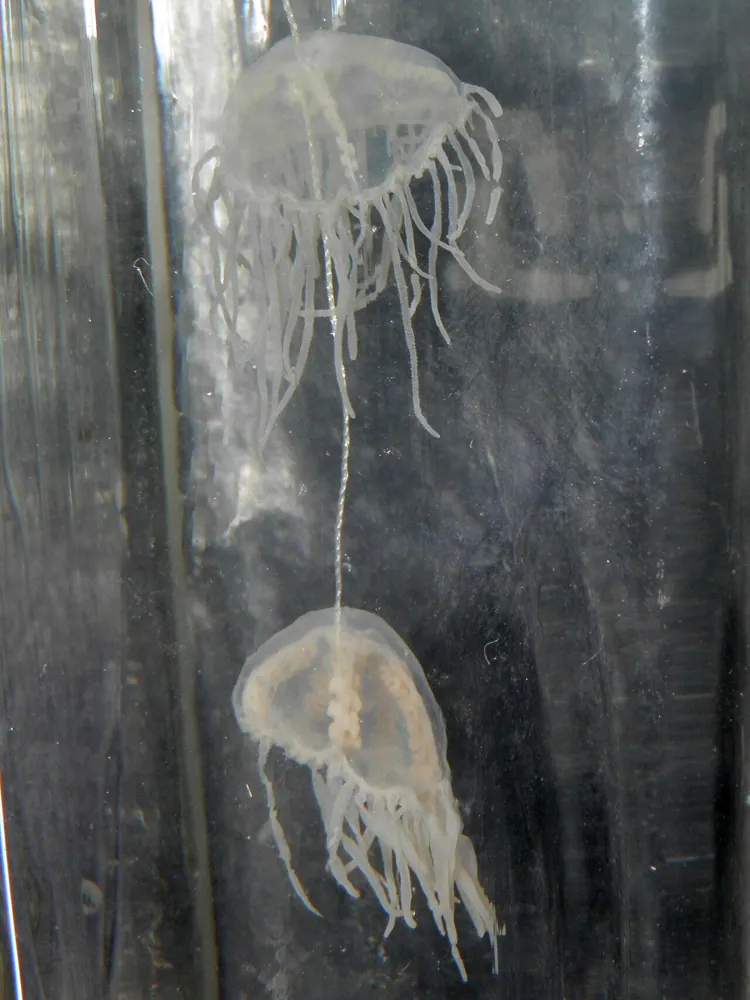
 Bí o ṣe lè dá a mọ̀
- Has a transparent bell lined with about 60 to 80 tentacles1
- Gonads are orange, red or violet in females and yellow-brown in males1
- The tan manubrium (mouth structure) hangs down in the middle of the bell1
- Bell is usually 1 to 3 cm across; a tentacle can be twice the bell's diameter when fully extended1
Agbára oró
Ẹgbẹẹgbẹ̀rún sẹ́ẹ̀lì ìtani kékeré máa ń ta jáde nígbà tí nǹkan bá fọwọ́ kàn wọ́n.
Kí ni oró rẹ̀ máa ń ṣe?
Its sting can cause pain, a swollen throat, chest tightness, muscle cramps, neuropsychiatric changes (effects on mood, thinking or behaviour) and anaphylactic shock, a severe allergic reaction.1
Báwo ló ṣe léwu tó fún ènìyàn?
Ewu fún ènìyàn: Ó le gan-anÌtani nílò dókítà. Ikú kò wọ́pọ̀ rárá.In much of its range the sting is strong enough to cause serious symptoms. Stinging incidents have been reported from East Asia, Europe and the Atlantic coast of the United States. Off North America's northeast Pacific coast, its sting cannot be felt and it is considered harmless to people.1
 Bí ó bá ta ni
- Jáde kúrò nínú omi kí o sì yọ gbogbo okùn-ọwọ́ rẹ̀ (tentacles) kúrò (pẹ̀lú ìbọ̀wọ́ tàbí aṣọ).
- Fún box jellyfish ilẹ̀ olóoru: da ọtí kíkan (vinegar) sí ibi tí ó ti ta ni fún ó kéré tán ìṣẹ́jú-àáyá 30, pe fún ìrànlọ́wọ́ kí o sì múra láti ṣe CPR (ìmúsọjí ọkàn àti èémí). Fún bluebottles àti ọ̀pọ̀ àwọn yòókù: fi omi òkun fọ̀ ọ́, lẹ́yìn náà omi gbígbóná fún ìrora náà.
Máa kọ́kọ́ pe nọ́ńbà pàjáwìrì rẹ nígbà gbogbo (112, 000, 911). Èyí jẹ́ ìtọ́sọ́nà ìtọ́jú àkọ́kọ́ gbogbogbò, kì í ṣe ìmọ̀ràn ìṣègùn. Ìpìlẹ̀ ìtọ́jú àkọ́kọ́
 Wà láìléwu
- Má ṣe fọwọ́ kan, mú tàbí yọ ẹranko igbó lẹ́nu láéláé, kódà bí ó bá kéré, kódà bí ó bá dà bí ẹni pé ó ń sùn tàbí ó ti kú.
- Fún un ní àyè. Bí o bá pàdé ọ̀kan, farabalẹ̀, sẹ́yìn díẹ̀díẹ̀ kí o sì jẹ́ kí ó máa bá ọ̀nà rẹ̀ lọ.
- Bí ọ̀kan bá ta ọ́: farabalẹ̀, má ṣe mira, pe nọ́ńbà pàjáwìrì rẹ (112, 000, 911) tàbí lọ sí ilé ìwòsàn kíákíá. Rántí bí ó ṣe rí, fọ́tò máa ń ṣèrànwọ́.
Kò wá ọ kiri láti ṣe ọ́ léṣe. Ó ń lo oró rẹ̀ láti mú oúnjẹ tàbí láti dáàbò bo ara rẹ̀, ó sì fẹ́ràn láti farapamọ́ jù. Sí i nípa wíwà láìléwu
Níbo ní ayé?
Báwo ló ṣe tóbi tó?
Báwo ló ṣe gùn tó?
 ó gùn tó pínì ìwé (paper clip)
Báwo ni Clinging jellyfish ṣe tóbi tó tí a bá fi wé ÌWỌ?
Ìṣirò nìkan nínú bráwúsà rẹ. A kò fi ohunkóhun pamọ́, a kò sì fi ránṣẹ́ sí ibikíbi.
Báwo ló ṣe yára tó?


Òtítọ́
Some scientists think the clinging jellyfish may be a group of closely related species, because its sting and body shape vary from place to place.1
The jellyfish appear once the water warms to about 17 to 18 °C, so they follow a yearly pattern and sometimes appear in large numbers at once.1
The medusa (jellyfish) stage usually lasts no more than three months, but the polyp stage can last for years.1
Polyps can split into several new polyps by budding.1
In Europe, the species is non-native and has been found in the Mediterranean and along the Atlantic coast from Portugal to Norway and Sweden.1
Olùfọ́ àròsọ
Àròsọ: The clinging jellyfish is harmless everywhere.
Òtítọ́: Its sting is harmless off the northeast Pacific coast of North America, but it can be strong and dangerous in East Asia, Europe and the Atlantic coast of the United States.1
Fún àwọn amòye oró
- Orúkọ sáyẹ́ǹsì
- Gonionemus vertens
- Ẹgbẹ́
- Jellyfish àti àwọn ẹ̀dá òkun tó ń ta ni
- Ìdílé
- Olindiidae2
- Ètò
- Limnomedusae
- Àwọn kọ́ńtínẹ́ńtì
- Òkun Pàsífíìkì, Òkun Àtìláńtíìkì, Àwọn òkun ńlá
- Àwọn ọmọ
- Medusae release tens of thousands of eggs and sperm into the sea. The fertilised young become planula larvae, which settle on the seabed as tiny polyps.1
- Ewu fún ènìyàn
- 3 / 5: Ó le gan-an3
Ibi tí àwọn òtítọ́ ti wá
- Gonionemus vertens (Wikipedia (CC BY-SA 4.0))
- Gonionemus vertens (iNaturalist): orúkọ àti ìpínsísọ̀rí.
- Venom Wiki: ìpele ewu, ìtóbi déédé àti àfojúbù ìyára jẹ́ tiwa. Wo bí a ṣe ń ṣírò wọn: Bí a ṣe ń díwọ̀n ewu.
Gbogbo òtítọ́ ojú-ìwé yìí ní nọ́ńbà tó tọ́ka sí orísun rẹ̀. Bí a bá ṣe àṣìṣe, má bínú, olólùfẹ́ ẹranko ni wá, kì í ṣe ìwé ìròyìn sáyẹ́ǹsì. Sọ fún wa ní [email protected] a ó sì tún un ṣe.
 Ebi ń pa àkekèé! Iṣẹ́ akanṣe ẹnì kan ṣoṣo ni Venom Wiki: ọ̀fẹ́ ni, kò sí ìpolówó, kò sì sí olùtọpinpin. Ẹ̀bùn kékeré ń ràn án lọ́wọ́ láti wà lórí íńtánẹ́ẹ̀tì.Bọ́ àkekèé
Sí i láti inú ẹgbẹ́ kan náà: Jellyfish àti àwọn ẹ̀dá òkun tó ń ta ni
 Australian box jellyfishJellyfish àti àwọn ẹ̀dá òkun tó ń ta niApaniMá ṣe fọwọ́ kàn án
 Irukandji jellyfishJellyfish àti àwọn ẹ̀dá òkun tó ń ta niÓ lè paniMá ṣe fọwọ́ kàn án
 Portuguese man o' warJellyfish àti àwọn ẹ̀dá òkun tó ń ta niÓ nílò dókítàMá ṣe fọwọ́ kàn án
 Lion's mane jellyfishJellyfish àti àwọn ẹ̀dá òkun tó ń ta niÓ kàn ń dunniMá ṣe fọwọ́ kàn án
 Moon jellyfishJellyfish àti àwọn ẹ̀dá òkun tó ń ta niAláìléwu
 Common kingslayerJellyfish àti àwọn ẹ̀dá òkun tó ń ta niÓ lè paniMá ṣe fọwọ́ kàn án
Ó tún ń gbé ní: Òkun Pàsífíìkì
 Geography coneÌgbín cone àti octopusApani
 Greater blue-ringed octopusÌgbín cone àti octopusApani
 Japanese pufferfishÀwọn ẹranko onímájèlé mìírànApani
 Southern blue-ringed octopusÌgbín cone àti octopusApani
 Hawksbill sea turtleÀwọn ẹranko onímájèlé mìírànÓ lè pani
 Reef stonefishẸja olóróÓ lè paniMá ṣe fọwọ́ kàn án