
 Áfíríkà
 Éṣíà
Éṣíà Yúróòpù
 Gúúsù Amẹ́ríkà
 Ọsirélíà àti Òṣéáníà
 Antáktíkà
 Òkun Pàsífíìkì
 Òkun Àtìláńtíìkì
 Òkun Íńdíà
 Òkun Áktíkì
 Òkun Mẹditaréníà
 Òkun Pupa
 Òkun Káríbíànù
 Òkun Coral
 Òkun Gúúsù Ṣáínà
 Òkun Fílípínì
 Òkun Andaman
 Òkun Àríwá
 Òkun Tímọ̀ àti Òkun Àráfúrà
 Ìyawọlẹ̀ Òkun Bẹ̀ngál
 Ìyawọlẹ̀ Òkun Kalifọ́níà
Cuban solenodon
 Ìbùjẹ
ÌbùjẹThe Cuban solenodon is a small, furry, shrew-like mammal that lives only in the mountain forests of eastern Cuba. It is one of the few mammals that can inject venom, which it uses to catch its prey. It is endangered and was once thought to be extinct.1



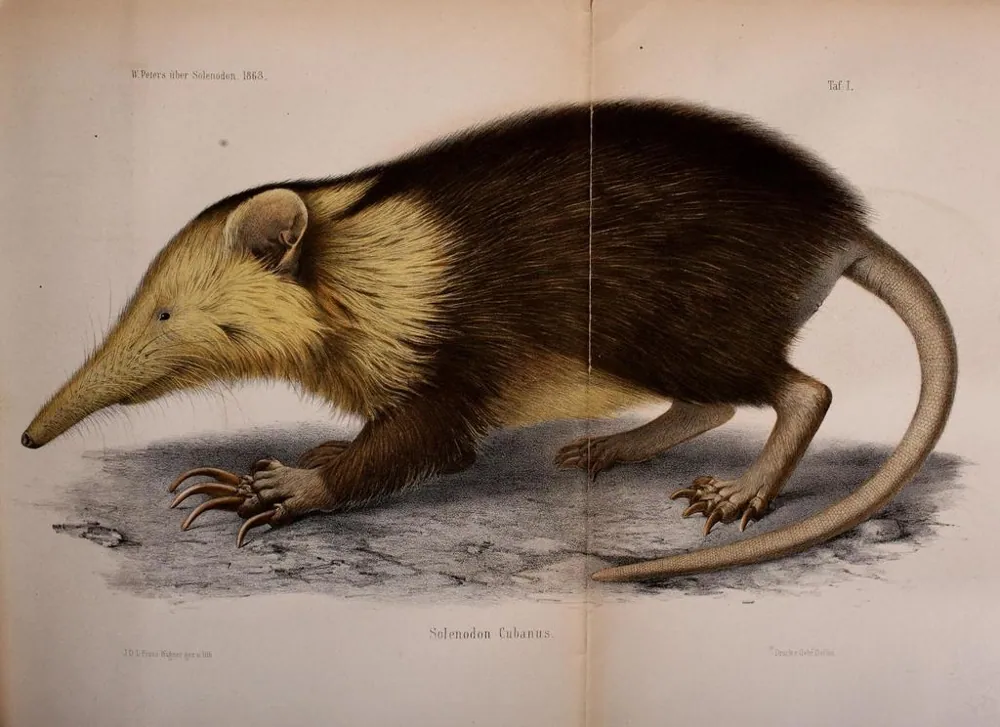
 Bí o ṣe lè dá a mọ̀
- Dark brown to black hair1
- Small eyes and an extremely elongated snout1
- Looks like a large brown rat, with a long, naked, scaly tail1
- Measures 41–56 cm from nose to tail tip1
A sábà máa ń ṣì í mọ̀ sí: It is sometimes compared to a shrew, but it most closely resembles the tenrecs of Madagascar.1
Agbára oró
Oró ń jáde láti inú eyín oró tàbí eyín rẹ̀ nígbà tí ó bá bùjẹ.
Kí ni oró rẹ̀ máa ń ṣe?
Its venom comes from modified salivary glands in the lower jaw, so it is a venomous bite. The venom is strong enough to kill lizards, other small reptiles, frogs, small birds and rodents. Solenodons do not appear to be immune to the venom of their own kind, and cage mates have been reported dying after fights.1
Báwo ló ṣe léwu tó fún ènìyàn?
Ewu fún ènìyàn: Ó ń dunniÓ lè dunni gan-an, ṣùgbọ́n kì í fẹ́rẹ̀ẹ́ le rárá. Bí ó bá bùjẹ
- Fọ ọgbẹ́ náà dáadáa kí o sì wá ìrànlọ́wọ́ ìṣègùn.
Máa kọ́kọ́ pe nọ́ńbà pàjáwìrì rẹ nígbà gbogbo (112, 000, 911). Èyí jẹ́ ìtọ́sọ́nà ìtọ́jú àkọ́kọ́ gbogbogbò, kì í ṣe ìmọ̀ràn ìṣègùn. Ìpìlẹ̀ ìtọ́jú àkọ́kọ́
 Wà láìléwu
- Má ṣe fọwọ́ kan, mú tàbí yọ ẹranko igbó lẹ́nu láéláé, kódà bí ó bá kéré, kódà bí ó bá dà bí ẹni pé ó ń sùn tàbí ó ti kú.
- Fún un ní àyè. Bí o bá pàdé ọ̀kan, farabalẹ̀, sẹ́yìn díẹ̀díẹ̀ kí o sì jẹ́ kí ó máa bá ọ̀nà rẹ̀ lọ.
- Bí ọ̀kan bá bù ọ́ jẹ: farabalẹ̀, má ṣe mira, pe nọ́ńbà pàjáwìrì rẹ (112, 000, 911) tàbí lọ sí ilé ìwòsàn kíákíá. Rántí bí ó ṣe rí, fọ́tò máa ń ṣèrànwọ́.
Kò wá ọ kiri láti ṣe ọ́ léṣe. Ó ń lo oró rẹ̀ láti mú oúnjẹ tàbí láti dáàbò bo ara rẹ̀, ó sì fẹ́ràn láti farapamọ́ jù. Sí i nípa wíwà láìléwu
Báwo ló ṣe tóbi tó?
Báwo ló ṣe gùn tó?
Báwo ló ṣe wúwo tó?
 ó gùn tó ọ̀gẹ̀dẹ̀ 3 tí a tò tẹ̀léra
 ó gùn tó bíríkì ìṣeré 18 tí a tò sí ìlà kan
 lè sáré mítà 100 ní ìṣẹ́jú-àáyá 45 (ènìyàn tó yára jùlọ nílò 9.6)
Báwo ni Cuban solenodon ṣe tóbi tó tí a bá fi wé ÌWỌ?
Ìṣirò nìkan nínú bráwúsà rẹ. A kò fi ohunkóhun pamọ́, a kò sì fi ránṣẹ́ sí ibikíbi.
Báwo ló ṣe yára tó?


Òtítọ́
The solenodons are one of the few groups of mammals that are venomous.1
It was declared extinct in 1970, but was found again in 1974.1
The Cuban solenodon found in 2003 was named Alejandrito. It was healthy, and it was released back into the wild after two days of scientific study.1
Males mate with several females, but they do not help raise the young. Males and females only meet to mate.1
Olùfọ́ àròsọ
Àròsọ: The Cuban solenodon is extinct.
Òtítọ́: It is not extinct. It was once thought to be extinct because it is so rare and hard to see, but it survives today and is listed as endangered.1
Ibi tí àwọn òtítọ́ ti wá
- Cuban solenodon (Wikipedia (CC BY-SA 4.0))
- Atopogale cubana (iNaturalist): orúkọ àti ìpínsísọ̀rí.
- Venom Wiki: ìpele ewu, ìtóbi déédé àti àfojúbù ìyára jẹ́ tiwa. Wo bí a ṣe ń ṣírò wọn: Bí a ṣe ń díwọ̀n ewu.
Gbogbo òtítọ́ ojú-ìwé yìí ní nọ́ńbà tó tọ́ka sí orísun rẹ̀. Bí a bá ṣe àṣìṣe, má bínú, olólùfẹ́ ẹranko ni wá, kì í ṣe ìwé ìròyìn sáyẹ́ǹsì. Sọ fún wa ní [email protected] a ó sì tún un ṣe.
 Ebi ń pa àkekèé! Iṣẹ́ akanṣe ẹnì kan ṣoṣo ni Venom Wiki: ọ̀fẹ́ ni, kò sí ìpolówó, kò sì sí olùtọpinpin. Ẹ̀bùn kékeré ń ràn án lọ́wọ́ láti wà lórí íńtánẹ́ẹ̀tì.Bọ́ àkekèé
Sí i láti inú ẹgbẹ́ kan náà: Ẹranko afọmúbọ́mọ olóró
 Common vampire batẸranko afọmúbọ́mọ olóróÓ kàn ń dunni
 Hispaniolan solenodonẸranko afọmúbọ́mọ olóróÓ kàn ń dunni
 Northern short-tailed shrewẸranko afọmúbọ́mọ olóróAláìléwu
 Hairy-legged vampire batẸranko afọmúbọ́mọ olóróAláìléwu
 White-winged vampire batẸranko afọmúbọ́mọ olóróAláìléwu
 PlatypusẸranko afọmúbọ́mọ olóróÓ kàn ń dunni
 Terciopelo
 Eastern coral snake
 Eastern diamondback rattlesnake
 Eyelash viper
 Timber rattlesnake
 Western diamondback rattlesnake