
 Áfíríkà
 Éṣíà
Éṣíà Yúróòpù
 Gúúsù Amẹ́ríkà
 Ọsirélíà àti Òṣéáníà
 Antáktíkà
 Òkun Pàsífíìkì
 Òkun Àtìláńtíìkì
 Òkun Íńdíà
 Òkun Áktíkì
 Òkun Mẹditaréníà
 Òkun Pupa
 Òkun Káríbíànù
 Òkun Coral
 Òkun Gúúsù Ṣáínà
 Òkun Fílípínì
 Òkun Andaman
 Òkun Àríwá
 Òkun Tímọ̀ àti Òkun Àráfúrà
 Ìyawọlẹ̀ Òkun Bẹ̀ngál
 Ìyawọlẹ̀ Òkun Kalifọ́níà
Northern short-tailed shrew
 Ìbùjẹ
ÌbùjẹThe northern short-tailed shrew is a small, very active mammal that lives in eastern and central North America. It is one of the few venomous mammals, and it uses venom in its saliva to paralyse the animals it hunts. It is also a voracious eater that can eat up to three times its own weight in food each day.1



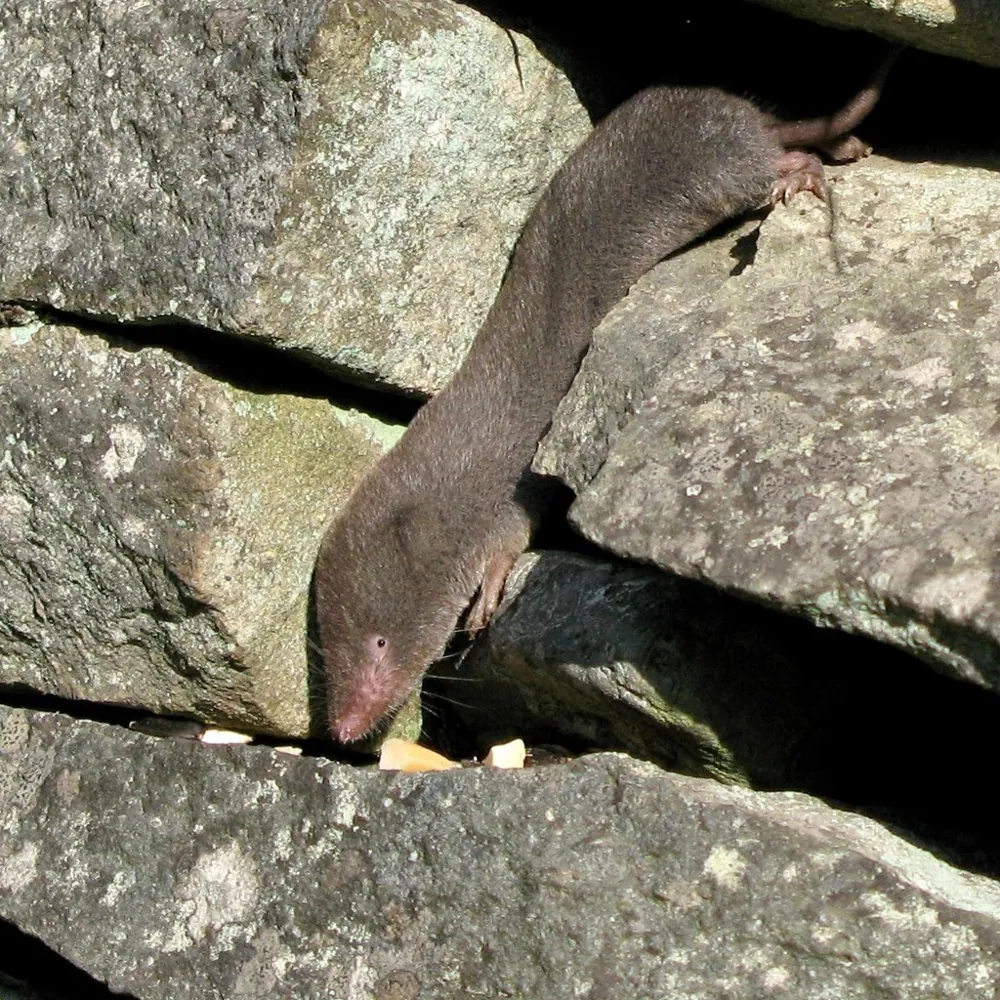
 Bí o ṣe lè dá a mọ̀
Agbára oró
Oró ń jáde láti inú eyín oró tàbí eyín rẹ̀ nígbà tí ó bá bùjẹ.
Kí ni oró rẹ̀ máa ń ṣe?
Its saliva contains a kallikrein-like protease, a toxin that paralyses and subdues prey. The toxin is strong enough to kill small animals, including some somewhat larger than the shrew itself. In people, it causes painful bites when they handle the shrew.1
Báwo ló ṣe léwu tó fún ènìyàn?
Ewu fún ènìyàn: Fúyẹ́Bí ìtani oyin tàbí kò tó bẹ́ẹ̀. Kò fẹ́rẹ̀ẹ́ léwu fún ènìyàn.Its bites are painful to people who try to handle it.1
Kí ni ó máa ń ṣe nígbà tí ẹ̀rù bá bà á?
Its scent glands produce a musky odour that deters mammalian carnivores.1
 Bí ó bá bùjẹ
- Fọ ọgbẹ́ náà dáadáa kí o sì wá ìrànlọ́wọ́ ìṣègùn.
Máa kọ́kọ́ pe nọ́ńbà pàjáwìrì rẹ nígbà gbogbo (112, 000, 911). Èyí jẹ́ ìtọ́sọ́nà ìtọ́jú àkọ́kọ́ gbogbogbò, kì í ṣe ìmọ̀ràn ìṣègùn. Ìpìlẹ̀ ìtọ́jú àkọ́kọ́
 Wà láìléwu
- Má ṣe fọwọ́ kan, mú tàbí yọ ẹranko igbó lẹ́nu láéláé, kódà bí ó bá kéré, kódà bí ó bá dà bí ẹni pé ó ń sùn tàbí ó ti kú.
- Fún un ní àyè. Bí o bá pàdé ọ̀kan, farabalẹ̀, sẹ́yìn díẹ̀díẹ̀ kí o sì jẹ́ kí ó máa bá ọ̀nà rẹ̀ lọ.
- Bí ọ̀kan bá bù ọ́ jẹ: farabalẹ̀, má ṣe mira, pe nọ́ńbà pàjáwìrì rẹ (112, 000, 911) tàbí lọ sí ilé ìwòsàn kíákíá. Rántí bí ó ṣe rí, fọ́tò máa ń ṣèrànwọ́.
Kò wá ọ kiri láti ṣe ọ́ léṣe. Ó ń lo oró rẹ̀ láti mú oúnjẹ tàbí láti dáàbò bo ara rẹ̀, ó sì fẹ́ràn láti farapamọ́ jù. Sí i nípa wíwà láìléwu
Báwo ló ṣe tóbi tó?
Báwo ló ṣe gùn tó?
Báwo ló ṣe wúwo tó?

 ó gùn tó bíríkì ìṣeré 4 tí a tò sí ìlà kan
 lè sáré mítà 100 ní ìṣẹ́jú-àáyá 90 (ènìyàn tó yára jùlọ nílò 9.6)
Báwo ni Northern short-tailed shrew ṣe tóbi tó tí a bá fi wé ÌWỌ?
Ìṣirò nìkan nínú bráwúsà rẹ. A kò fi ohunkóhun pamọ́, a kò sì fi ránṣẹ́ sí ibikíbi.
Báwo ló ṣe yára tó?


Òtítọ́
It is one of the few venomous mammals, and its saliva is used to subdue prey.1
It can eat up to three times its own weight in food each day.1
It is thought to have a poor sense of smell and very limited vision, so it uses echolocation and a fine sense of touch instead.1
Its winter food intake is 43% higher than in summer, because it must work harder to keep its body warm.1
Its nests can be up to 20 cm across and lined with leaves or vole fur, and its waste is kept in a separate latrine area.1
Fún àwọn amòye oró
- Orúkọ sáyẹ́ǹsì
- Blarina brevicauda
- Ẹgbẹ́
- Ẹranko afọmúbọ́mọ olóró
- Ìdílé
- Soricidae2
- Ètò
- Eulipotyphla
- Àwọn kọ́ńtínẹ́ńtì
- Àríwá Amẹ́ríkà
- Àwọn ọmọ
- Females usually have two litters a season, each with six to eight young. The young are born hairless and blind, weighing less than a gram.1
- Bí ó ṣe ń ṣe nínú igbó
- Least Concern1
- Ewu fún ènìyàn
- 1 / 5: Fúyẹ́3
Ibi tí àwọn òtítọ́ ti wá
- Northern short-tailed shrew (Wikipedia (CC BY-SA 4.0))
- Blarina brevicauda (iNaturalist): orúkọ àti ìpínsísọ̀rí.
- Venom Wiki: ìpele ewu, ìtóbi déédé àti àfojúbù ìyára jẹ́ tiwa. Wo bí a ṣe ń ṣírò wọn: Bí a ṣe ń díwọ̀n ewu.
Gbogbo òtítọ́ ojú-ìwé yìí ní nọ́ńbà tó tọ́ka sí orísun rẹ̀. Bí a bá ṣe àṣìṣe, má bínú, olólùfẹ́ ẹranko ni wá, kì í ṣe ìwé ìròyìn sáyẹ́ǹsì. Sọ fún wa ní [email protected] a ó sì tún un ṣe.
 Ebi ń pa àkekèé! Iṣẹ́ akanṣe ẹnì kan ṣoṣo ni Venom Wiki: ọ̀fẹ́ ni, kò sí ìpolówó, kò sì sí olùtọpinpin. Ẹ̀bùn kékeré ń ràn án lọ́wọ́ láti wà lórí íńtánẹ́ẹ̀tì.Bọ́ àkekèé
Sí i láti inú ẹgbẹ́ kan náà: Ẹranko afọmúbọ́mọ olóró
 Common vampire batẸranko afọmúbọ́mọ olóróÓ kàn ń dunni
 Cuban solenodonẸranko afọmúbọ́mọ olóróÓ kàn ń dunni
 Hispaniolan solenodonẸranko afọmúbọ́mọ olóróÓ kàn ń dunni
 Hairy-legged vampire batẸranko afọmúbọ́mọ olóróAláìléwu
 White-winged vampire batẸranko afọmúbọ́mọ olóróAláìléwu
 PlatypusẸranko afọmúbọ́mọ olóróÓ kàn ń dunni
 Terciopelo
 Eastern coral snake
 Eastern diamondback rattlesnake
 Eyelash viper
 Timber rattlesnake
 Western diamondback rattlesnake