
 Áfíríkà
 Éṣíà
Éṣíà Yúróòpù
 Gúúsù Amẹ́ríkà
 Ọsirélíà àti Òṣéáníà
 Antáktíkà
 Òkun Pàsífíìkì
 Òkun Àtìláńtíìkì
 Òkun Íńdíà
 Òkun Áktíkì
 Òkun Mẹditaréníà
 Òkun Pupa
 Òkun Káríbíànù
 Òkun Coral
 Òkun Gúúsù Ṣáínà
 Òkun Fílípínì
 Òkun Andaman
 Òkun Àríwá
 Òkun Tímọ̀ àti Òkun Àráfúrà
 Ìyawọlẹ̀ Òkun Bẹ̀ngál
 Ìyawọlẹ̀ Òkun Kalifọ́níà
Inland robust scorpion
 Ìtani
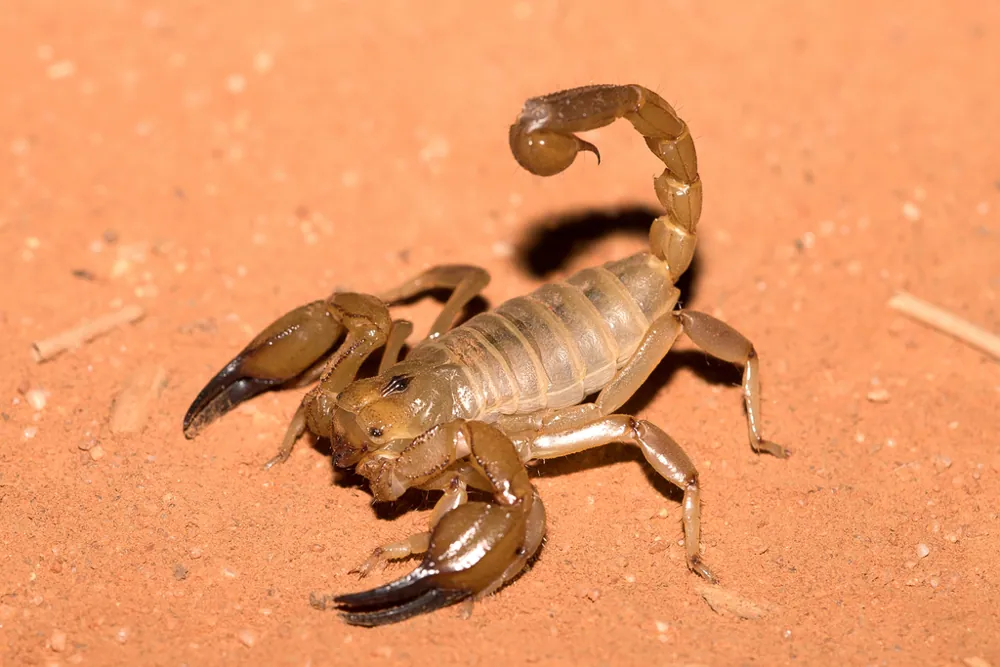
ÌtaniThe inland robust scorpion is a large black-and-red scorpion that lives in the dry inland deserts of Australia. It is one of the biggest scorpion species in Australia, and it digs spiral burrows deep into the sand.1
 Bí o ṣe lè dá a mọ̀
- Measures up to 7 cm, making it one of the largest scorpion species native to Australia.1
- The body (carapace) is red-yellow-brown, with the back segments, tail and pedipalps darker red to red-black.1
- The underside and legs are brown-yellow.1
- Males have a long, spiked tail, while females have a short tail.1
Agbára oró
Oró ń jáde láti inú ohun ìtani.
Báwo ló ṣe léwu tó fún ènìyàn?
Ewu fún ènìyàn: Ó ń dunniÓ lè dunni gan-an, ṣùgbọ́n kì í fẹ́rẹ̀ẹ́ le rárá.Its tail is described as deadly, with a hook at the end. Females have a short tail lined with venom.1
 Bí ó bá ta ni
- Fi àpò yìnyín tu ibi tí ó ti ta ni lára, kí o sì jẹ́ kí ẹni náà wà láìmira. Wá ìrànlọ́wọ́ ìṣègùn kíákíá, pàápàá fún àwọn ọmọdé: àwọn àkekèé kan lè pa ọmọdé.
Máa kọ́kọ́ pe nọ́ńbà pàjáwìrì rẹ nígbà gbogbo (112, 000, 911). Èyí jẹ́ ìtọ́sọ́nà ìtọ́jú àkọ́kọ́ gbogbogbò, kì í ṣe ìmọ̀ràn ìṣègùn. Ìpìlẹ̀ ìtọ́jú àkọ́kọ́
 Wà láìléwu
- Má ṣe fọwọ́ kan, mú tàbí yọ ẹranko igbó lẹ́nu láéláé, kódà bí ó bá kéré, kódà bí ó bá dà bí ẹni pé ó ń sùn tàbí ó ti kú.
- Fún un ní àyè. Bí o bá pàdé ọ̀kan, farabalẹ̀, sẹ́yìn díẹ̀díẹ̀ kí o sì jẹ́ kí ó máa bá ọ̀nà rẹ̀ lọ.
- Bí ọ̀kan bá ta ọ́: farabalẹ̀, má ṣe mira, pe nọ́ńbà pàjáwìrì rẹ (112, 000, 911) tàbí lọ sí ilé ìwòsàn kíákíá. Rántí bí ó ṣe rí, fọ́tò máa ń ṣèrànwọ́.
Kò wá ọ kiri láti ṣe ọ́ léṣe. Ó ń lo oró rẹ̀ láti mú oúnjẹ tàbí láti dáàbò bo ara rẹ̀, ó sì fẹ́ràn láti farapamọ́ jù. Sí i nípa wíwà láìléwu
Báwo ló ṣe tóbi tó?
Báwo ló ṣe gùn tó?
 ó gùn tó bíríkì ìṣeré 2 tí a tò sí ìlà kan
 lè sáré mítà 100 ní ìṣẹ́jú-àáyá 180 (ènìyàn tó yára jùlọ nílò 9.6)
Báwo ni Inland robust scorpion ṣe tóbi tó tí a bá fi wé ÌWỌ?
Ìṣirò nìkan nínú bráwúsà rẹ. A kò fi ohunkóhun pamọ́, a kò sì fi ránṣẹ́ sí ibikíbi.
Báwo ló ṣe yára tó?


Òtítọ́
It digs by moving sand with its pincers (chelicerae) and scraping it backwards with its legs. The sand it removes can weigh 200 to 400 times the scorpion's own weight.1
Every burrow has the same basic shape: a sloping entrance, then up to nine spiral turns, ending in a flat chamber at the bottom.1
In experiments, these scorpions built a burrow in 8 to 10 hours.1
Burrows change with age. Young scorpions dig burrows about 15 to 20 cm deep, while the oldest scorpions dig down to around 100 cm.1
In captivity, they can live for 10 to 15 years, and they are sold in pet shops in Australia.1
Ibi tí àwọn òtítọ́ ti wá
- Urodacus yaschenkoi (Wikipedia (CC BY-SA 4.0))
- Urodacus yaschenkoi (iNaturalist): orúkọ àti ìpínsísọ̀rí.
- Venom Wiki: ìpele ewu, ìtóbi déédé àti àfojúbù ìyára jẹ́ tiwa. Wo bí a ṣe ń ṣírò wọn: Bí a ṣe ń díwọ̀n ewu.
Gbogbo òtítọ́ ojú-ìwé yìí ní nọ́ńbà tó tọ́ka sí orísun rẹ̀. Bí a bá ṣe àṣìṣe, má bínú, olólùfẹ́ ẹranko ni wá, kì í ṣe ìwé ìròyìn sáyẹ́ǹsì. Sọ fún wa ní [email protected] a ó sì tún un ṣe.
 Ebi ń pa àkekèé! Iṣẹ́ akanṣe ẹnì kan ṣoṣo ni Venom Wiki: ọ̀fẹ́ ni, kò sí ìpolówó, kò sì sí olùtọpinpin. Ẹ̀bùn kékeré ń ràn án lọ́wọ́ láti wà lórí íńtánẹ́ẹ̀tì.Bọ́ àkekèé
 Marbled scorpion
 Spider-hunting scorpion
 Black rock scorpion
 Dwarf wood scorpion
 Flinders Ranges scorpion
 Rainforest scorpion
 Coastal taipan
 Common death adder
 Eastern brown snake
 Ejò taipan inú ilẹ̀
 Sydney funnel-web spider
 Ejò ẹkùn