
 Áfíríkà
 Éṣíà
Éṣíà Yúróòpù
 Gúúsù Amẹ́ríkà
 Ọsirélíà àti Òṣéáníà
 Antáktíkà
 Òkun Pàsífíìkì
 Òkun Àtìláńtíìkì
 Òkun Íńdíà
 Òkun Áktíkì
 Òkun Mẹditaréníà
 Òkun Pupa
 Òkun Káríbíànù
 Òkun Coral
 Òkun Gúúsù Ṣáínà
 Òkun Fílípínì
 Òkun Andaman
 Òkun Àríwá
 Òkun Tímọ̀ àti Òkun Àráfúrà
 Ìyawọlẹ̀ Òkun Bẹ̀ngál
 Ìyawọlẹ̀ Òkun Kalifọ́níà
Paraguayan three-striped scorpion
 Ìtani
ÌtaniThis is a scorpion from South America, also called the Brazilian red house scorpion. It lives in Brazil, Argentina, Paraguay and Uruguay, and it is often found in people's homes. Its sting can cause serious symptoms, so it is important to know what it looks like.1

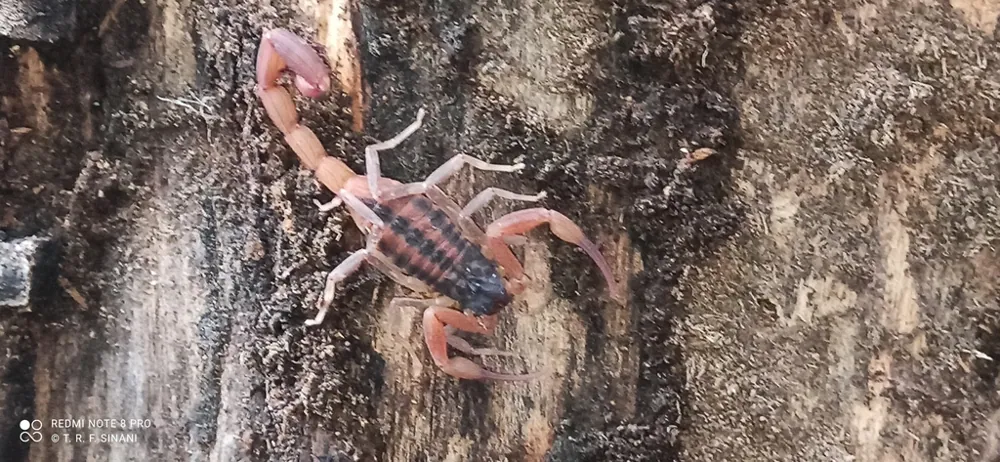
 Bí o ṣe lè dá a mọ̀
- The back of the body is yellow or reddish-yellow.1
- The legs, pedipalps (the front limbs used like tweezers) and tail are pale yellow or yellow-brown.1
- The legs and pedipalps may have dark segmented marks.1
- Young scorpions are reddish, with dark spots on the legs.1
- It is nocturnal, so it is mostly active at night.1
Agbára oró
Oró ń jáde láti inú ohun ìtani.
Kí ni oró rẹ̀ máa ń ṣe?
The venom causes pain in most cases, and swelling, burning, redness and itching around the sting are also common. Neurological symptoms include tingling, cramps, excitement and headache. Other reported symptoms include pale skin, a fast heartbeat, difficulty breathing, low blood pressure, an irregular heartbeat and chest pain, along with low body temperature in some cases. Vomiting, nausea and sweating can also occur.1
Báwo ló ṣe léwu tó fún ènìyàn?
Ewu fún ènìyàn: Ó le gan-anÌtani nílò dókítà. Ikú kò wọ́pọ̀ rárá.It is the main cause of more serious scorpion accidents in Argentina. It is not usually aggressive. How severe a sting is depends on the age of the person stung and the amount of venom injected.1
Kí ni ó máa ń ṣe nígbà tí ẹ̀rù bá bà á?
It can sting to defend itself when it is handled, stepped on, or hidden in clothing when someone is getting dressed.1
 Bí ó bá ta ni
- Fi àpò yìnyín tu ibi tí ó ti ta ni lára, kí o sì jẹ́ kí ẹni náà wà láìmira. Wá ìrànlọ́wọ́ ìṣègùn kíákíá, pàápàá fún àwọn ọmọdé: àwọn àkekèé kan lè pa ọmọdé.
Máa kọ́kọ́ pe nọ́ńbà pàjáwìrì rẹ nígbà gbogbo (112, 000, 911). Èyí jẹ́ ìtọ́sọ́nà ìtọ́jú àkọ́kọ́ gbogbogbò, kì í ṣe ìmọ̀ràn ìṣègùn. Ìpìlẹ̀ ìtọ́jú àkọ́kọ́
 Wà láìléwu
- Má ṣe fọwọ́ kan, mú tàbí yọ ẹranko igbó lẹ́nu láéláé, kódà bí ó bá kéré, kódà bí ó bá dà bí ẹni pé ó ń sùn tàbí ó ti kú.
- Fún un ní àyè. Bí o bá pàdé ọ̀kan, farabalẹ̀, sẹ́yìn díẹ̀díẹ̀ kí o sì jẹ́ kí ó máa bá ọ̀nà rẹ̀ lọ.
- Bí ọ̀kan bá ta ọ́: farabalẹ̀, má ṣe mira, pe nọ́ńbà pàjáwìrì rẹ (112, 000, 911) tàbí lọ sí ilé ìwòsàn kíákíá. Rántí bí ó ṣe rí, fọ́tò máa ń ṣèrànwọ́.
Kò wá ọ kiri láti ṣe ọ́ léṣe. Ó ń lo oró rẹ̀ láti mú oúnjẹ tàbí láti dáàbò bo ara rẹ̀, ó sì fẹ́ràn láti farapamọ́ jù. Sí i nípa wíwà láìléwu
Báwo ló ṣe tóbi tó?
Báwo ló ṣe gùn tó?
 ó gùn tó bíríkì ìṣeré 2 tí a tò sí ìlà kan
 lè sáré mítà 100 ní ìṣẹ́jú-àáyá 260 (ènìyàn tó yára jùlọ nílò 9.6)
Báwo ni Paraguayan three-striped scorpion ṣe tóbi tó tí a bá fi wé ÌWỌ?
Ìṣirò nìkan nínú bráwúsà rẹ. A kò fi ohunkóhun pamọ́, a kò sì fi ránṣẹ́ sí ibikíbi.
Báwo ló ṣe yára tó?


Òtítọ́
In Argentina it is the species behind most of the more serious scorpion stings.1
It uses its pedipalps like tweezers to hold prey before it stings.1
It is found only in South America, where it is common in houses.1
It hides in small gaps such as cracks, pipes, under floors and behind baseboards.1
Its young are reddish with dark spots on their legs, unlike the yellow-brown adults.1
Ibi tí àwọn òtítọ́ ti wá
- Tityus trivittatus (Wikipedia (CC BY-SA 4.0))
- Tityus trivittatus (iNaturalist): orúkọ àti ìpínsísọ̀rí.
- Venom Wiki: ìpele ewu, ìtóbi déédé àti àfojúbù ìyára jẹ́ tiwa. Wo bí a ṣe ń ṣírò wọn: Bí a ṣe ń díwọ̀n ewu.
Gbogbo òtítọ́ ojú-ìwé yìí ní nọ́ńbà tó tọ́ka sí orísun rẹ̀. Bí a bá ṣe àṣìṣe, má bínú, olólùfẹ́ ẹranko ni wá, kì í ṣe ìwé ìròyìn sáyẹ́ǹsì. Sọ fún wa ní [email protected] a ó sì tún un ṣe.
 Ebi ń pa àkekèé! Iṣẹ́ akanṣe ẹnì kan ṣoṣo ni Venom Wiki: ọ̀fẹ́ ni, kò sí ìpolówó, kò sì sí olùtọpinpin. Ẹ̀bùn kékeré ń ràn án lọ́wọ́ láti wà lórí íńtánẹ́ẹ̀tì.Bọ́ àkekèé
 Brazilian yellow scorpion
 Amazonian black scorpion
 Caracas scorpion
 Panamanian black scorpion
 Zulia scorpion
 Amazon forest scorpion
 Golden poison frog
 Terciopelo
 Brazilian wandering spider
 Eyelash viper
 Golden lancehead
 South American bushmaster