
 Áfíríkà
 Éṣíà
Éṣíà Yúróòpù
 Gúúsù Amẹ́ríkà
 Ọsirélíà àti Òṣéáníà
 Antáktíkà
 Òkun Pàsífíìkì
 Òkun Àtìláńtíìkì
 Òkun Íńdíà
 Òkun Áktíkì
 Òkun Mẹditaréníà
 Òkun Pupa
 Òkun Káríbíànù
 Òkun Coral
 Òkun Gúúsù Ṣáínà
 Òkun Fílípínì
 Òkun Andaman
 Òkun Àríwá
 Òkun Tímọ̀ àti Òkun Àráfúrà
 Ìyawọlẹ̀ Òkun Bẹ̀ngál
 Ìyawọlẹ̀ Òkun Kalifọ́níà
Pinktoe tarantula
 Ìbùjẹ
ÌbùjẹThe pinktoe tarantula is a large spider that lives in the rainforests of northern South America. It spends much of its life high in trees, where it hunts insects and small tree frogs. It is often seen as one of the gentlest tarantulas, and it is a popular pet for beginners.1



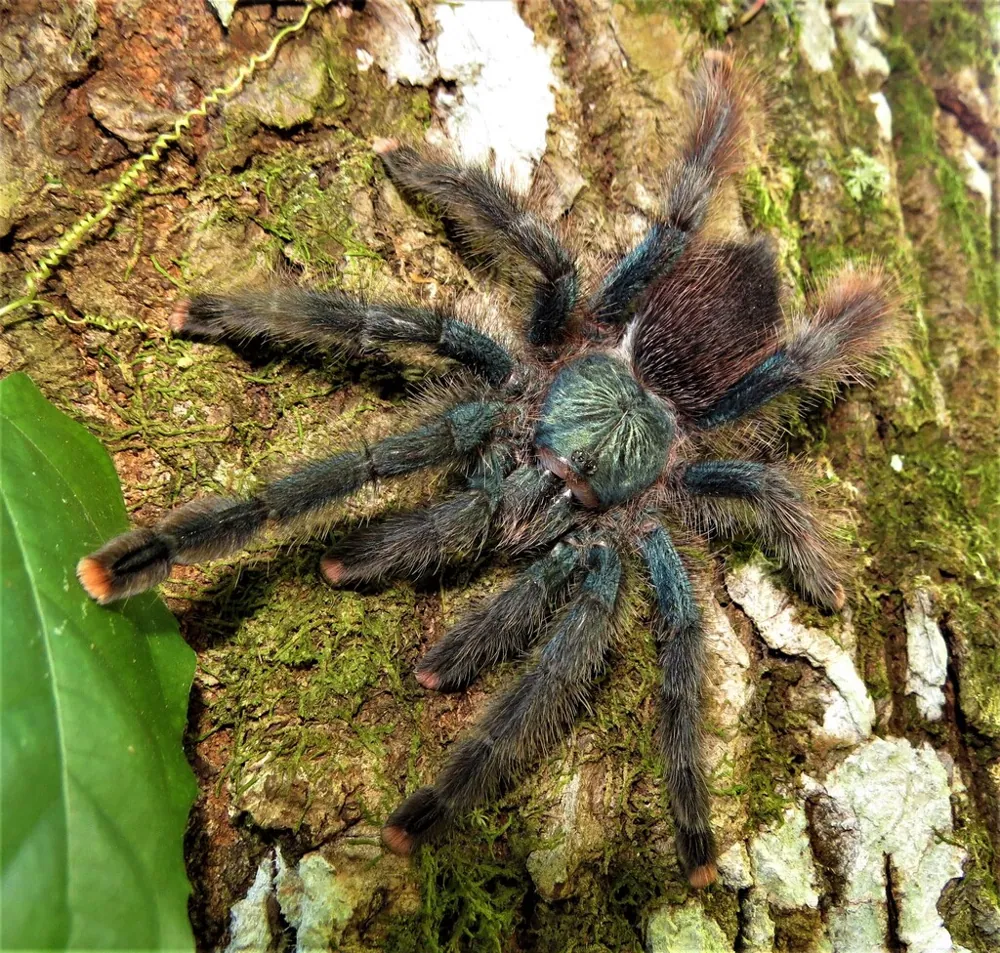
 Bí o ṣe lè dá a mọ̀
Agbára oró
Oró ń jáde láti inú eyín oró tàbí eyín rẹ̀ nígbà tí ó bá bùjẹ.
Kí ni oró rẹ̀ máa ń ṣe?
The spider has a bite that injects venom. Its venom is considered mild, even compared with other New World tarantulas.1
Báwo ló ṣe léwu tó fún ènìyàn?
Ewu fún ènìyàn: Fúyẹ́Bí ìtani oyin tàbí kò tó bẹ́ẹ̀. Kò fẹ́rẹ̀ẹ́ léwu fún ènìyàn.It is not very defensive, and it is considered one of the safest tarantulas to handle, although handling is still not recommended. Its venom is mild, so it is a much lower risk than more toxic tarantulas such as those in the genera Psalmopoeus and Poecilotheria.1
Kí ni ó máa ń ṣe nígbà tí ẹ̀rù bá bà á?
When threatened it usually runs or leaps away, but it may adopt a threat posture, flick its faeces at the threat, or bite if provoked.1
 Bí ó bá bùjẹ
- Fọ ibi ìbùjẹ náà kí o sì tù ú. Wá ìrànlọ́wọ́ ìṣègùn bí ìrora bá le tàbí tí ara ẹni náà kò bá yá.
Máa kọ́kọ́ pe nọ́ńbà pàjáwìrì rẹ nígbà gbogbo (112, 000, 911). Èyí jẹ́ ìtọ́sọ́nà ìtọ́jú àkọ́kọ́ gbogbogbò, kì í ṣe ìmọ̀ràn ìṣègùn. Ìpìlẹ̀ ìtọ́jú àkọ́kọ́
 Wà láìléwu
- Má ṣe fọwọ́ kan, mú tàbí yọ ẹranko igbó lẹ́nu láéláé, kódà bí ó bá kéré, kódà bí ó bá dà bí ẹni pé ó ń sùn tàbí ó ti kú.
- Fún un ní àyè. Bí o bá pàdé ọ̀kan, farabalẹ̀, sẹ́yìn díẹ̀díẹ̀ kí o sì jẹ́ kí ó máa bá ọ̀nà rẹ̀ lọ.
- Bí ọ̀kan bá bù ọ́ jẹ: farabalẹ̀, má ṣe mira, pe nọ́ńbà pàjáwìrì rẹ (112, 000, 911) tàbí lọ sí ilé ìwòsàn kíákíá. Rántí bí ó ṣe rí, fọ́tò máa ń ṣèrànwọ́.
Kò wá ọ kiri láti ṣe ọ́ léṣe. Ó ń lo oró rẹ̀ láti mú oúnjẹ tàbí láti dáàbò bo ara rẹ̀, ó sì fẹ́ràn láti farapamọ́ jù. Sí i nípa wíwà láìléwu
Báwo ló ṣe tóbi tó?
Báwo ló ṣe gùn tó?
 ó gùn tó bíríkì ìṣeré 5 tí a tò sí ìlà kan
 lè sáré mítà 100 ní ìṣẹ́jú-àáyá 220 (ènìyàn tó yára jùlọ nílò 9.6)
Báwo ni Pinktoe tarantula ṣe tóbi tó tí a bá fi wé ÌWỌ?
Ìṣirò nìkan nínú bráwúsà rẹ. A kò fi ohunkóhun pamọ́, a kò sì fi ránṣẹ́ sí ibikíbi.
Báwo ló ṣe yára tó?


Òtítọ́
Females of this species may eat males after mating, a behaviour called sexual cannibalism.1
Its urticating hairs, which can irritate skin, are released by direct contact rather than being kicked into the air.1
Adult males live about 2 to 3 years, while females live about 6 to 9 years.1
In captivity, the spider can build nests and tunnels using nearby debris when its enclosure is enriched.1
Mature males have a pair of hooks on the last segment of their pedipalps, which they use to build sperm webs and during courtship.1
Olùfọ́ àròsọ
Àròsọ: Pinktoe tarantulas need high humidity to survive.
Òtítọ́: Outdated advice says they need high humidity, but in captivity they should be kept on dry substrate with a water dish. Too much moisture and stagnant air can be fatal to them.1
Ibi tí àwọn òtítọ́ ti wá
- Avicularia avicularia (Wikipedia (CC BY-SA 4.0))
- Avicularia avicularia (iNaturalist): orúkọ àti ìpínsísọ̀rí.
- Venom Wiki: ìpele ewu, ìtóbi déédé àti àfojúbù ìyára jẹ́ tiwa. Wo bí a ṣe ń ṣírò wọn: Bí a ṣe ń díwọ̀n ewu.
Gbogbo òtítọ́ ojú-ìwé yìí ní nọ́ńbà tó tọ́ka sí orísun rẹ̀. Bí a bá ṣe àṣìṣe, má bínú, olólùfẹ́ ẹranko ni wá, kì í ṣe ìwé ìròyìn sáyẹ́ǹsì. Sọ fún wa ní [email protected] a ó sì tún un ṣe.
 Ebi ń pa àkekèé! Iṣẹ́ akanṣe ẹnì kan ṣoṣo ni Venom Wiki: ọ̀fẹ́ ni, kò sí ìpolówó, kò sì sí olùtọpinpin. Ẹ̀bùn kékeré ń ràn án lọ́wọ́ láti wà lórí íńtánẹ́ẹ̀tì.Bọ́ àkekèé
Sí i láti inú ẹgbẹ́ kan náà: Tarantula àti funnel-web
 Goliath birdeaterTarantula àti funnel-webÓ kàn ń dunni
 Brazilian salmon pink birdeaterTarantula àti funnel-webAláìléwu
 Chilean rose tarantulaTarantula àti funnel-webAláìléwu
 Greenbottle blue tarantulaTarantula àti funnel-webAláìléwu
 Brazilian funnel-web spiderTarantula àti funnel-webÓ nílò dókítà
 Burgundy goliath birdeaterTarantula àti funnel-webÓ kàn ń dunni
 Golden poison frog
 Terciopelo
 Brazilian wandering spider
 Eyelash viper
 Golden lancehead
 South American bushmaster