
 Áfíríkà
 Éṣíà
Éṣíà Yúróòpù
 Gúúsù Amẹ́ríkà
 Ọsirélíà àti Òṣéáníà
 Antáktíkà
 Òkun Pàsífíìkì
 Òkun Àtìláńtíìkì
 Òkun Íńdíà
 Òkun Áktíkì
 Òkun Mẹditaréníà
 Òkun Pupa
 Òkun Káríbíànù
 Òkun Coral
 Òkun Gúúsù Ṣáínà
 Òkun Fílípínì
 Òkun Andaman
 Òkun Àríwá
 Òkun Tímọ̀ àti Òkun Àráfúrà
 Ìyawọlẹ̀ Òkun Bẹ̀ngál
 Ìyawọlẹ̀ Òkun Kalifọ́níà
Red widow
 Ìbùjẹ
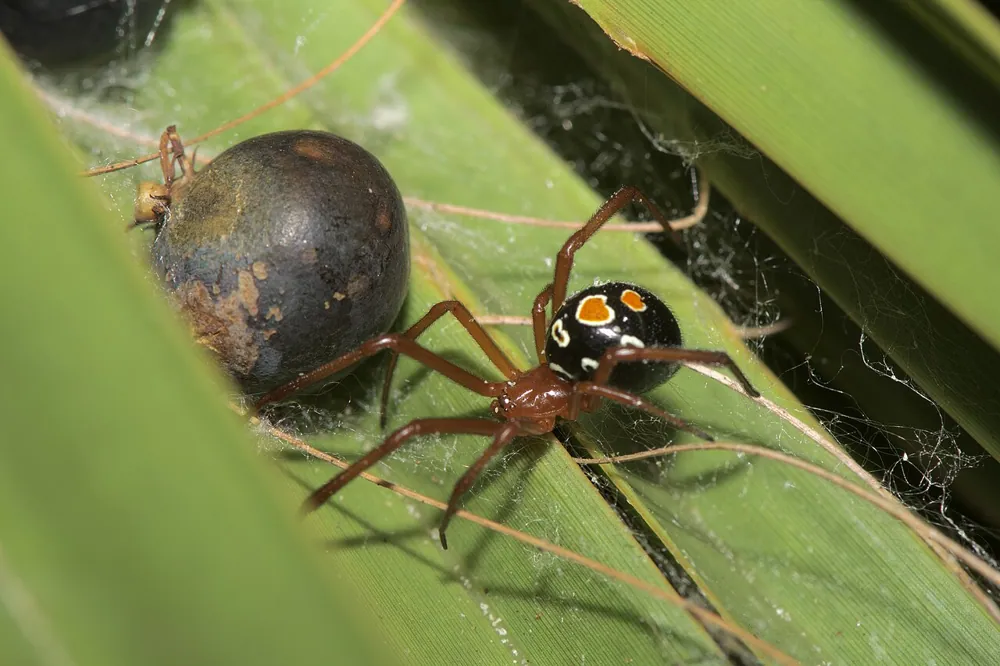
ÌbùjẹThe red widow is a venomous spider that lives only in Florida, in the dry, sandy scrub where sand pine trees grow. It is a close relative of the black widow, but it rarely comes into contact with people, so it is not often met. Its bright red colours make it easy to recognise.1
 Bí o ṣe lè dá a mọ̀
- The cephalothorax (the front part of the body) is red-orange.1
- The abdomen is black, with yellow rings outlining rows of red spots.1
- The legs are vermilion red.1
- The underside does not have the familiar hourglass marking. It usually has one or two small red marks instead.1
- Females are almost double the size of males.1
A sábà máa ń ṣì í mọ̀ sí: It is closely related to the black widow (Latrodectus mactans). The two can be told apart by features of the male and female genitalia, which are examined under magnification. The red widow's male embolus has one fewer loop, and the female's connecting ducts to the spermatheca also have one fewer loop.1
Agbára oró
Oró ń jáde láti inú eyín oró tàbí eyín rẹ̀ nígbà tí ó bá bùjẹ.
Kí ni oró rẹ̀ máa ń ṣe?
The red widow is venomous like other members of the genus Latrodectus. In a documented bite, the main effect was a mildly painful throbbing sensation that lasted several hours. The median lethal dose (LD50) of its venom in mice is 2.20 mg/kg, and each spider contains about 0.157 mg of venom.1
Báwo ló ṣe léwu tó fún ènìyàn?
Ewu fún ènìyàn: Ó ń dunniÓ lè dunni gan-an, ṣùgbọ́n kì í fẹ́rẹ̀ẹ́ le rárá.No bites from this spider are recorded in the medical literature. It seldom comes into contact with humans, unlike the black and brown widows, which live close to people. One documented bite caused a mildly painful throbbing that lasted several hours.1
 Bí ó bá bùjẹ
- Fọ ibi ìbùjẹ náà kí o sì fi àpò yìnyín lé e fún ìrora. Wá ìrànlọ́wọ́ ìṣègùn bí ìrora bá le, tí ó ń tàn kálẹ̀, tàbí tí ara ẹni náà kò bá yá.
Máa kọ́kọ́ pe nọ́ńbà pàjáwìrì rẹ nígbà gbogbo (112, 000, 911). Èyí jẹ́ ìtọ́sọ́nà ìtọ́jú àkọ́kọ́ gbogbogbò, kì í ṣe ìmọ̀ràn ìṣègùn. Ìpìlẹ̀ ìtọ́jú àkọ́kọ́
 Wà láìléwu
- Má ṣe fọwọ́ kan, mú tàbí yọ ẹranko igbó lẹ́nu láéláé, kódà bí ó bá kéré, kódà bí ó bá dà bí ẹni pé ó ń sùn tàbí ó ti kú.
- Fún un ní àyè. Bí o bá pàdé ọ̀kan, farabalẹ̀, sẹ́yìn díẹ̀díẹ̀ kí o sì jẹ́ kí ó máa bá ọ̀nà rẹ̀ lọ.
- Bí ọ̀kan bá bù ọ́ jẹ: farabalẹ̀, má ṣe mira, pe nọ́ńbà pàjáwìrì rẹ (112, 000, 911) tàbí lọ sí ilé ìwòsàn kíákíá. Rántí bí ó ṣe rí, fọ́tò máa ń ṣèrànwọ́.
Kò wá ọ kiri láti ṣe ọ́ léṣe. Ó ń lo oró rẹ̀ láti mú oúnjẹ tàbí láti dáàbò bo ara rẹ̀, ó sì fẹ́ràn láti farapamọ́ jù. Sí i nípa wíwà láìléwu
Báwo ló ṣe tóbi tó?
Báwo ló ṣe gùn tó?
 ó gùn tó pínì ìwé (paper clip)
Báwo ni Red widow ṣe tóbi tó tí a bá fi wé ÌWỌ?
Ìṣirò nìkan nínú bráwúsà rẹ. A kò fi ohunkóhun pamọ́, a kò sì fi ránṣẹ́ sí ibikíbi.
Báwo ló ṣe yára tó?


Òtítọ́
A bite was filmed and documented in 2023 by biologist Spencer Hoffman, one of the few recorded bites from this species.1
Females are almost double the size of males.1
Its predators are thought to include sphecid wasps and the Florida scrub jay.1
It lives in sand-pine scrub, a habitat found only in Florida and coastal Alabama.1
Olùfọ́ àròsọ
Àròsọ: All widow spiders have the hourglass marking on the underside.
Òtítọ́: The red widow does not have the familiar hourglass marking. It usually has one or two small red marks instead.1
Ibi tí àwọn òtítọ́ ti wá
- Latrodectus bishopi (Wikipedia (CC BY-SA 4.0))
- Latrodectus bishopi (iNaturalist): orúkọ àti ìpínsísọ̀rí.
- Venom Wiki: ìpele ewu, ìtóbi déédé àti àfojúbù ìyára jẹ́ tiwa. Wo bí a ṣe ń ṣírò wọn: Bí a ṣe ń díwọ̀n ewu.
Gbogbo òtítọ́ ojú-ìwé yìí ní nọ́ńbà tó tọ́ka sí orísun rẹ̀. Bí a bá ṣe àṣìṣe, má bínú, olólùfẹ́ ẹranko ni wá, kì í ṣe ìwé ìròyìn sáyẹ́ǹsì. Sọ fún wa ní [email protected] a ó sì tún un ṣe.
 Ebi ń pa àkekèé! Iṣẹ́ akanṣe ẹnì kan ṣoṣo ni Venom Wiki: ọ̀fẹ́ ni, kò sí ìpolówó, kò sì sí olùtọpinpin. Ẹ̀bùn kékeré ń ràn án lọ́wọ́ láti wà lórí íńtánẹ́ẹ̀tì.Bọ́ àkekèé
 Brown recluse
 Southern black widow
 Northern black widow
 Western black widow
 Bold jumping spider
 Golden silk orb-weaver
 Terciopelo
 Eastern coral snake
 Eastern diamondback rattlesnake
 Eyelash viper
 Timber rattlesnake
 Western diamondback rattlesnake