
 Áfíríkà
 Éṣíà
Éṣíà Yúróòpù
 Gúúsù Amẹ́ríkà
 Ọsirélíà àti Òṣéáníà
 Antáktíkà
 Òkun Pàsífíìkì
 Òkun Àtìláńtíìkì
 Òkun Íńdíà
 Òkun Áktíkì
 Òkun Mẹditaréníà
 Òkun Pupa
 Òkun Káríbíànù
 Òkun Coral
 Òkun Gúúsù Ṣáínà
 Òkun Fílípínì
 Òkun Andaman
 Òkun Àríwá
 Òkun Tímọ̀ àti Òkun Àráfúrà
 Ìyawọlẹ̀ Òkun Bẹ̀ngál
 Ìyawọlẹ̀ Òkun Kalifọ́níà
Texas coral snake
 Ìbùjẹ
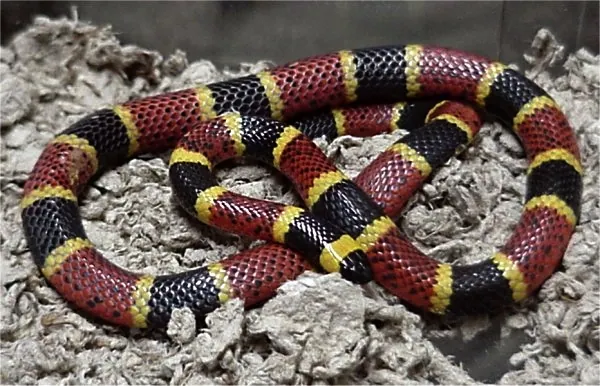
ÌbùjẹThe Texas coral snake is a venomous snake with bright black, yellow and red rings. It lives in the southern and southwestern United States and in parts of northeastern and central Mexico. Its bite can cause paralysis, so it is important to recognise it and keep well away.1



 Bí o ṣe lè dá a mọ̀
- Black, yellow and red rings, with the rings running onto the belly.1
- Smooth scales, a rounded head and round pupils.1
- Somewhat larger and stouter than the eastern coral snake.1
- Males are typically smaller than females.1
- Shy and secretive, and mostly active at night.1
A sábà máa ń ṣì í mọ̀ sí: Nonvenomous snakes copy the coral snake's colours as a form of Batesian mimicry. In the United States, the venomous coral snakes can be told apart by red rings touching yellow rings. The common rhyme "red and yellow, kill a fellow" is not always accurate because colours vary, and relying on it is dangerous.1
Agbára oró
Oró ń jáde láti inú eyín oró tàbí eyín rẹ̀ nígbà tí ó bá bùjẹ.
Kí ni oró rẹ̀ máa ń ṣe?
The snake has a pair of fixed, grooved fangs at the front of the upper jaw, and venom is injected through them. Its venom contains a neurotoxin, which attacks the nerves, and a myotoxin, which damages muscle. Bite victims may experience paralysis or myolysis (muscle breakdown), which can be potentially lethal.1
Báwo ló ṣe léwu tó fún ènìyàn?
Ewu fún ènìyàn: Ó le gan-anÌbùjẹ nílò dókítà. Ikú kò wọ́pọ̀ rárá.Before antivenom was available, the fatality rate of coral snake bites was estimated at 10%. Deaths were mainly caused by breathing or heart failure from paralysis. A single bite can deliver 10–12 mg of dry venom, about twice the lethal dose for an adult human of 5–7 mg. Many bites deliver no venom at all, known as dry bites.1
 Ìròyìn ayọ̀: àwọn dókítà ní oògùn (antivenom) tàbí ìtọ́jú fún èyí.1
Kí ni ó máa ń ṣe nígbà tí ẹ̀rù bá bà á?
When grabbed suddenly, or sometimes just when touched, it may thrash about, swing around and bite.1
 Bí ó bá bùjẹ
- Remove any jewellery from a bitten limb, in case of severe swelling. Wrap the bite area moderately tightly in a wide cloth, and move the bitten limb as little as possible. Take the bite victim to the nearest hospital as soon as possible for advanced treatment, such as antivenom.1
- Jẹ́ kí ẹni náà wà láìmira kí ó sì farabalẹ̀, kí ẹ sì lọ sí ilé ìwòsàn kíákíá, kódà bí ìbùjẹ náà bá dà bí kékeré: àmì àìsàn lè bẹ̀rẹ̀ ní wákàtí púpọ̀ lẹ́yìn náà.
Máa kọ́kọ́ pe nọ́ńbà pàjáwìrì rẹ nígbà gbogbo (112, 000, 911). Èyí jẹ́ ìtọ́sọ́nà ìtọ́jú àkọ́kọ́ gbogbogbò, kì í ṣe ìmọ̀ràn ìṣègùn. Ìpìlẹ̀ ìtọ́jú àkọ́kọ́
 Wà láìléwu
- Má ṣe fọwọ́ kan, mú tàbí yọ ẹranko igbó lẹ́nu láéláé, kódà bí ó bá kéré, kódà bí ó bá dà bí ẹni pé ó ń sùn tàbí ó ti kú.
- Fún un ní àyè. Bí o bá pàdé ọ̀kan, farabalẹ̀, sẹ́yìn díẹ̀díẹ̀ kí o sì jẹ́ kí ó máa bá ọ̀nà rẹ̀ lọ.
- Bí ọ̀kan bá bù ọ́ jẹ: farabalẹ̀, má ṣe mira, pe nọ́ńbà pàjáwìrì rẹ (112, 000, 911) tàbí lọ sí ilé ìwòsàn kíákíá. Rántí bí ó ṣe rí, fọ́tò máa ń ṣèrànwọ́.
Kò wá ọ kiri láti ṣe ọ́ léṣe. Ó ń lo oró rẹ̀ láti mú oúnjẹ tàbí láti dáàbò bo ara rẹ̀, ó sì fẹ́ràn láti farapamọ́ jù. Sí i nípa wíwà láìléwu
Báwo ló ṣe tóbi tó?
Báwo ló ṣe gùn tó?
 ó gùn tó ológbò ilé 2.5 láti imú dé ìrù
 ó gùn tó ọ̀gẹ̀dẹ̀ 7 tí a tò tẹ̀léra
 lè sáré mítà 100 ní ìṣẹ́jú-àáyá 73 (ènìyàn tó yára jùlọ nílò 9.6)
Báwo ni Texas coral snake ṣe tóbi tó tí a bá fi wé ÌWỌ?
Ìṣirò nìkan nínú bráwúsà rẹ. A kò fi ohunkóhun pamọ́, a kò sì fi ránṣẹ́ sí ibikíbi.
Báwo ló ṣe yára tó?


Òtítọ́
A single bite can deliver about twice the lethal dose for an adult human, yet many bites inject no venom at all.1
The Texas coral snake eats other snakes, including venomous ones, and will even eat its own kind.1
Colour variants exist in the wild, including albino, anerythristic, pastel and completely black (melanistic) snakes.1
Olùfọ́ àròsọ
Àròsọ: "Red and yellow, kill a fellow. Red on black, friend of Jack" is a reliable way to tell a coral snake from a harmless look-alike.
Òtítọ́: The rhyme is not always accurate because colour patterns vary, and relying on it is dangerous to both people and snakes.1
Ibi tí àwọn òtítọ́ ti wá
- Texas coral snake (Wikipedia (CC BY-SA 4.0))
- Micrurus tener (iNaturalist): orúkọ àti ìpínsísọ̀rí.
- Venom Wiki: ìpele ewu, ìtóbi déédé àti àfojúbù ìyára jẹ́ tiwa. Wo bí a ṣe ń ṣírò wọn: Bí a ṣe ń díwọ̀n ewu.
Gbogbo òtítọ́ ojú-ìwé yìí ní nọ́ńbà tó tọ́ka sí orísun rẹ̀. Bí a bá ṣe àṣìṣe, má bínú, olólùfẹ́ ẹranko ni wá, kì í ṣe ìwé ìròyìn sáyẹ́ǹsì. Sọ fún wa ní [email protected] a ó sì tún un ṣe.
 Ebi ń pa àkekèé! Iṣẹ́ akanṣe ẹnì kan ṣoṣo ni Venom Wiki: ọ̀fẹ́ ni, kò sí ìpolówó, kò sì sí olùtọpinpin. Ẹ̀bùn kékeré ń ràn án lọ́wọ́ láti wà lórí íńtánẹ́ẹ̀tì.Bọ́ àkekèé
 Eastern coral snake
 Central American coral snake
 Sonoran coral snake
 Allen's coral snake
 Brown's coral snake
 Dumeril's coral snake
 Terciopelo
 Eastern diamondback rattlesnake
 Eyelash viper
 Timber rattlesnake
 Western diamondback rattlesnake
 Arizona bark scorpion