
 I-Afrika
 I-Asia
 I-Yurophu
 INingizimu Melika
 I-Australia ne-Oceania
 I-Antarctica
 ULwandlekazi iPacific
 ULwandlekazi i-Atlantic
 ULwandlekazi i-India
 ULwandlekazi i-Arctic
 Ulwandle iMediterranean
 Ulwandle Olubomvu
 Ulwandle iCaribbean
 Ulwandle iCoral
 Ulwandle lwaseNingizimu China
 Ulwandle lwasePhilippines
 Ulwandle i-Andaman
 Ulwandle i-North Sea
 Ulwandle lwaseTimor ne-Arafura
 Ichweba laseBengal
 Ichweba laseCalifornia
Asian common toad
 Ushevu esikhumbeni sasoSidla: InyamaSinoshevu, asinabo ubuthi bokuluma noma bokuhlaba
The Asian common toad is a large toad found across much of South and Southeast Asia. It grows to about 20 cm long and is often seen at night under street lamps. It matters because it has spread to places where it does not belong, and experts worry it could harm local wildlife.1

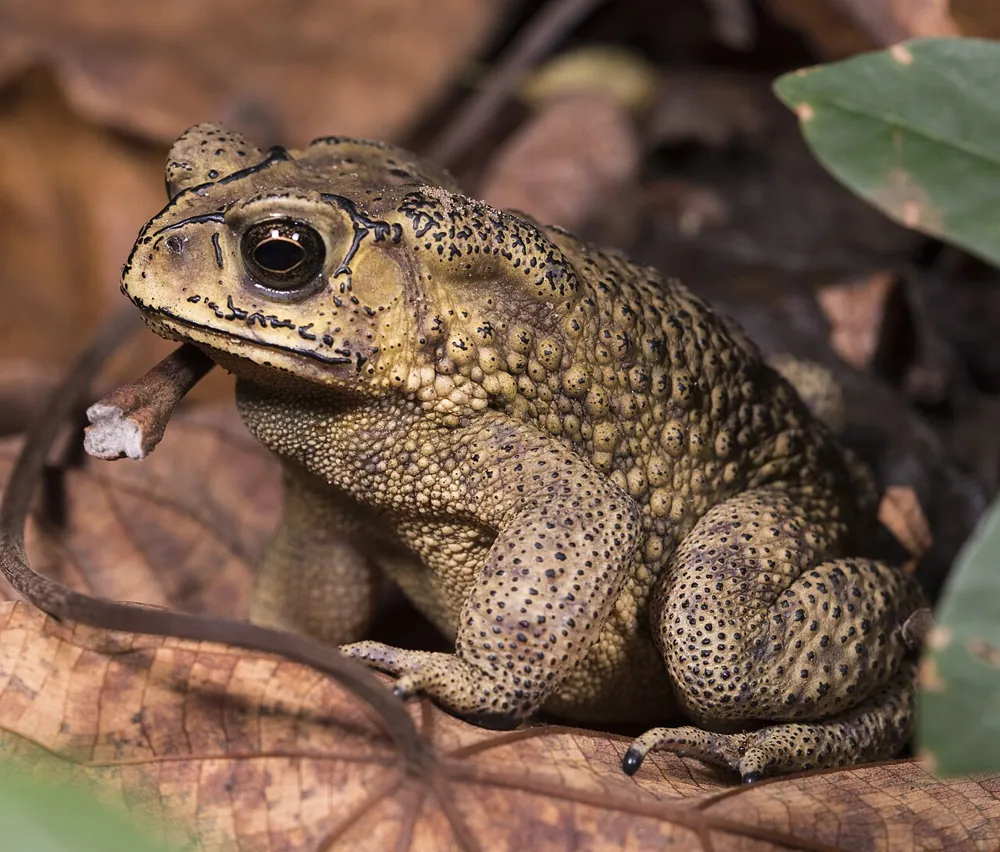
 Indlela yokusibona
- Grows to about 20 cm long1
- Back is yellowish or brownish, with black spines and ridges1
- Large, kidney-shaped or elongated parotoid glands behind the eyes, which are prominent1
- Ear drum (tympanum) is very distinct, at least two-thirds the width of the eye1
- Short, blunt snout and several bony ridges on top of the head1
Amandla oshevu
Isikhumba saso sinoshevu. Kuyingozi ukusithinta, ukusikhotha noma ukusidla.
Ushevu waso wenzani?
Its parotoid glands secrete milky white bufotoxin, a toxin, from its back. It uses this to deter predators. The toxin would beyond reasonable doubt severely affect native predators such as snakes, goannas and quolls.1
Siyingozi kangakanani ebantwini?
Ingozi ebantwini: Kubi kakhuluUma umuntu esithinta noma esidla, yana kudokotela. Ukufa kuyivelakancane kakhulu.Senzani uma sesabile?
Its glands in the back release toxin to deter predators.1
 Uma umuntu esithintile noma esidlile
- Uma umuntu esithintile: geza izandla kahle futhi ungathinti amehlo noma umlomo. Uma ingane noma isilwane sasekhaya sisikhothile noma sisidlile: shayela isikhungo soshevu noma inombolo yezimo eziphuthumayo.
Njalo shayela kuqala inombolo yezimo eziphuthumayo (112, 000, 911). Lokhu kuyiseluleko sosizo lokuqala esijwayelekile, akusona iseluleko sezokwelapha. Izisekelo zosizo lokuqala
 Hlala uphephile
- Ungalokothi uthinte, ubambe noma ugcone isilwane sasendle, ngisho noma sincane, futhi ngisho noma sibukeka silele noma sifile.
- Sinike isikhala. Uma uhlangana naso, hlala uzolile, uhlehle kancane bese usiyeka sihambe ngendlela yaso.
- Uma usithintile noma usidlile: ungahlikihli amehlo noma umlomo wakho, geza izandla zakho futhi uthole usizo lwezokwelapha.
Asikuzingeli wena. Ushevu waso ukhona nje ukuze kungabikho okusidlayo. Okwengeziwe mayelana nokuhlala uphephile
Sikhulu kangakanani?
Side kangakanani?
 side njengezitini zamathoyizi ezingu-6 ezilandelanayo
 singahamba amamitha ali-100 ngemizuzwana engu-180 (umuntu oshesha kunabo bonke udinga engu-9,6)
Asian common toad mkhulu kangakanani uma uqhathanisa NAWE?
Yizibalo nje kusiphequluli sakho. Akukho okulondolozwayo noma okuthunyelwa ndawo.
Sishesha kangakanani?


Amaqiniso
It has been described as one of Australia's '10 most unwanted' species, and as potentially more damaging than the cane toad.1
Madagascar's native predators lack resistance to its toxins, which could affect local wildlife there.1
Tadpoles have been shown to be able to recognise their kin.1
Tadpoles grown in sibling groups metamorphosed faster than those kept in mixed groups.1
Okongoti bobuthi
- Igama lesayensi
- Duttaphrynus melanostictus
- Iqembu
- Amaxoxo anoshevu, amaxoxo e-toad nama-newt
- Umndeni
- Bufonidae2
- Ukuhleleka
- Anura
- Amazwekazi
- I-Asia
- Izinsana
- Breeds during the monsoon. Tadpoles are black, and young toads may be seen in large numbers after monsoon rains finish.1
- Ingozi ebantwini
- 3 / 5: Kubi kakhulu3
Lapho amaqiniso evela khona
- Duttaphrynus melanostictus (Wikipedia (CC BY-SA 4.0))
- Duttaphrynus melanostictus (iNaturalist): amagama nokuhlelwa ngezigaba.
- Venom Wiki: izinga lengozi, usayizi ojwayelekile nesiqagela sejubane kungokwethu. Bona ukuthi sikubala kanjani: Indlela esilinganisa ngayo ingozi.
Iqiniso ngalinye kuleli khasi linenombolo ekhomba umthombo walo. Uma senze iphutha, uxolo, singabathandi bezilwane, hhayi iphephabhuku lesayensi. Sitshele ku-[email protected] futhi sizolilungisa.
 Ufezela ulambile! I-Venom Wiki iwumsebenzi womuntu oyedwa: imahhala, ayinazo izikhangiso noma izilandeli. Isipho esincane sisiza ukuyigcina ku-inthanethi.Phakela ufezela
Okunye okuvela eqenjini elifanayo: Amaxoxo anoshevu, amaxoxo e-toad nama-newt
 Japanese fire-bellied newtAmaxoxo anoshevu, amaxoxo e-toad nama-newtKudinga udokotelaUngathinti
 Common toadAmaxoxo anoshevu, amaxoxo e-toad nama-newtKubuhlungu njeUngathinti
 Oriental fire-bellied toadAmaxoxo anoshevu, amaxoxo e-toad nama-newtAkunangozi
 Asiatic toadAmaxoxo anoshevu, amaxoxo e-toad nama-newtKubuhlungu njeUngathinti
 Emperor newtAmaxoxo anoshevu, amaxoxo e-toad nama-newtKubuhlungu njeUngathinti
 Himalayan newtAmaxoxo anoshevu, amaxoxo e-toad nama-newtKubuhlungu njeUngathinti
 Deathstalker
 Indian cobra
 Indian saw-scaled viper
 King cobra
 Ibululu
 Inhlangwane kaRussell
.jpg)