
 I-Afrika
 I-Asia
 I-Yurophu
 INingizimu Melika
 I-Australia ne-Oceania
 I-Antarctica
 ULwandlekazi iPacific
 ULwandlekazi i-Atlantic
 ULwandlekazi i-India
 ULwandlekazi i-Arctic
 Ulwandle iMediterranean
 Ulwandle Olubomvu
 Ulwandle iCaribbean
 Ulwandle iCoral
 Ulwandle lwaseNingizimu China
 Ulwandle lwasePhilippines
 Ulwandle i-Andaman
 Ulwandle i-North Sea
 Ulwandle lwaseTimor ne-Arafura
 Ichweba laseBengal
 Ichweba laseCalifornia
Blue-bellied black snake
 Ukuluma
The blue-bellied black snake is a venomous snake from eastern Australia. It is shy and usually moves away from people, but its venom is strong, so it is important to know what it looks like. Bites are rare.1



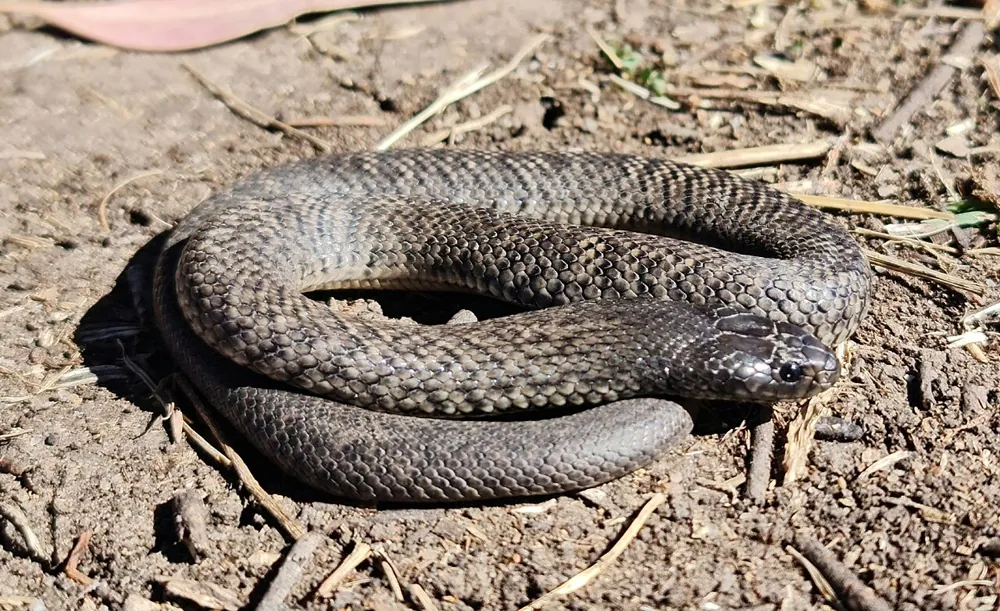
 Indlela yokusibona
- Its upper body is dark blue or black.1
- Its underside is dark grey to black.1
- Some individuals are cream or pale grey with black-edged scales, which gives them a spotted look.1
- Its head is uniformly dark in all individuals.1
- Adults can reach about 1.2 m on average, and some reach 1.5 m.1
Ivamise ukudidaniswa ne: The red-bellied black snake is a similar species, and its bite symptoms are similar to those of the blue-bellied black snake.1
Amandla obuthi
Ubuthi buphuma ngamazinyo aso obuthi noma ngamazinyo uma siluma.
Ubuthi baso benzani?
Its venom is neurotoxic, which means it attacks the nerves, so it can cause severe pain, nausea, vomiting, diarrhoea and excessive sweating (diaphoresis). The lymph glands near the bite can also swell (regional lymphadenopathy).1
Siyingozi kangakanani ebantwini?
Ingozi ebantwini: Kuyingozi kakhuluSingabulala umuntu ongatholi kwelashwa.Bites are infrequent. The venom is strong, so any bite is serious.1
 Izindaba ezinhle: odokotela banomuthi (i-antivenom) noma indlela yokwelapha lokhu.1
Senzani uma sesabile?
It hisses loudly and flattens its forebody into a low S-shape to warn threats away. It bites only when provoked, for example when stepped on or prodded, and it hangs on to its victim if it bites.1
 Uma siluma
- If bitten, tiger snake antivenom is the preferred treatment.1
- Ukubopha ngokucindezela nokuvimba ukunyakaza (pressure immobilisation): bopha ibhandeshi elinwebekayo eliqinile phezu kwenxeba bese ukhuphuka nesitho sonke, usiqinise nge-splint, futhi ugcine umuntu engashukumi nhlobo kuze kufike usizo.
- Ungaligezi inxeba lokulunywa: izibhedlela zingahlola ubuthi obusele esikhumbeni ukuze zikhethe i-antivenom efanele.
Njalo shayela kuqala inombolo yezimo eziphuthumayo (112, 000, 911). Lokhu kuyiseluleko sosizo lokuqala esijwayelekile, akusona iseluleko sezokwelapha. Izisekelo zosizo lokuqala
 Hlala uphephile
- Ungalokothi uthinte, ubambe noma ugcone isilwane sasendle, ngisho noma sincane, futhi ngisho noma sibukeka silele noma sifile.
- Sinike isikhala. Uma uhlangana naso, hlala uzolile, uhlehle kancane bese usiyeka sihambe ngendlela yaso.
- Uma sikuluma: hlala uzolile, ungashukumi, shayela inombolo yezimo eziphuthumayo (112, 000, 911) noma uye esibhedlela ngokushesha. Khumbula ukuthi besibukeka kanjani, isithombe siyasiza.
Asikuzingeli wena. Sisebenzisa ubuthi baso ukuze sibambe ukudla noma ukuzivikela, futhi singancamela ukucasha. Okwengeziwe mayelana nokuhlala uphephile
Sikhulu kangakanani?
Side kangakanani?
 side njengamakati asekhaya angu-3 kusuka ekhaleni kuya emsileni
 side njengobhanana abangu-8 abalandelanayo
 singahamba amamitha ali-100 ngemizuzwana engu-48 (umuntu oshesha kunabo bonke udinga engu-9,6)
Blue-bellied black snake mkhulu kangakanani uma uqhathanisa NAWE?
Yizibalo nje kusiphequluli sakho. Akukho okulondolozwayo noma okuthunyelwa ndawo.
Sishesha kangakanani?


Amaqiniso
Its venom is the second most toxic of all the Australian black snakes.1
It is naturally very shy and will usually try to escape rather than confront people.1
Some individuals have a spotted pattern, which is why it is also called the spotted black snake.1
Like most snakes, it lays eggs, with a clutch of 7–12 in the breeding season.1
Lapho amaqiniso evela khona
- Blue-bellied black snake (Wikipedia (CC BY-SA 4.0))
- Pseudechis guttatus (iNaturalist): amagama nokuhlelwa ngezigaba.
- Venom Wiki: izinga lengozi, usayizi ojwayelekile nesiqagela sejubane kungokwethu. Bona ukuthi sikubala kanjani: Indlela esilinganisa ngayo ingozi.
Iqiniso ngalinye kuleli khasi linenombolo ekhomba umthombo walo. Uma senze iphutha, uxolo, singabathandi bezilwane, hhayi iphephabhuku lesayensi. Sitshele ku-[email protected] futhi sizolilungisa.
 Ufezela ulambile! I-Venom Wiki iwumsebenzi womuntu oyedwa: imahhala, ayinazo izikhangiso noma izilandeli. Isipho esincane sisiza ukuyigcina ku-inthanethi.Phakela ufezela
Okunye okuvela eqenjini elifanayo: Izinyoka zase-Australia
 Coastal taipan
 Common death adder
 Eastern brown snake
 Inland taipan
 Inyoka yehlosi
 Collett's snake
.jpg)
Futhi ihlala: I-Australia ne-Oceania
 Sydney funnel-web spiderAma-tarantula nama-funnel-webKuyabulala
 Redback spiderIzicabucabuKudinga udokotela
 Brown tree snakeIzinyoka ezinamazinyo obuthi ngemuvaKubuhlungu nje
 Hooded pitohuiEzinye izilwane ezinoshevuKubuhlungu njeUngathinti
 PlatypusIzilwane ezincelisayo ezinobuthiKubuhlungu nje
 Northern tree-dwelling funnel-web spiderAma-tarantula nama-funnel-webKuyabulala