
 I-Afrika
 I-Asia
 I-Yurophu
 INingizimu Melika
 I-Australia ne-Oceania
 I-Antarctica
 ULwandlekazi iPacific
 ULwandlekazi i-Atlantic
 ULwandlekazi i-India
 ULwandlekazi i-Arctic
 Ulwandle iMediterranean
 Ulwandle Olubomvu
 Ulwandle iCaribbean
 Ulwandle iCoral
 Ulwandle lwaseNingizimu China
 Ulwandle lwasePhilippines
 Ulwandle i-Andaman
 Ulwandle i-North Sea
 Ulwandle lwaseTimor ne-Arafura
 Ichweba laseBengal
 Ichweba laseCalifornia
Cobalt blue tarantula
 Ukuluma
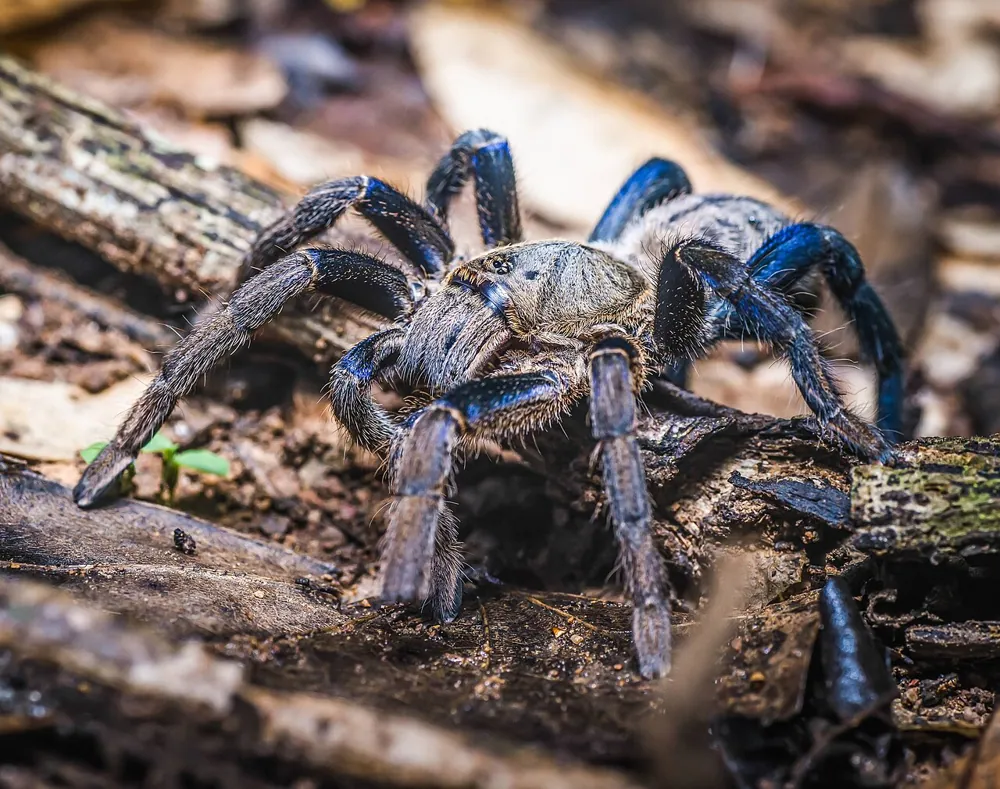
The cobalt blue tarantula is a medium-sized spider with bright blue legs. It lives in tropical rainforests in Myanmar and Thailand, mostly underground. It is popular in the pet trade, so people sometimes meet it in homes.1
 Indlela yokusibona
- Medium-sized, with a leg span of around 13 cm.1
- Iridescent blue legs.1
- Light grey body, which may have darker grey chevron markings on the abdomen.1
- Adult males turn light tan or bronze and look longer-legged after their final moult. They also gain mating hooks and a palpal bulb on the pedipalps.1
- Females look the same as males until the males' final moult, and they grow larger than males.1
Amandla obuthi
Ubuthi buphuma ngamazinyo aso obuthi noma ngamazinyo uma siluma.
Ubuthi baso benzani?
Its venom is not enough to kill a human, but bites can be extremely painful. In a 2001 case from Japan, two people bitten by a pet reported severe pain and inflammation, which faded after several hours. One person had stiffness for a few weeks. Bites can also cause severe muscle cramps.1
Siyingozi kangakanani ebantwini?
Ingozi ebantwini: KubuhlunguKungaba buhlungu ngempela, kodwa cishe akukaze kube kubi kakhulu.The venom is not enough to kill a person, but bites are very painful and can cause inflammation and severe muscle cramps. The species is described as having potent venom, so bites should still be taken seriously.1
Senzani uma sesabile?
It is described as a fast and defensive tarantula.1
 Uma siluma
- Geza inxeba lokulunywa bese ulipholisa. Thola usizo lwezokwelapha uma ubuhlungu bunamandla noma umuntu ezizwa engaphilile.
Njalo shayela kuqala inombolo yezimo eziphuthumayo (112, 000, 911). Lokhu kuyiseluleko sosizo lokuqala esijwayelekile, akusona iseluleko sezokwelapha. Izisekelo zosizo lokuqala
 Hlala uphephile
- Ungalokothi uthinte, ubambe noma ugcone isilwane sasendle, ngisho noma sincane, futhi ngisho noma sibukeka silele noma sifile.
- Sinike isikhala. Uma uhlangana naso, hlala uzolile, uhlehle kancane bese usiyeka sihambe ngendlela yaso.
- Uma sikuluma: hlala uzolile, ungashukumi, shayela inombolo yezimo eziphuthumayo (112, 000, 911) noma uye esibhedlela ngokushesha. Khumbula ukuthi besibukeka kanjani, isithombe siyasiza.
Asikuzingeli wena. Sisebenzisa ubuthi baso ukuze sibambe ukudla noma ukuzivikela, futhi singancamela ukucasha. Okwengeziwe mayelana nokuhlala uphephile
Sikhulu kangakanani?
Side kangakanani?
 side njengezitini zamathoyizi ezingu-4 ezilandelanayo
 singahamba amamitha ali-100 ngemizuzwana engu-220 (umuntu oshesha kunabo bonke udinga engu-9,6)
Cobalt blue tarantula mkhulu kangakanani uma uqhathanisa NAWE?
Yizibalo nje kusiphequluli sakho. Akukho okulondolozwayo noma okuthunyelwa ndawo.
Sishesha kangakanani?


Amaqiniso
Its blue colour comes from iridescent legs, which shimmer in light.1
Adult males change colour after their final moult, turning light tan or bronze.1
Despite its potent venom, it is a mainstay of the pet trade.1
It is a fossorial species, meaning it spends nearly all its time in deep burrows that it digs itself.1
Females grow larger than males and live for years longer.1
Umqothuli wezinganekwane
Inganekwane: Tarantula venom is deadly to people.
Iqiniso: The venom of this tarantula is not enough to kill a human, but its bites can be extremely painful.1
Lapho amaqiniso evela khona
- Cobalt blue tarantula (Wikipedia (CC BY-SA 4.0))
- Cyriopagopus lividus (iNaturalist): amagama nokuhlelwa ngezigaba.
- Venom Wiki: izinga lengozi, usayizi ojwayelekile nesiqagela sejubane kungokwethu. Bona ukuthi sikubala kanjani: Indlela esilinganisa ngayo ingozi.
Iqiniso ngalinye kuleli khasi linenombolo ekhomba umthombo walo. Uma senze iphutha, uxolo, singabathandi bezilwane, hhayi iphephabhuku lesayensi. Sitshele ku-[email protected] futhi sizolilungisa.
 Ufezela ulambile! I-Venom Wiki iwumsebenzi womuntu oyedwa: imahhala, ayinazo izikhangiso noma izilandeli. Isipho esincane sisiza ukuyigcina ku-inthanethi.Phakela ufezela
Okunye okuvela eqenjini elifanayo: Ama-tarantula nama-funnel-web
 Gooty sapphire tarantulaAma-tarantula nama-funnel-webKudinga udokotela
 Indian ornamental tarantulaAma-tarantula nama-funnel-webKudinga udokotela
 Chinese bird spiderAma-tarantula nama-funnel-webKudinga udokotela
 Chinese black earth tiger tarantulaAma-tarantula nama-funnel-webKudinga udokotela
 Fringed ornamental tarantulaAma-tarantula nama-funnel-webKudinga udokotela
 Japanese funnel-web spiderAma-tarantula nama-funnel-webKudinga udokotela
 Deathstalker
 Indian cobra
 Indian saw-scaled viper
 King cobra
 Ibululu
 Inhlangwane kaRussell