
 I-Afrika
 I-Asia
 I-Yurophu
 INingizimu Melika
 I-Australia ne-Oceania
 I-Antarctica
 ULwandlekazi iPacific
 ULwandlekazi i-Atlantic
 ULwandlekazi i-India
 ULwandlekazi i-Arctic
 Ulwandle iMediterranean
 Ulwandle Olubomvu
 Ulwandle iCaribbean
 Ulwandle iCoral
 Ulwandle lwaseNingizimu China
 Ulwandle lwasePhilippines
 Ulwandle i-Andaman
 Ulwandle i-North Sea
 Ulwandle lwaseTimor ne-Arafura
 Ichweba laseBengal
 Ichweba laseCalifornia
Common desert centipede
 Ukuluma
The common desert centipede is a large centipede that lives in the deserts and dry grasslands of western North America. It is known for its striped body and for its venom, which scientists are studying for possible medical uses.1
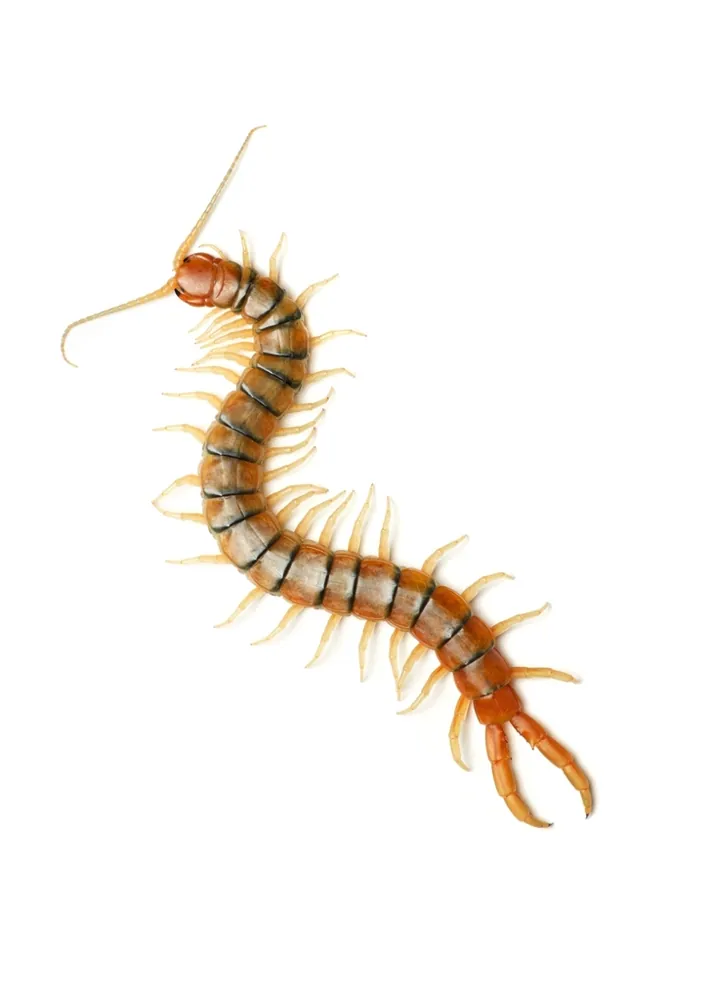
 Indlela yokusibona
- Adults usually measure 10 to 18 cm long.1
- Each body segment has one dark stripe along its side, which gives it the name tiger centipede.1
- Most have a darker brown, red or orange head, lighter brown, tan or orange body segments and yellow legs.1
- Some populations, such as those in Southern California, are entirely light blue with indigo stripes and turquoise legs.1
- Its antennae have seven or more smooth segments.1
Amandla obuthi
Ubuthi buphuma ngamazinyo aso obuthi noma ngamazinyo uma siluma.
Ubuthi baso benzani?
Its venom contains a peptide called SPC13 that kills or slows some bacteria, including Staphylococcus aureus and Pseudomonas aeruginosa. In studies on mice, the venom damaged muscle, causing tissue death and abnormal mitochondria (the parts of cells that make energy). It may also affect the respiratory complexes, the chemical systems cells use to make energy, of the animals it hunts.1
Siyingozi kangakanani ebantwini?
Ingozi ebantwini: KubuhlunguKungaba buhlungu ngempela, kodwa cishe akukaze kube kubi kakhulu.Senzani uma sesabile?
Its venom is used to defend itself, but it cannot fully rebuild its venom within 48 hours, which limits how well it can defend itself.1
 Uma siluma
- Geza inxeba lokulunywa, lipholise noma ulicwilise emanzini afudumele ngenxa yobuhlungu, bese uthola usizo lwezokwelapha uma kuba kubi kakhulu.
Njalo shayela kuqala inombolo yezimo eziphuthumayo (112, 000, 911). Lokhu kuyiseluleko sosizo lokuqala esijwayelekile, akusona iseluleko sezokwelapha. Izisekelo zosizo lokuqala
 Hlala uphephile
- Ungalokothi uthinte, ubambe noma ugcone isilwane sasendle, ngisho noma sincane, futhi ngisho noma sibukeka silele noma sifile.
- Sinike isikhala. Uma uhlangana naso, hlala uzolile, uhlehle kancane bese usiyeka sihambe ngendlela yaso.
- Uma sikuluma: hlala uzolile, ungashukumi, shayela inombolo yezimo eziphuthumayo (112, 000, 911) noma uye esibhedlela ngokushesha. Khumbula ukuthi besibukeka kanjani, isithombe siyasiza.
Asikuzingeli wena. Sisebenzisa ubuthi baso ukuze sibambe ukudla noma ukuzivikela, futhi singancamela ukucasha. Okwengeziwe mayelana nokuhlala uphephile
Sikhulu kangakanani?
Side kangakanani?
 side njengezitini zamathoyizi ezingu-6 ezilandelanayo
 singahamba amamitha ali-100 ngemizuzwana engu-220 (umuntu oshesha kunabo bonke udinga engu-9,6)
Common desert centipede mkhulu kangakanani uma uqhathanisa NAWE?
Yizibalo nje kusiphequluli sakho. Akukho okulondolozwayo noma okuthunyelwa ndawo.
Sishesha kangakanani?


Amaqiniso
Its venom contains a peptide that has shown antimicrobial activity against bacteria that cause hospital infections.1
Within two days it regenerates 65 to 86% of its venom volume, but its venom levels do not return to their original amounts even after 7 months.1
The bigger the centipede, the slower its venom regenerates, so body size limits how quickly it can recover its venom.1
Its colours are so varied that its species name, polymorpha, means "many forms".1
It is most active at night during the cool winter months, or during the summer New Mexico Monsoon, when it is cooler and wetter.1
Lapho amaqiniso evela khona
- Scolopendra polymorpha (Wikipedia (CC BY-SA 4.0))
- Scolopendra polymorpha (iNaturalist): amagama nokuhlelwa ngezigaba.
- Venom Wiki: izinga lengozi, usayizi ojwayelekile nesiqagela sejubane kungokwethu. Bona ukuthi sikubala kanjani: Indlela esilinganisa ngayo ingozi.
Iqiniso ngalinye kuleli khasi linenombolo ekhomba umthombo walo. Uma senze iphutha, uxolo, singabathandi bezilwane, hhayi iphephabhuku lesayensi. Sitshele ku-[email protected] futhi sizolilungisa.
 Ufezela ulambile! I-Venom Wiki iwumsebenzi womuntu oyedwa: imahhala, ayinazo izikhangiso noma izilandeli. Isipho esincane sisiza ukuyigcina ku-inthanethi.Phakela ufezela
 Giant desert centipede
 Green centipede
 Haitian giant centipede
 Eastern red centipede
 Florida blue centipede
 Peruvian giant centipede
 Terciopelo
 Eastern coral snake
 Eastern diamondback rattlesnake
 Eyelash viper
 Timber rattlesnake
 Western diamondback rattlesnake