
 I-Afrika
 I-Asia
 I-Yurophu
 INingizimu Melika
 I-Australia ne-Oceania
 I-Antarctica
 ULwandlekazi iPacific
 ULwandlekazi i-Atlantic
 ULwandlekazi i-India
 ULwandlekazi i-Arctic
 Ulwandle iMediterranean
 Ulwandle Olubomvu
 Ulwandle iCaribbean
 Ulwandle iCoral
 Ulwandle lwaseNingizimu China
 Ulwandle lwasePhilippines
 Ulwandle i-Andaman
 Ulwandle i-North Sea
 Ulwandle lwaseTimor ne-Arafura
 Ichweba laseBengal
 Ichweba laseCalifornia
European paper wasp
 Ukuhlaba
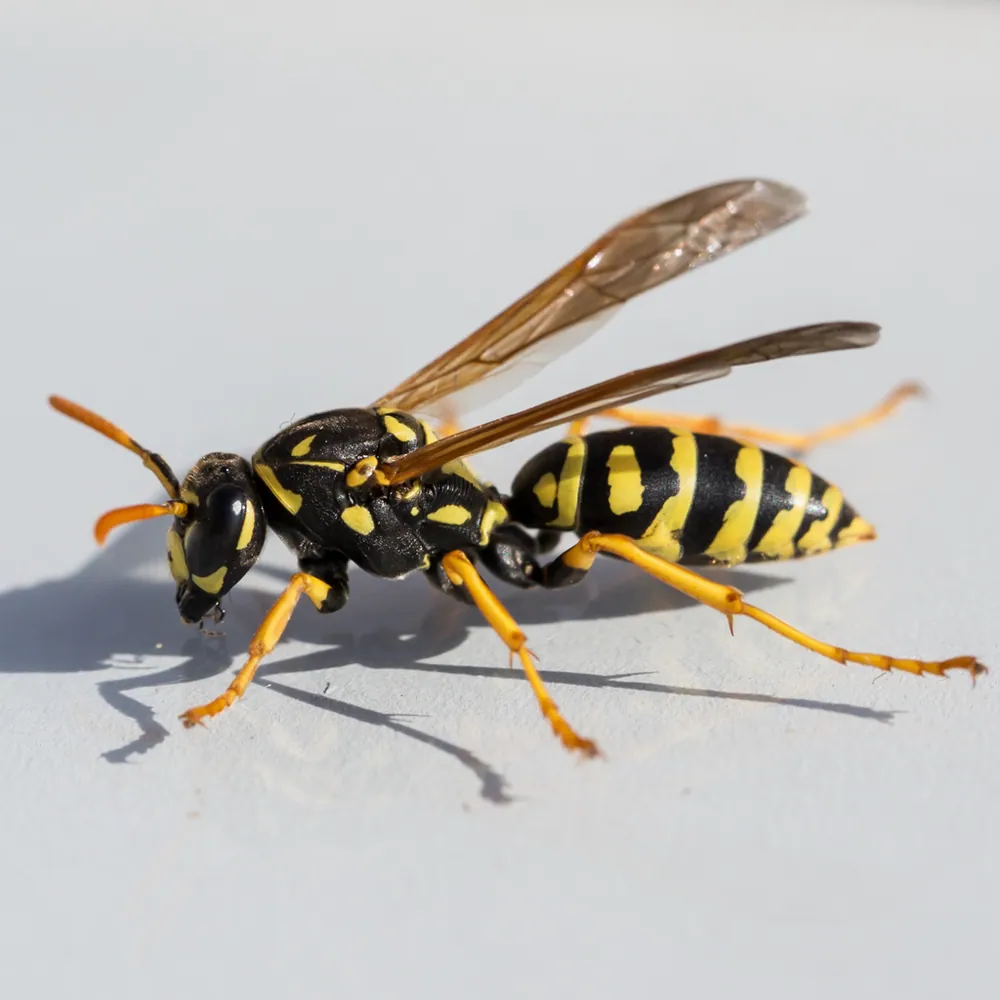
The European paper wasp is a yellow and black social wasp that builds nests from chewed plant fibre mixed with saliva, which looks like grey paper. It lives in warm, temperate parts of Europe, North Africa and Asia, and it has spread to many other continents. It matters because it has become a common invasive species in North America.1

 Indlela yokusibona
- Its body is coloured entirely yellow and black.1
- The female's mandible (jaw) is black and sometimes has a yellow spot.1
- The outer half of the antennae (feelers) is orange-yellow.1
- Wings are about 8.5 to 13 mm long, with little variation between individuals.1
- Males have curled antennae and no stinger.1
Ivamise ukudidaniswa ne: Its yellow and black body is similar to that of Vespula germanica, one of the most common and defensive wasps in its native range. In older literature it was often confused with Polistes gallicus, which is now recognised as a separate species.1
Amandla obuthi
Ubuthi buphuma ngodosi.
Siyingozi kangakanani ebantwini?
Ingozi ebantwini: KubuhlunguKungaba buhlungu ngempela, kodwa cishe akukaze kube kubi kakhulu.Senzani uma sesabile?
Its bright yellow and black colouring is a warning colour, and its nests are built in well-protected places to help it avoid predators.1
 Uma sihlaba
- Khipha udosi lwenyosi ngokulukhuhla bese upholisa indawo.
- Uma umuntu ephefumula kanzima, ebuso noma emphinjeni kuvuvukala, noma ezizwa ezoquleka, lesi yisimo esiphuthumayo se-allergy: shayela inombolo yezimo eziphuthumayo futhi usebenzise ipeni lakhe le-adrenaline uma enalo.
Njalo shayela kuqala inombolo yezimo eziphuthumayo (112, 000, 911). Lokhu kuyiseluleko sosizo lokuqala esijwayelekile, akusona iseluleko sezokwelapha. Izisekelo zosizo lokuqala
 Hlala uphephile
- Ungalokothi uthinte, ubambe noma ugcone isilwane sasendle, ngisho noma sincane, futhi ngisho noma sibukeka silele noma sifile.
- Sinike isikhala. Uma uhlangana naso, hlala uzolile, uhlehle kancane bese usiyeka sihambe ngendlela yaso.
- Uma sikuhlaba: hlala uzolile, ungashukumi, shayela inombolo yezimo eziphuthumayo (112, 000, 911) noma uye esibhedlela ngokushesha. Khumbula ukuthi besibukeka kanjani, isithombe siyasiza.
Asikuzingeli wena. Sisebenzisa ubuthi baso ukuze sibambe ukudla noma ukuzivikela, futhi singancamela ukucasha. Okwengeziwe mayelana nokuhlala uphephile
Sikhulu kangakanani?
Side kangakanani?
 sincane kangangokuthi singahlala ezinzipheni zakho
 singandiza siwele inkundla yebhola yonke ngemizuzwana engu-15
European paper wasp mkhulu kangakanani uma uqhathanisa NAWE?
Yizibalo nje kusiphequluli sakho. Akukho okulondolozwayo noma okuthunyelwa ndawo.
Sishesha kangakanani?


Amaqiniso
Its colonies can include many unrelated wasps: about 35% of the wasps in a colony are unrelated, which is unusual for social insects.1
Males' abdominal spots vary in size, location and pattern, and they signal social rank within the colony.1
If the queen is removed from a nest, the second most dominant female takes over her role.1
In spring, some North American colonies have been seen with more than 80 wasps joining to reuse and expand an old nest.1
The first North American record was in Massachusetts in the late 1970s, and it had spread across the northeastern USA by 1995.1
Umqothuli wezinganekwane
Inganekwane: The species name is sometimes spelled "dominulus", as authors wrongly assumed the name was an adjective.
Iqiniso: Dominula is a noun meaning "little mistress", so under the International Code of Zoological Nomenclature it does not change when the species moves genus.1
Lapho amaqiniso evela khona
- European paper wasp (Wikipedia (CC BY-SA 4.0))
- Polistes dominula (iNaturalist): amagama nokuhlelwa ngezigaba.
- Venom Wiki: izinga lengozi, usayizi ojwayelekile nesiqagela sejubane kungokwethu. Bona ukuthi sikubala kanjani: Indlela esilinganisa ngayo ingozi.
Iqiniso ngalinye kuleli khasi linenombolo ekhomba umthombo walo. Uma senze iphutha, uxolo, singabathandi bezilwane, hhayi iphephabhuku lesayensi. Sitshele ku-[email protected] futhi sizolilungisa.
 Ufezela ulambile! I-Venom Wiki iwumsebenzi womuntu oyedwa: imahhala, ayinazo izikhangiso noma izilandeli. Isipho esincane sisiza ukuyigcina ku-inthanethi.Phakela ufezela
Okunye okuvela eqenjini elifanayo: Izinyosi, imivi nama-hornet
 Asian giant hornetIzinyosi, imivi nama-hornetKungabulala
 Common waspIzinyosi, imivi nama-hornetKubuhlungu nje
 European hornetIzinyosi, imivi nama-hornetKubuhlungu nje
 Western honey beeIzinyosi, imivi nama-hornetKubuhlungu nje
 Giant honey beeIzinyosi, imivi nama-hornetKudinga udokotela
 Asian hornetIzinyosi, imivi nama-hornetKubuhlungu nje
Futhi ihlala: I-Yurophu
 Common European adderAma-viper namabululuKudinga udokotela
 Spanish flyEzinye izilwane ezinoshevuKudinga udokotelaUngathinti
 Fire salamanderAmaxoxo anoshevu, amaxoxo e-toad nama-newtKubuhlungu njeUngathinti
 Blunt-nosed viperAma-viper namabululuKungabulala
 Nose-horned viperAma-viper namabululuKungabulala
 Ottoman viperAma-viper namabululuKungabulala