
 I-Afrika
 I-Asia
 I-Yurophu
 INingizimu Melika
 I-Australia ne-Oceania
 I-Antarctica
 ULwandlekazi iPacific
 ULwandlekazi i-Atlantic
 ULwandlekazi i-India
 ULwandlekazi i-Arctic
 Ulwandle iMediterranean
 Ulwandle Olubomvu
 Ulwandle iCaribbean
 Ulwandle iCoral
 Ulwandle lwaseNingizimu China
 Ulwandle lwasePhilippines
 Ulwandle i-Andaman
 Ulwandle i-North Sea
 Ulwandle lwaseTimor ne-Arafura
 Ichweba laseBengal
 Ichweba laseCalifornia
Giant green anemone
 Ama-tentacle ahlabayo
The giant green anemone is a sea animal that looks like a flower but is a relative of jellyfish. It lives on rocky and sandy shores along the Pacific coast of North America, where it is covered by water for most of the day. Its bright green colour comes partly from tiny algae that live inside its body and make food for it.1



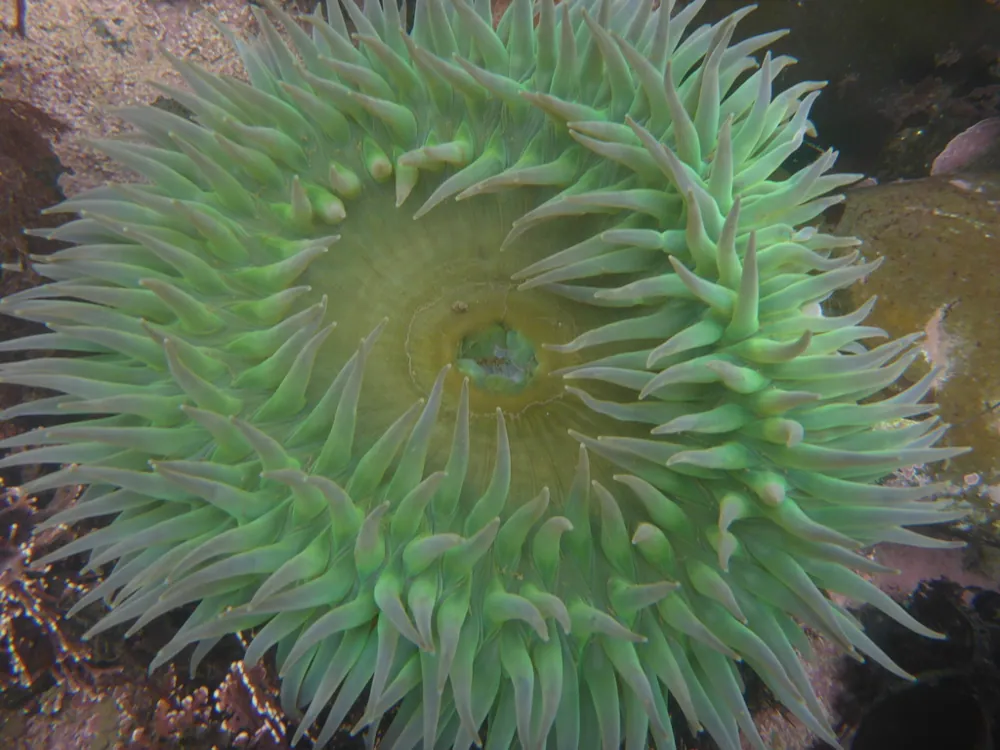
 Indlela yokusibona
- Bright green when underwater in good sunlight.1
- Dark green or brown when out of the water, because it closes up and droops, showing its darker outer body.1
- Broad, flat top surface (oral disk) with no stripes, bands or other markings.1
- Short, cone-shaped tentacles arranged in six or more rows around the mouth, with pointed or blunt tips.1
Ivamise ukudidaniswa ne: Large giant green anemones can be confused with A. elegantissima or A. sola. Those two usually have pink-tipped tentacles and a striped oral disk, which the giant green anemone does not have.1
Amandla obuthi
Izinkulungwane zamaseli amancane ahlabayo ziyadubula uma kukhona okuzithintayo.
Ubuthi baso benzani?
Stinging cells called nematocysts in the tentacles release a paralysing venom that helps the anemone catch prey.1
Siyingozi kangakanani ebantwini?
Ingozi ebantwini: KuncaneNjengokuhlatshwa yinyosi noma ngaphansi. Cishe akunangozi ebantwini.Senzani uma sesabile?
It uses its stinging cells in the tentacles to defend itself against predators.1
 Uma sihlaba
- Phuma emanzini bese ukhipha noma yimiphi imicu ehlabayo (ama-tentacle) (ngamagilavu noma ngendwangu).
- Kuma-box jellyfish asezindaweni ezishisayo: thela uviniga ezindaweni ezihlatshiwe okungenani imizuzwana engama-30, biza usizo futhi ulungele ukwenza i-CPR. Kuma-bluebottle nakwamanye amaningi: hlanza ngamanzi olwandle, bese usebenzisa amanzi ashisayo ngenxa yobuhlungu.
Njalo shayela kuqala inombolo yezimo eziphuthumayo (112, 000, 911). Lokhu kuyiseluleko sosizo lokuqala esijwayelekile, akusona iseluleko sezokwelapha. Izisekelo zosizo lokuqala
 Hlala uphephile
- Ungalokothi uthinte, ubambe noma ugcone isilwane sasendle, ngisho noma sincane, futhi ngisho noma sibukeka silele noma sifile.
- Sinike isikhala. Uma uhlangana naso, hlala uzolile, uhlehle kancane bese usiyeka sihambe ngendlela yaso.
- Uma sikuhlaba: hlala uzolile, ungashukumi, shayela inombolo yezimo eziphuthumayo (112, 000, 911) noma uye esibhedlela ngokushesha. Khumbula ukuthi besibukeka kanjani, isithombe siyasiza.
Asikuzingeli wena. Sisebenzisa ubuthi baso ukuze sibambe ukudla noma ukuzivikela, futhi singancamela ukucasha. Okwengeziwe mayelana nokuhlala uphephile
Kuphi emhlabeni?
Sikhulu kangakanani?
Side kangakanani?
 side njengezitini zamathoyizi ezingu-9 ezilandelanayo
 sihamba kancane kunomnenke wasengadini
Giant green anemone mkhulu kangakanani uma uqhathanisa NAWE?
Yizibalo nje kusiphequluli sakho. Akukho okulondolozwayo noma okuthunyelwa ndawo.
Sishesha kangakanani?

Amaqiniso
Tiny algae living inside its body help feed it through photosynthesis and add to its bright green colour.1
It can have a crown of tentacles up to 25 cm across.1
Anemones in caves and shady places have few or no algae and are usually less colourful.1
Its main predators include a leather seastar, two nudibranchs and several snails and sea spiders.1
Okongoti bobuthi
- Igama lesayensi
- Anthopleura xanthogrammica
- Iqembu
- Ama-jellyfish nezinye izilwane zasolwandle ezihlabayo
- Umndeni
- Actiniidae2
- Ukuhleleka
- Actiniaria
- Amazwekazi
- ULwandlekazi iPacific, Izilwandlekazi
- Izinsana
- Sperm and eggs are released into the water in late autumn and join outside the body. The young larvae float in the water until they settle in mussel beds.1
- Ingozi ebantwini
- 1 / 5: Kuncane3
Lapho amaqiniso evela khona
- Anthopleura xanthogrammica (Wikipedia (CC BY-SA 4.0))
- Anthopleura xanthogrammica (iNaturalist): amagama nokuhlelwa ngezigaba.
- Venom Wiki: izinga lengozi, usayizi ojwayelekile nesiqagela sejubane kungokwethu. Bona ukuthi sikubala kanjani: Indlela esilinganisa ngayo ingozi.
Iqiniso ngalinye kuleli khasi linenombolo ekhomba umthombo walo. Uma senze iphutha, uxolo, singabathandi bezilwane, hhayi iphephabhuku lesayensi. Sitshele ku-[email protected] futhi sizolilungisa.
 Ufezela ulambile! I-Venom Wiki iwumsebenzi womuntu oyedwa: imahhala, ayinazo izikhangiso noma izilandeli. Isipho esincane sisiza ukuyigcina ku-inthanethi.Phakela ufezela
Okunye okuvela eqenjini elifanayo: Ama-jellyfish nezinye izilwane zasolwandle ezihlabayo
 Australian box jellyfishAma-jellyfish nezinye izilwane zasolwandle ezihlabayoKuyabulalaUngathinti
 Irukandji jellyfishAma-jellyfish nezinye izilwane zasolwandle ezihlabayoKungabulalaUngathinti
 Portuguese man o' warAma-jellyfish nezinye izilwane zasolwandle ezihlabayoKudinga udokotelaUngathinti
 Lion's mane jellyfishAma-jellyfish nezinye izilwane zasolwandle ezihlabayoKubuhlungu njeUngathinti
 Moon jellyfishAma-jellyfish nezinye izilwane zasolwandle ezihlabayoAkunangozi
 Common kingslayerAma-jellyfish nezinye izilwane zasolwandle ezihlabayoKungabulalaUngathinti
Futhi ihlala: ULwandlekazi iPacific
 Geography coneIminenke ye-cone nezingwaneKuyabulala
 Greater blue-ringed octopusIminenke ye-cone nezingwaneKuyabulala
 Japanese pufferfishEzinye izilwane ezinoshevuKuyabulala
 Southern blue-ringed octopusIminenke ye-cone nezingwaneKuyabulala
 Hawksbill sea turtleEzinye izilwane ezinoshevuKungabulala
 Reef stonefishIzinhlanzi ezinobuthiKungabulalaUngathinti