
 I-Afrika
 I-Asia
 I-Yurophu
 INingizimu Melika
 I-Australia ne-Oceania
 I-Antarctica
 ULwandlekazi iPacific
 ULwandlekazi i-Atlantic
 ULwandlekazi i-India
 ULwandlekazi i-Arctic
 Ulwandle iMediterranean
 Ulwandle Olubomvu
 Ulwandle iCaribbean
 Ulwandle iCoral
 Ulwandle lwaseNingizimu China
 Ulwandle lwasePhilippines
 Ulwandle i-Andaman
 Ulwandle i-North Sea
 Ulwandle lwaseTimor ne-Arafura
 Ichweba laseBengal
 Ichweba laseCalifornia
Greek meadow viper
 Ukuluma
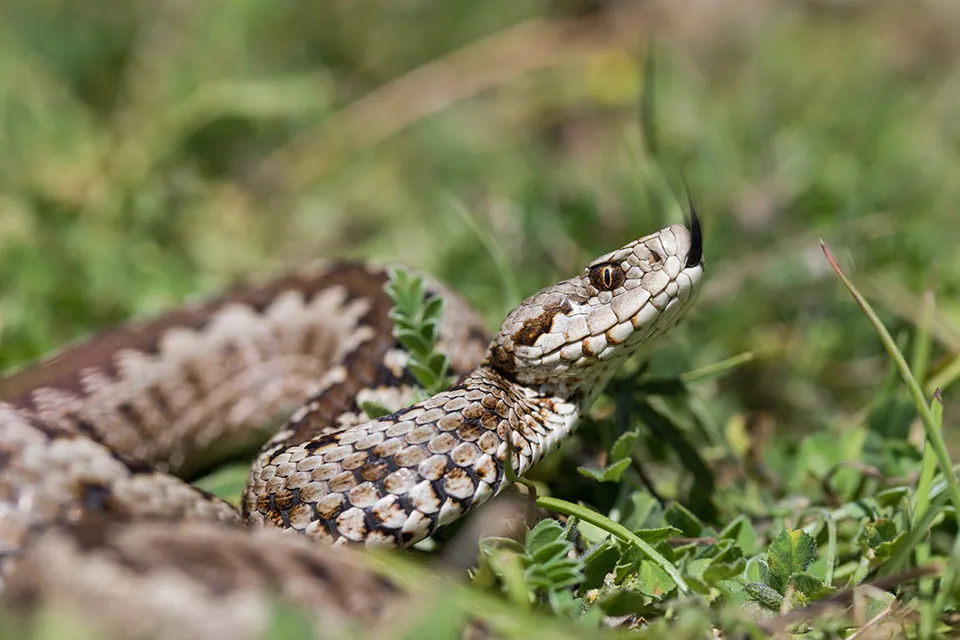
The Greek meadow viper is a small venomous snake that lives in mountain meadows in Albania and Greece. It was once thought to be a type of meadow viper, but scientists now see it as its own species. Its bite is venomous, so it is important to know what it looks like.1

 Indlela yokusibona
- Small body, with a maximum snout-vent length of about 40 to 44 cm, depending on sex. Females are larger.1
- Maximum tail length of about 4 to 5 cm. Males have longer tails.1
- Dark spots are absent from the sides and top of the head, except for stripes behind the eyes and at the back of the head.1
- White or brownish-grey underside.1
- A sharp zigzag pattern along the back. Some males and young show a faint similarity to the meadow viper.1
Ivamise ukudidaniswa ne: It is often compared with the meadow viper (Vipera ursinii), which it closely resembles. The Greek viper has no dark spots on the head sides or top, apart from the head stripes, and it has different scale counts. Some males and juveniles show faint pattern similarities.1
Amandla obuthi
Ubuthi buphuma ngamazinyo aso obuthi noma ngamazinyo uma siluma.
Siyingozi kangakanani ebantwini?
Ingozi ebantwini: KubuhlunguKungaba buhlungu ngempela, kodwa cishe akukaze kube kubi kakhulu. Uma siluma
- Gcina umuntu engashukumi futhi ezolile, gcina isitho esilunyiwe sisezingeni lenhliziyo, khipha izindandatho nezinto eziqinile, bese umusa esibhedlela ngokushesha.
Njalo shayela kuqala inombolo yezimo eziphuthumayo (112, 000, 911). Lokhu kuyiseluleko sosizo lokuqala esijwayelekile, akusona iseluleko sezokwelapha. Izisekelo zosizo lokuqala
 Hlala uphephile
- Ungalokothi uthinte, ubambe noma ugcone isilwane sasendle, ngisho noma sincane, futhi ngisho noma sibukeka silele noma sifile.
- Sinike isikhala. Uma uhlangana naso, hlala uzolile, uhlehle kancane bese usiyeka sihambe ngendlela yaso.
- Uma sikuluma: hlala uzolile, ungashukumi, shayela inombolo yezimo eziphuthumayo (112, 000, 911) noma uye esibhedlela ngokushesha. Khumbula ukuthi besibukeka kanjani, isithombe siyasiza.
Asikuzingeli wena. Sisebenzisa ubuthi baso ukuze sibambe ukudla noma ukuzivikela, futhi singancamela ukucasha. Okwengeziwe mayelana nokuhlala uphephile
Sikhulu kangakanani?
Side kangakanani?
 side njengobhanana abangu-2.5 abalandelanayo
 side njengezitini zamathoyizi ezingu-14 ezilandelanayo
 singahamba amamitha ali-100 ngemizuzwana engu-110 (umuntu oshesha kunabo bonke udinga engu-9,6)
Greek meadow viper mkhulu kangakanani uma uqhathanisa NAWE?
Yizibalo nje kusiphequluli sakho. Akukho okulondolozwayo noma okuthunyelwa ndawo.
Sishesha kangakanani?


Amaqiniso
The red fox, common kestrel and short-toed snake eagle are the only known predators of this viper.1
It is most common at high elevations, where annual temperatures average about 6 °C and snow lies until summer.1
Scientists were not sure it was a separate species until 2012, when DNA analysis showed it was its own species.1
Lapho amaqiniso evela khona
- Vipera graeca (Wikipedia (CC BY-SA 4.0))
- Vipera graeca (iNaturalist): amagama nokuhlelwa ngezigaba.
- Venom Wiki: izinga lengozi, usayizi ojwayelekile nesiqagela sejubane kungokwethu. Bona ukuthi sikubala kanjani: Indlela esilinganisa ngayo ingozi.
Iqiniso ngalinye kuleli khasi linenombolo ekhomba umthombo walo. Uma senze iphutha, uxolo, singabathandi bezilwane, hhayi iphephabhuku lesayensi. Sitshele ku-[email protected] futhi sizolilungisa.
 Ufezela ulambile! I-Venom Wiki iwumsebenzi womuntu oyedwa: imahhala, ayinazo izikhangiso noma izilandeli. Isipho esincane sisiza ukuyigcina ku-inthanethi.Phakela ufezela
Okunye okuvela eqenjini elifanayo: Ama-viper namabululu
 Common European adder
 Blunt-nosed viper
 Nose-horned viper
 Ottoman viper
 Asp viper
 Lataste's viper
Futhi ihlala: I-Yurophu
 Spanish flyEzinye izilwane ezinoshevuKudinga udokotelaUngathinti
 Common waspIzinyosi, imivi nama-hornetKubuhlungu nje
 European hornetIzinyosi, imivi nama-hornetKubuhlungu nje
 Fire salamanderAmaxoxo anoshevu, amaxoxo e-toad nama-newtKubuhlungu njeUngathinti
 Western honey beeIzinyosi, imivi nama-hornetKubuhlungu nje
 Mediterranean black widowIzicabucabuKudinga udokotela