
 I-Afrika
 I-Asia
 I-Yurophu
 INingizimu Melika
 I-Australia ne-Oceania
 I-Antarctica
 ULwandlekazi iPacific
 ULwandlekazi i-Atlantic
 ULwandlekazi i-India
 ULwandlekazi i-Arctic
 Ulwandle iMediterranean
 Ulwandle Olubomvu
 Ulwandle iCaribbean
 Ulwandle iCoral
 Ulwandle lwaseNingizimu China
 Ulwandle lwasePhilippines
 Ulwandle i-Andaman
 Ulwandle i-North Sea
 Ulwandle lwaseTimor ne-Arafura
 Ichweba laseBengal
 Ichweba laseCalifornia
Lovely poison frog
 Ushevu esikhumbeni sasoSinoshevu, asinabo ubuthi bokuluma noma bokuhlaba
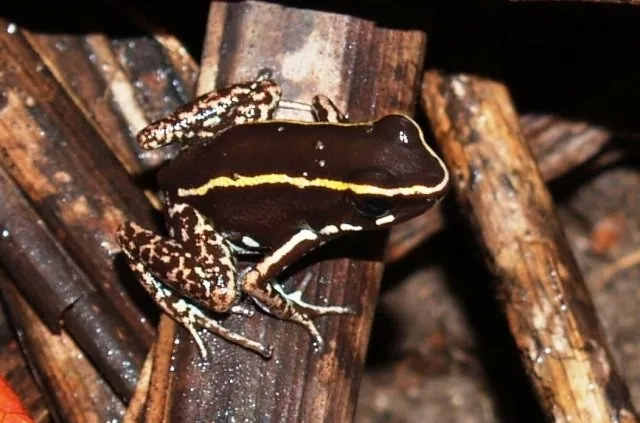
The lovely poison frog is a small, brightly striped frog that lives in the forests of Central America. Its skin is normally toxic, so it is a poisonous frog, and it is one of the species in the poison frog family Dendrobatidae.1
 Indlela yokusibona
- The back is black with a pair of stripes that are usually pale yellow, gold or orange. The stripes run along the sides from near the back legs to the snout.1
- The limbs are usually mottled yellow to greenish yellow.1
- The belly is mottled with a lot of black, often so much that it looks almost solid black.1
- Adult males measure 18.5 to 21 mm from snout to vent, and females 21 to 24 mm.1
- It is active during the day and lives on the ground.1
Ivamise ukudidaniswa ne: Populations on the Pacific side of Central America were once included in this species. They are now identified as Phyllobates vittatus, so the Pacific frogs are a different species.1
Amandla oshevu
Isikhumba saso sinoshevu. Kuyingozi ukusithinta, ukusikhotha noma ukusidla.
Ushevu waso wenzani?
This species is normally toxic, like other related poison frogs. Some populations in Central America are not known to be toxic.1
Siyingozi kangakanani ebantwini?
Ingozi ebantwini: KubuhlunguKungaba buhlungu ngempela, kodwa cishe akukaze kube kubi kakhulu. Uma umuntu esithintile noma esidlile
- Uma umuntu esithintile: geza izandla kahle futhi ungathinti amehlo noma umlomo. Uma ingane noma isilwane sasekhaya sisikhothile noma sisidlile: shayela isikhungo soshevu noma inombolo yezimo eziphuthumayo.
Njalo shayela kuqala inombolo yezimo eziphuthumayo (112, 000, 911). Lokhu kuyiseluleko sosizo lokuqala esijwayelekile, akusona iseluleko sezokwelapha. Izisekelo zosizo lokuqala
 Hlala uphephile
- Ungalokothi uthinte, ubambe noma ugcone isilwane sasendle, ngisho noma sincane, futhi ngisho noma sibukeka silele noma sifile.
- Sinike isikhala. Uma uhlangana naso, hlala uzolile, uhlehle kancane bese usiyeka sihambe ngendlela yaso.
- Uma usithintile noma usidlile: ungahlikihli amehlo noma umlomo wakho, geza izandla zakho futhi uthole usizo lwezokwelapha.
Asikuzingeli wena. Ushevu waso ukhona nje ukuze kungabikho okusidlayo. Okwengeziwe mayelana nokuhlala uphephile
Sikhulu kangakanani?
Side kangakanani?
 side cishe njengesibophi sephepha
 singahamba amamitha ali-100 ngemizuzwana engu-110 (umuntu oshesha kunabo bonke udinga engu-9,6)
Lovely poison frog mkhulu kangakanani uma uqhathanisa NAWE?
Yizibalo nje kusiphequluli sakho. Akukho okulondolozwayo noma okuthunyelwa ndawo.
Sishesha kangakanani?


Amaqiniso
Okongoti bobuthi
- Igama lesayensi
- Phyllobates lugubris
- Iqembu
- Amaxoxo anoshevu, amaxoxo e-toad nama-newt
- Umndeni
- Dendrobatidae2
- Ukuhleleka
- Anura
- Amazwekazi
- INyakatho Melika
- Izinsana
- The female lays eggs on dry leaf litter. The male guards the eggs and keeps them from drying out, then carries the tadpoles on his back to streams, where they finish developing.1
- Simo saso endle
- CITES Appendix II1
- Ingozi ebantwini
- 2 / 5: Kubuhlungu3
Lapho amaqiniso evela khona
- Lovely poison frog (Wikipedia (CC BY-SA 4.0))
- Phyllobates lugubris (iNaturalist): amagama nokuhlelwa ngezigaba.
- Venom Wiki: izinga lengozi, usayizi ojwayelekile nesiqagela sejubane kungokwethu. Bona ukuthi sikubala kanjani: Indlela esilinganisa ngayo ingozi.
Iqiniso ngalinye kuleli khasi linenombolo ekhomba umthombo walo. Uma senze iphutha, uxolo, singabathandi bezilwane, hhayi iphephabhuku lesayensi. Sitshele ku-[email protected] futhi sizolilungisa.
 Ufezela ulambile! I-Venom Wiki iwumsebenzi womuntu oyedwa: imahhala, ayinazo izikhangiso noma izilandeli. Isipho esincane sisiza ukuyigcina ku-inthanethi.Phakela ufezela
Okunye okuvela eqenjini elifanayo: Amaxoxo anoshevu, amaxoxo e-toad nama-newt
 Cane toadAmaxoxo anoshevu, amaxoxo e-toad nama-newtKudinga udokotelaUngathinti
 Strawberry poison-dart frogAmaxoxo anoshevu, amaxoxo e-toad nama-newtKubuhlungu njeUngathinti
 California newtAmaxoxo anoshevu, amaxoxo e-toad nama-newtKungabulalaUngathinti
 Rough-skinned newtAmaxoxo anoshevu, amaxoxo e-toad nama-newtKungabulalaUngathinti
 Colorado River toadAmaxoxo anoshevu, amaxoxo e-toad nama-newtKudinga udokotelaUngathinti
 Panamanian golden frogAmaxoxo anoshevu, amaxoxo e-toad nama-newtKudinga udokotelaUngathinti
 Terciopelo
 Eastern coral snake
 Eastern diamondback rattlesnake
 Eyelash viper
 Timber rattlesnake
 Western diamondback rattlesnake