
 I-Afrika
 I-Asia
 I-Yurophu
 INingizimu Melika
 I-Australia ne-Oceania
 I-Antarctica
 ULwandlekazi iPacific
 ULwandlekazi i-Atlantic
 ULwandlekazi i-India
 ULwandlekazi i-Arctic
 Ulwandle iMediterranean
 Ulwandle Olubomvu
 Ulwandle iCaribbean
 Ulwandle iCoral
 Ulwandle lwaseNingizimu China
 Ulwandle lwasePhilippines
 Ulwandle i-Andaman
 Ulwandle i-North Sea
 Ulwandle lwaseTimor ne-Arafura
 Ichweba laseBengal
 Ichweba laseCalifornia
Malayan pit viper
 Ukuluma
The Malayan pit viper is a venomous snake of Southeast Asia. It lives in forests, farmland and plantations, where it hunts rats and mice. Its bite causes severe pain and swelling, so it is an important snake to recognise.1

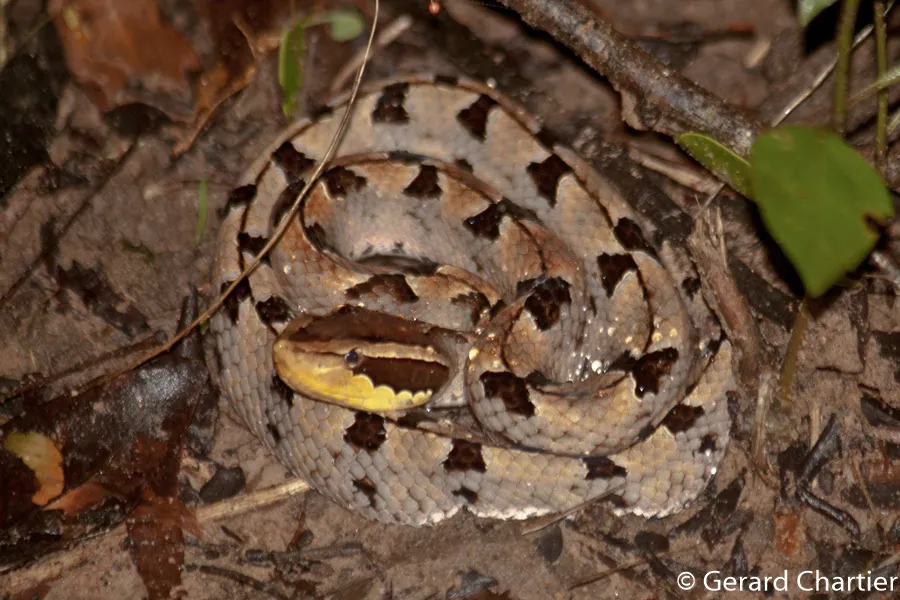
 Indlela yokusibona
- Reddish, grey or pale brown in colour on its back.1
- Two rows of large, dark brown triangular blotches with black edges run down the back.1
- A broad dark brown stripe runs from the eye to the corner of the mouth.1
- Smooth scales and a pointed, upturned snout.1
- Adults average about 76 cm long and can reach about 91 cm.1
Amandla obuthi
Ubuthi buphuma ngamazinyo aso obuthi noma ngamazinyo uma siluma.
Ubuthi baso benzani?
Its venom causes severe pain and swelling around the bite, and sometimes tissue damage (necrosis), where body tissue dies. The venom acts on platelets, the small cells that help blood clot, and can cause dangerous blood clots. Symptoms are described as developing over time after a bite.1
Siyingozi kangakanani ebantwini?
Ingozi ebantwini: Kuyingozi kakhuluSingabulala umuntu ongatholi kwelashwa.In northern Malaysia it is responsible for about 700 snakebite incidents a year, with a mortality rate of about 2 percent. In a 2005 study of 145 patients in Thailand, 18.6 percent were left with permanently swollen limbs, and two patients died from brain bleeding. Many victims lose limb use or have limbs amputated when there is no antivenom or early treatment.1
 Izindaba ezinhle: odokotela banomuthi (i-antivenom) noma indlela yokwelapha lokhu.1
Senzani uma sesabile?
It has a reputation for being bad-tempered and quick to strike when disturbed.1
 Uma siluma
- Get medical treatment as early as possible, as delays are linked to lasting limb damage. Antivenin is effective in reversing the blood clotting caused by the venom. Authors advise victims not to use traditional healers and to avoid overusing tourniquets.1
- Gcina umuntu engashukumi futhi ezolile, gcina isitho esilunyiwe sisezingeni lenhliziyo, khipha izindandatho nezinto eziqinile, bese umusa esibhedlela ngokushesha.
Njalo shayela kuqala inombolo yezimo eziphuthumayo (112, 000, 911). Lokhu kuyiseluleko sosizo lokuqala esijwayelekile, akusona iseluleko sezokwelapha. Izisekelo zosizo lokuqala
 Hlala uphephile
- Ungalokothi uthinte, ubambe noma ugcone isilwane sasendle, ngisho noma sincane, futhi ngisho noma sibukeka silele noma sifile.
- Sinike isikhala. Uma uhlangana naso, hlala uzolile, uhlehle kancane bese usiyeka sihambe ngendlela yaso.
- Uma sikuluma: hlala uzolile, ungashukumi, shayela inombolo yezimo eziphuthumayo (112, 000, 911) noma uye esibhedlela ngokushesha. Khumbula ukuthi besibukeka kanjani, isithombe siyasiza.
Asikuzingeli wena. Sisebenzisa ubuthi baso ukuze sibambe ukudla noma ukuzivikela, futhi singancamela ukucasha. Okwengeziwe mayelana nokuhlala uphephile
Sikhulu kangakanani?
Side kangakanani?
 side njengamakati asekhaya angu-2 kusuka ekhaleni kuya emsileni
 side njengobhanana abangu-5 abalandelanayo
 singahamba amamitha ali-100 ngemizuzwana engu-100 (umuntu oshesha kunabo bonke udinga engu-9,6)
Malayan pit viper mkhulu kangakanani uma uqhathanisa NAWE?
Yizibalo nje kusiphequluli sakho. Akukho okulondolozwayo noma okuthunyelwa ndawo.
Sishesha kangakanani?


Amaqiniso
The venom of this snake is used to isolate an enzyme called ancrod, which doctors use to break down blood clots in patients.1
It is very sedentary, and has often been found in the same spot several hours after a bite involving a person.1
Bites happen throughout the year but mostly early in the monsoon season, in May and June.1
It is the only Asian pit viper with large crown scales and smooth back scales.1
Lapho amaqiniso evela khona
- Calloselasma (Wikipedia (CC BY-SA 4.0))
- Calloselasma rhodostoma (iNaturalist): amagama nokuhlelwa ngezigaba.
- Venom Wiki: izinga lengozi, usayizi ojwayelekile nesiqagela sejubane kungokwethu. Bona ukuthi sikubala kanjani: Indlela esilinganisa ngayo ingozi.
Iqiniso ngalinye kuleli khasi linenombolo ekhomba umthombo walo. Uma senze iphutha, uxolo, singabathandi bezilwane, hhayi iphephabhuku lesayensi. Sitshele ku-[email protected] futhi sizolilungisa.
 Ufezela ulambile! I-Venom Wiki iwumsebenzi womuntu oyedwa: imahhala, ayinazo izikhangiso noma izilandeli. Isipho esincane sisiza ukuyigcina ku-inthanethi.Phakela ufezela
 Brown spotted pit viper
 Habu
Habu Hump-nosed viper
 Hundred-pace viper
 Mamushi
 Mangshan pit viper
 Deathstalker
 Indian cobra
 Indian saw-scaled viper
 King cobra
 Ibululu
 Inhlangwane kaRussell