
 I-Afrika
 I-Asia
 I-Yurophu
 INingizimu Melika
 I-Australia ne-Oceania
 I-Antarctica
 ULwandlekazi iPacific
 ULwandlekazi i-Atlantic
 ULwandlekazi i-India
 ULwandlekazi i-Arctic
 Ulwandle iMediterranean
 Ulwandle Olubomvu
 Ulwandle iCaribbean
 Ulwandle iCoral
 Ulwandle lwaseNingizimu China
 Ulwandle lwasePhilippines
 Ulwandle i-Andaman
 Ulwandle i-North Sea
 Ulwandle lwaseTimor ne-Arafura
 Ichweba laseBengal
 Ichweba laseCalifornia
Taylor's cantil
 Ukuluma
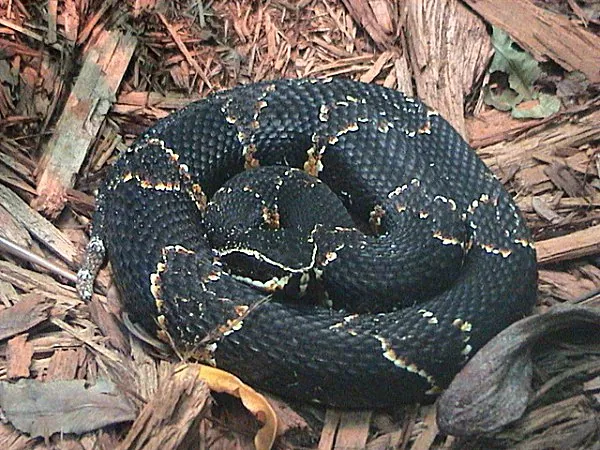
Taylor's cantil is a stout, venomous pitviper that lives only in northeastern Mexico. It is rare in the wild, and it is known to be very defensive when approached or restrained. Its name honours Edward Harrison Taylor, a herpetologist who studied the reptiles and amphibians of Mexico.1
 Indlela yokusibona
- Two bold white or yellowish stripes run along each side of the face.1
- The body has a pattern of black and grey-brown bands, accented with white, yellow and orange.1
- Males are noticeably darker than females, and some older males become nearly black.1
- The tail ends in a small, downturned, spine-like scale.1
- Adults are stout and medium-sized, usually 64 to 90 cm long.1
Ivamise ukudidaniswa ne: Other members of the genus Agkistrodon differ in several ways. The cottonmouth and Conant's cantil lack the loreal scale that Taylor's cantil has, and the copperhead and broad-banded cantil lack its face stripes. Taylor's cantil also has fewer subcaudal scales than the other cantils, 45 to 56 in males and 40 to 47 in females.1
Amandla obuthi
Ubuthi buphuma ngamazinyo aso obuthi noma ngamazinyo uma siluma.
Ubuthi baso benzani?
Its venom is believed to be similar to that of its close relative, the cantil Agkistrodon bilineatus. The venom is considered potentially fatal.1
Siyingozi kangakanani ebantwini?
Ingozi ebantwini: Kuyingozi kakhuluSingabulala umuntu ongatholi kwelashwa.No case reports of human envenomations have been published. Because the snake is rare and its venom is thought to be potentially fatal, it is treated with caution.1
Senzani uma sesabile?
It is not overtly aggressive, but it is very defensive, with a volatile temper, and may be quick to strike when approached, threatened or restrained.1
 Uma siluma
- Gcina umuntu engashukumi futhi ezolile, gcina isitho esilunyiwe sisezingeni lenhliziyo, khipha izindandatho nezinto eziqinile, bese umusa esibhedlela ngokushesha.
Njalo shayela kuqala inombolo yezimo eziphuthumayo (112, 000, 911). Lokhu kuyiseluleko sosizo lokuqala esijwayelekile, akusona iseluleko sezokwelapha. Izisekelo zosizo lokuqala
 Hlala uphephile
- Ungalokothi uthinte, ubambe noma ugcone isilwane sasendle, ngisho noma sincane, futhi ngisho noma sibukeka silele noma sifile.
- Sinike isikhala. Uma uhlangana naso, hlala uzolile, uhlehle kancane bese usiyeka sihambe ngendlela yaso.
- Uma sikuluma: hlala uzolile, ungashukumi, shayela inombolo yezimo eziphuthumayo (112, 000, 911) noma uye esibhedlela ngokushesha. Khumbula ukuthi besibukeka kanjani, isithombe siyasiza.
Asikuzingeli wena. Sisebenzisa ubuthi baso ukuze sibambe ukudla noma ukuzivikela, futhi singancamela ukucasha. Okwengeziwe mayelana nokuhlala uphephile
Sikhulu kangakanani?
Side kangakanani?
 side njengamakati asekhaya angu-2 kusuka ekhaleni kuya emsileni
 side njengobhanana abangu-5 abalandelanayo
 singahamba amamitha ali-100 ngemizuzwana engu-100 (umuntu oshesha kunabo bonke udinga engu-9,6)
Taylor's cantil mkhulu kangakanani uma uqhathanisa NAWE?
Yizibalo nje kusiphequluli sakho. Akukho okulondolozwayo noma okuthunyelwa ndawo.
Sishesha kangakanani?


Amaqiniso
Only a handful of specimens were known for decades. A 1948 to 1953 field study in Tamaulipas yielded just three specimens over 14 months of fieldwork.1
It is the only species in its genus with an obvious difference in colour between males and females.1
It was first collected in 1938 crawling on a highway, and it was not formally described as a subspecies until 1951.1
Its tail is proportionately shorter than in other cantils, making up 16 to 19% of total length in males and 13 to 18% in females.1
Okongoti bobuthi
Lapho amaqiniso evela khona
- Agkistrodon taylori (Wikipedia (CC BY-SA 4.0))
- Agkistrodon taylori (iNaturalist): amagama nokuhlelwa ngezigaba.
- Venom Wiki: izinga lengozi, usayizi ojwayelekile nesiqagela sejubane kungokwethu. Bona ukuthi sikubala kanjani: Indlela esilinganisa ngayo ingozi.
Iqiniso ngalinye kuleli khasi linenombolo ekhomba umthombo walo. Uma senze iphutha, uxolo, singabathandi bezilwane, hhayi iphephabhuku lesayensi. Sitshele ku-[email protected] futhi sizolilungisa.
 Ufezela ulambile! I-Venom Wiki iwumsebenzi womuntu oyedwa: imahhala, ayinazo izikhangiso noma izilandeli. Isipho esincane sisiza ukuyigcina ku-inthanethi.Phakela ufezela
 Terciopelo
 Eyelash viper
 Cottonmouth
 Eastern copperhead
 Cantil
 Central American bushmaster
 Eastern coral snake
 Eastern diamondback rattlesnake
 Timber rattlesnake
 Western diamondback rattlesnake
 Arizona bark scorpion
 Brown recluse