
 I-Afrika
 I-Asia
 I-Yurophu
 INingizimu Melika
 I-Australia ne-Oceania
 I-Antarctica
 ULwandlekazi iPacific
 ULwandlekazi i-Atlantic
 ULwandlekazi i-India
 ULwandlekazi i-Arctic
 Ulwandle iMediterranean
 Ulwandle Olubomvu
 Ulwandle iCaribbean
 Ulwandle iCoral
 Ulwandle lwaseNingizimu China
 Ulwandle lwasePhilippines
 Ulwandle i-Andaman
 Ulwandle i-North Sea
 Ulwandle lwaseTimor ne-Arafura
 Ichweba laseBengal
 Ichweba laseCalifornia
Warrior wasp
 Ukuhlaba
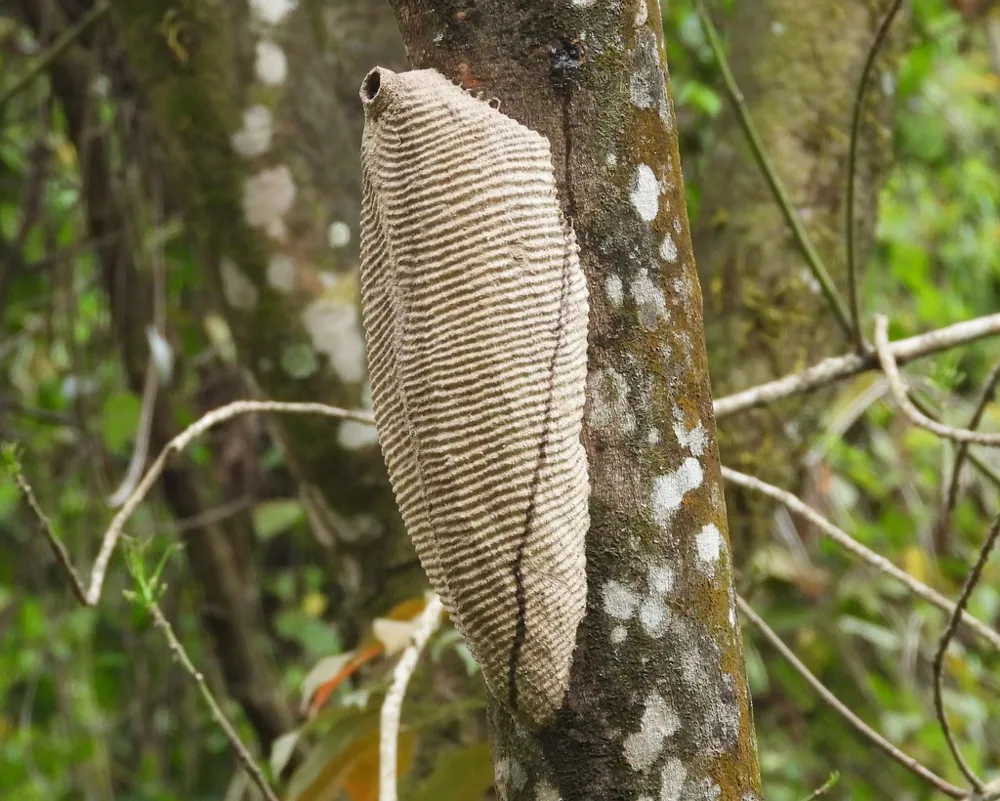
The warrior wasp is a large paper wasp that lives in Central and South America. It builds paper nests on tree trunks and is known for an extremely painful sting. Its colonies defend their nests together as a group.1
 Indlela yokusibona
Amandla obuthi
Ubuthi buphuma ngodosi.
Ubuthi baso benzani?
The sting is extremely painful. On the Schmidt sting pain index it scores the highest possible rating, the same as the bullet ant. On the Starr sting pain scale it also scores the maximum 4 out of 4, a rating shared by very few other species.1
Siyingozi kangakanani ebantwini?
Ingozi ebantwini: Kubi kakhuluUkuhlatshwa kudinga udokotela. Ukufa kuyivelakancane kakhulu.A sting from this wasp is rated as traumatically painful, and such stings often need some medical attention.1
Senzani uma sesabile?
When disturbed, many workers leave the nest to display or sting. They raise their abdomen upright in a behaviour called gaster-flagging, and they drum the nest walls to sound an alarm.1
 Uma sihlaba
- Because the sting is often traumatically painful, medical attention may be needed.1
- Khipha udosi lwenyosi ngokulukhuhla bese upholisa indawo.
- Uma umuntu ephefumula kanzima, ebuso noma emphinjeni kuvuvukala, noma ezizwa ezoquleka, lesi yisimo esiphuthumayo se-allergy: shayela inombolo yezimo eziphuthumayo futhi usebenzise ipeni lakhe le-adrenaline uma enalo.
Njalo shayela kuqala inombolo yezimo eziphuthumayo (112, 000, 911). Lokhu kuyiseluleko sosizo lokuqala esijwayelekile, akusona iseluleko sezokwelapha. Izisekelo zosizo lokuqala
 Hlala uphephile
- Ungalokothi uthinte, ubambe noma ugcone isilwane sasendle, ngisho noma sincane, futhi ngisho noma sibukeka silele noma sifile.
- Sinike isikhala. Uma uhlangana naso, hlala uzolile, uhlehle kancane bese usiyeka sihambe ngendlela yaso.
- Uma sikuhlaba: hlala uzolile, ungashukumi, shayela inombolo yezimo eziphuthumayo (112, 000, 911) noma uye esibhedlela ngokushesha. Khumbula ukuthi besibukeka kanjani, isithombe siyasiza.
Asikuzingeli wena. Sisebenzisa ubuthi baso ukuze sibambe ukudla noma ukuzivikela, futhi singancamela ukucasha. Okwengeziwe mayelana nokuhlala uphephile
Sikhulu kangakanani?
Side kangakanani?
 side cishe njengesibophi sephepha
 singandiza siwele inkundla yebhola yonke ngemizuzwana engu-13
Warrior wasp mkhulu kangakanani uma uqhathanisa NAWE?
Yizibalo nje kusiphequluli sakho. Akukho okulondolozwayo noma okuthunyelwa ndawo.
Sishesha kangakanani?


Amaqiniso
Its sting ranks as high as the bullet ant's on the Schmidt sting pain index, which is the top rating.1
Army ants regularly prey on these wasps, and the wasps have been seen piling their bodies against the nest entrance to defend against them.1
Montezuma oropendola birds often nest in trees where these wasps are present, because the wasps' stings help keep predators and parasites away.1
When moving to a new nest, the wasps rub glands on their abdomen to lay a chemical trail that the colony can follow.1
A colony can have more than one queen at a time, and the number of queens often changes.1
Okongoti bobuthi
- Igama lesayensi
- Synoeca septentrionalis
- Iqembu
- Izinyosi, imivi nama-hornet
- Umndeni
- Vespidae2
- Ukuhleleka
- Hymenoptera
- Amazwekazi
- INyakatho Melika, INingizimu Melika
- Izinsana
- The queen lays eggs in the cells of the nest. The larvae hatch about a week after the nest is finished, and they become adults around 30 days after hatching.1
- Ingozi ebantwini
- 3 / 5: Kubi kakhulu3
Lapho amaqiniso evela khona
- Synoeca septentrionalis (Wikipedia (CC BY-SA 4.0))
- Synoeca septentrionalis (iNaturalist): amagama nokuhlelwa ngezigaba.
- Venom Wiki: izinga lengozi, usayizi ojwayelekile nesiqagela sejubane kungokwethu. Bona ukuthi sikubala kanjani: Indlela esilinganisa ngayo ingozi.
Iqiniso ngalinye kuleli khasi linenombolo ekhomba umthombo walo. Uma senze iphutha, uxolo, singabathandi bezilwane, hhayi iphephabhuku lesayensi. Sitshele ku-[email protected] futhi sizolilungisa.
 Ufezela ulambile! I-Venom Wiki iwumsebenzi womuntu oyedwa: imahhala, ayinazo izikhangiso noma izilandeli. Isipho esincane sisiza ukuyigcina ku-inthanethi.Phakela ufezela
Okunye okuvela eqenjini elifanayo: Izinyosi, imivi nama-hornet
 Tarantula hawkIzinyosi, imivi nama-hornetKubuhlungu nje
 Executioner waspIzinyosi, imivi nama-hornetKudinga udokotela
 Bald-faced hornetIzinyosi, imivi nama-hornetKubuhlungu nje
 Cow killer velvet antIzinyosi, imivi nama-hornetKubuhlungu nje
 Eastern cicada killerIzinyosi, imivi nama-hornetAkunangozi
 Armadillo waspIzinyosi, imivi nama-hornetKudinga udokotela
 Terciopelo
 Eastern coral snake
 Eastern diamondback rattlesnake
 Eyelash viper
 Timber rattlesnake
 Western diamondback rattlesnake