
 Abibirem
 Asia
Asia Yuropu
 Amerika Anaafoɔ
 Australia ne Oceania
 Antarctica
 Pacific Po
 Atlantic Po
 India Po
 Arctic Po
 Mediterranean Po
 Po Kɔkɔɔ
 Caribbean Po
 Coral Po
 China Anaafoɔ Po
 Philippine Po
 Andaman Po
 Atifi Po
 Timor ne Arafura Po
 Bengal Ɛpo Ano
 California Ɛpo Ano
Asp viper
 Ka
KaThe asp viper is a venomous snake of south-western Europe. It lives in warm, sunny places with dry soil, often in hills and rocky areas. Its bite can be more severe than that of the European adder, so it is important to know what it looks like.1

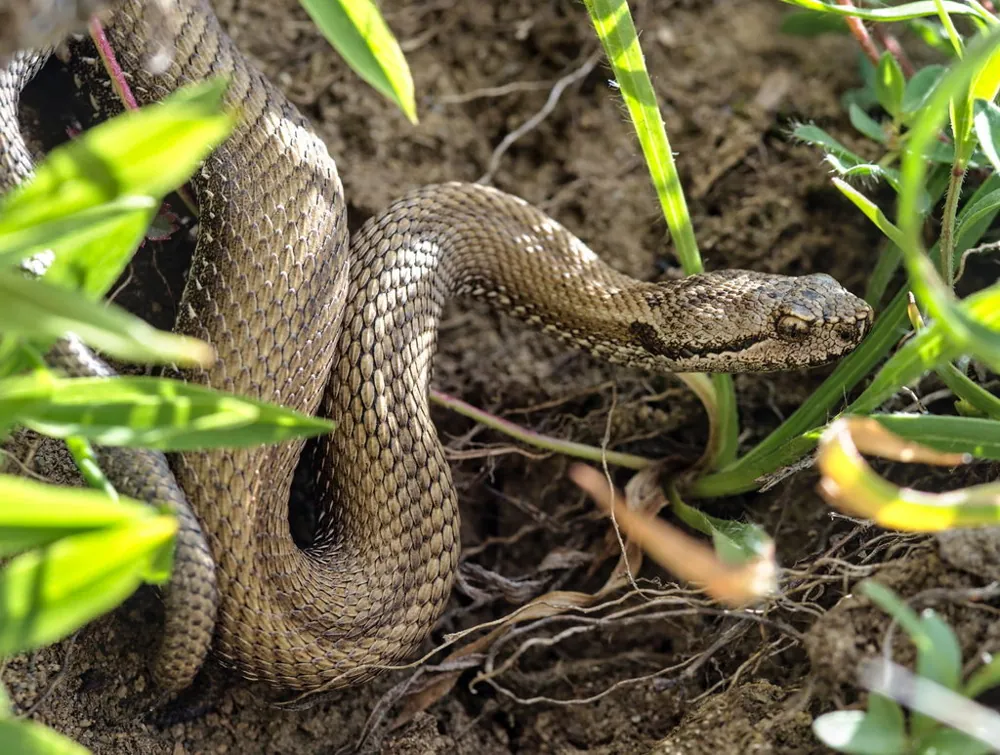
 Sɛdeɛ wobɛhunu no
- Average total length is 60–65 cm. Males can reach 85 cm, while females are rarely longer than 75 cm.1
- The head is broad and triangular, and it is clearly separate from the neck.1
- The tip of the snout is slightly but distinctly turned up.1
- The tail is very short, and males are a little slimmer than females.1
- The pattern on the back varies a lot. It rarely forms a clear zigzag, unlike the European adder.1
Wɔtaa fa no sɛ: The European adder (Vipera berus) is a close relative. The asp's back pattern rarely forms a clear zigzag, as the adder's often does. Bites from the asp can be more severe than those from the adder.1
Bɔre ahoɔden
Bɔre fi ne se mu ba bere a ɔka.
Ne bɔre yɛ dɛn?
Its venom causes rapidly spreading, severe pain, followed by swelling and skin discolouration. Severe bleeding and tissue death can happen within a few hours. Vision may be badly affected, and in some cases victims developed breathing and swallowing difficulties and paralysis of the bitten limb.1
Ne asiane ma nnipa te sɛn?
Asiane ma nnipa: Ɛyɛ denSɛ ɛka wo a, kɔ dɔkota nkyɛn. Ɛntaa nkum obi koraa.About 4% of untreated bites are fatal. In Italy, this species causes 90% of snakebite cases and is the only snake in Italian mountains that can be potentially lethal. Its bites can be more severe than those of the European adder.1
 Sɛ ɛka a
- Ma onipa no ntena dinn na ne bo nnwo, ma nsa anaa nan a ɛkaa no no nna pɛpɛɛpɛ ne ne koma (ɛnkɔ soro, ɛnsiane fam), yi kawa ne nneɛma a ɛkyere no den, na kɔ ayaresabea ntɛm.
Di kan frɛ wo ahohiahia nɔma (112, 000, 911). Yei yɛ mmoa a ɛdi kan ho akwankyerɛ, ɛnyɛ dɔkota afotuo. Mmoa a ɛdi kan ho nsɛm titiriw
 Hwɛ wo ho so
- Mfa wo nsa nka wiram aboa biara, nkyere no na mfa no nni agorɔ, sɛ ɔyɛ ketewa mpo, na sɛ ɛte sɛ ɔrededa anaa wawu mpo a.
- Ma no kwan. Sɛ wohyia baako a, ma wo bo nnwo, san w'akyi brɛoo na ma ɔnkɔ ne kwan.
- Sɛ baako ka wo a: ma wo bo nnwo, tena dinn, frɛ wo ahohiahia nɔma (112, 000, 911) anaa kɔ ayaresabea ntɛm. Kae sɛdeɛ na ɛte, mfonini bɛboa.
Ɛnhwehwɛ wo sɛ ɛbɛpira wo. Ɛde ne bɔre kyere aduane anaa ɛbɔ ne ho ban, na ɛpɛ sɛ ɛhinta sene biribiara. Nsɛm pii fa ahobammɔ ho
Wiase mu baabi bɛn?
Ne kɛseɛ te sɛn?
Ne tenten te sɛn?
 ne tenten te sɛ fie agyinamoa 1,5 a wɔde hwene ne dua to ntoatoasoɔ mu
 ne tenten te sɛ kwadu 5 a wɔde to ntoatoasoɔ mu
 ɛbɛtumi atu mita 100 wɔ anibu 110 mu (onipa a ɔwɔ ntɛm sen biara hia 9.6)
Asp viper kɛseɛ te sɛn sɛ wode toto WO ho a?
Akontabuo kɛkɛ wɔ wo browser mu. Wɔnkora hwee, na wɔmfa hwee nkɔ baabiara.
Ne ntɛm te sɛn?


Nsɛm
Ancient writers named the snake that supposedly killed Queen Cleopatra as an asp. Experts think a cobra would have been too big, over 5 feet long, to smuggle in a basket.1
In the past, the word "asp" was used to mean any venomous snake.1
In 2006, a number of these vipers were found in a wooded area near Poortugaal in the Netherlands. The species is not native there, so it was probably released or escaped.1
Asp vipers have been found at over 2,100 m above sea level in the Pyrenees, even though they are not strongly linked to high altitudes.1
The venom yield is relatively low. One study recorded a daily extraction of 9–10 mg.1
Atosɛm sɛefoɔ
Atosɛm: Queen Cleopatra was killed by a cobra.
Nokorɛ: Ancient sources named the snake an asp. Experts think a cobra would have been too big to smuggle in a basket.1
Baabi a nsɛm no fi
- Vipera aspis (Wikipedia (CC BY-SA 4.0))
- Vipera aspis (iNaturalist): din ne nkyekyɛmu.
- Venom Wiki: asiane gyinabea, kɛseɛ a ɛtaa yɛ ne ntɛm susuo no yɛ yɛn ankasa deɛ. Hwɛ sɛdeɛ yɛbu no: Sɛdeɛ yɛkyerɛ asiane gyinabea.
Nsɛm biara a ɛwɔ kratafa yi so wɔ nɔma a ɛkyerɛ ne fibea. Sɛ yɛfom biribi a, kafra, yɛyɛ mmoa ho akɔnnɔfoɔ, ɛnyɛ nyansahu nwoma. Ka kyerɛ yɛn wɔ [email protected] na yɛbɛsiesie.
 Ɔkɔm de akekantwerɛ no! Onipa baako na ɔyɛ Venom Wiki: ɛyɛ kwa, dawurubɔ nni so na biribiara nni so a ɛdi w'akyi. Akyɛdeɛ ketewa bi boa ma ɛkɔ so tena internet so.Ma akekantwere no aduane
Pii fi kuo korɔ no mu: Viper ne adder
 Common European adder
 Blunt-nosed viper
 Nose-horned viper
 Ottoman viper
 Lataste's viper
 Meadow viper
Ɔte nso wɔ: Yuropu
 Spanish flyMmoa afoforɔ a wɔn ho yɛ awuduroƐhia dɔkotaMfa wo nsa nka
 Common waspWowa, kotokurodu ne kotokurodu akɛseɛƐyɛ yaw kɛkɛ
 European hornetWowa, kotokurodu ne kotokurodu akɛseɛƐyɛ yaw kɛkɛ
 Fire salamanderApɔtorɔwa a wɔn ho yɛ awuduro, apɔtorɔ ne newtƐyɛ yaw kɛkɛMfa wo nsa nka
 Western honey beeWowa, kotokurodu ne kotokurodu akɛseɛƐyɛ yaw kɛkɛ
 Mediterranean black widowAnanseƐhia dɔkota