
 Abibirem
 Asia
Asia Yuropu
 Amerika Anaafoɔ
 Australia ne Oceania
 Antarctica
 Pacific Po
 Atlantic Po
 India Po
 Arctic Po
 Mediterranean Po
 Po Kɔkɔɔ
 Caribbean Po
 Coral Po
 China Anaafoɔ Po
 Philippine Po
 Andaman Po
 Atifi Po
 Timor ne Arafura Po
 Bengal Ɛpo Ano
 California Ɛpo Ano
Black sea nettle
 Nhama (tentacles) a ɛwɔ
The black sea nettle is a large jellyfish with a dark purple to nearly black bell. It lives in the Pacific Ocean off western North America, and it is rare to see except in big swarms that appear in some years. Its stinging tentacles can cause a painful sting to people.1


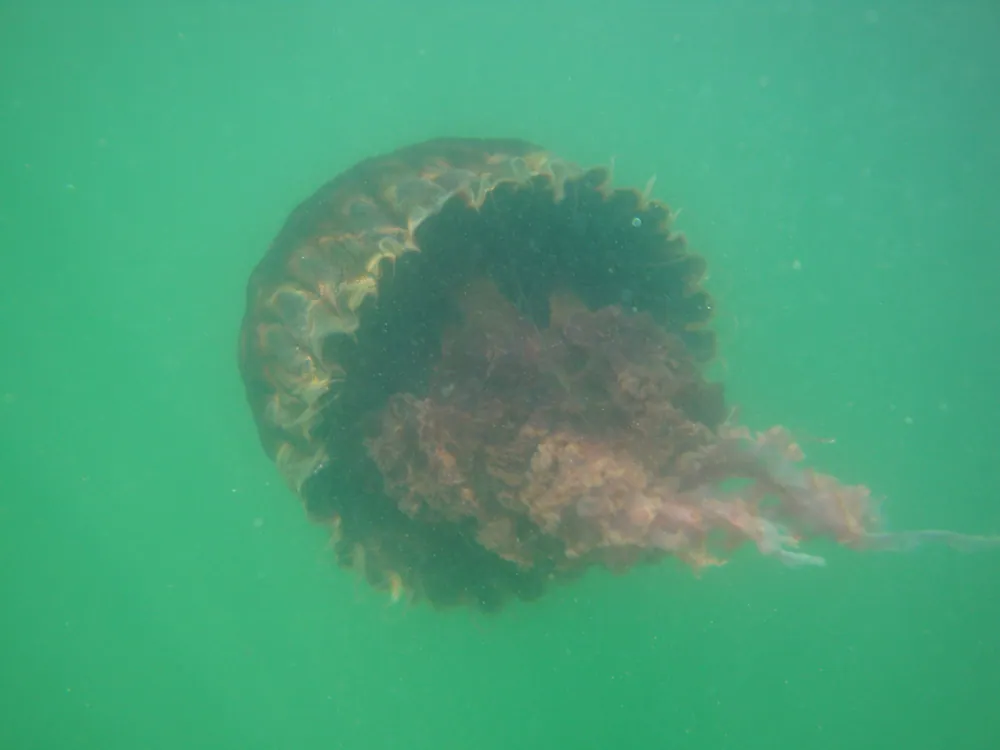
 Sɛdeɛ wobɛhunu no
- The bell is an opaque dark purple to nearly black colour.1
- The edge of the bell has a lighter brown, net-like (reticulated) pattern.1
- The bell can reach about 1 metre across, and the oral arms can extend 5 or 6 metres.1
- There are marginal sense organs around the bell edge, one after every set of 3 tentacles, 8 in total.1
Wɔtaa fa no sɛ: No other West Coast jelly that visits nearshore waters has this dark pigmentation, so the very dark colour is the main way to tell it apart.1
Bɔre ahoɔden
Nwowaa (cells) nketewa mpempem a ɛwɔ tow wɔn bɔre bere a biribi de ne ho ka wɔn.
Ne bɔre yɛ dɛn?
Each tentacle is covered in thousands of microscopic stinging cells called nematocysts. When touched, they fire a filament that injects toxins, which can kill smaller prey or stun predators. In people, the sting is usually not lethal but is painful and can last for forty minutes.1
Ne asiane ma nnipa te sɛn?
Asiane ma nnipa: Ɛyɛ yawƐtumi yɛ yaw paa, nanso ɛkame ayɛ sɛ ɛnyɛ asiane kɛseɛ da.The sting is usually not lethal to people, but it is painful and can last for about forty minutes.1
Ɛyɛ dɛn bere a ehu aka no?
Its stinging tentacles fire venom-filled filaments on contact, which stun or deter anything that threatens it.1
 Sɛ ɛwɔ a
- Fi nsuo no mu na yi nhama (tentacles) biara a ɛda so (fa nsa kotokuo anaa ntoma).
- Box jellyfish a ɛwɔ nsuo hyew mu: hwie vinegar gu baabi a ɛwɔɔ no so anibu 30 anaa deɛ ɛsen saa, frɛ ma wɔmmɛboa na siesie wo ho sɛ wobɛyɛ CPR. Bluebottles ne afoforɔ dodoɔ no: fa ɛpo nsuo hohoro, na afei nsuo hyew ma yaw no.
Di kan frɛ wo ahohiahia nɔma (112, 000, 911). Yei yɛ mmoa a ɛdi kan ho akwankyerɛ, ɛnyɛ dɔkota afotuo. Mmoa a ɛdi kan ho nsɛm titiriw
 Hwɛ wo ho so
- Mfa wo nsa nka wiram aboa biara, nkyere no na mfa no nni agorɔ, sɛ ɔyɛ ketewa mpo, na sɛ ɛte sɛ ɔrededa anaa wawu mpo a.
- Ma no kwan. Sɛ wohyia baako a, ma wo bo nnwo, san w'akyi brɛoo na ma ɔnkɔ ne kwan.
- Sɛ baako wɔ wo a: ma wo bo nnwo, tena dinn, frɛ wo ahohiahia nɔma (112, 000, 911) anaa kɔ ayaresabea ntɛm. Kae sɛdeɛ na ɛte, mfonini bɛboa.
Ɛnhwehwɛ wo sɛ ɛbɛpira wo. Ɛde ne bɔre kyere aduane anaa ɛbɔ ne ho ban, na ɛpɛ sɛ ɛhinta sene biribiara. Nsɛm pii fa ahobammɔ ho
Wiase mu baabi bɛn?
Ne kɛseɛ te sɛn?
Ne tenten te sɛn?
 ne tenten te sɛ fie agyinamoa 2 a wɔde hwene ne dua to ntoatoasoɔ mu
 ne tenten te sɛ kwadu 6 a wɔde to ntoatoasoɔ mu
 ɛbɛtumi aguare aguare tare kɛseɛ tenten (50 m) wɔ anibu 95 mu
Black sea nettle kɛseɛ te sɛn sɛ wode toto WO ho a?
Akontabuo kɛkɛ wɔ wo browser mu. Wɔnkora hwee, na wɔmfa hwee nkɔ baabiara.
Ne ntɛm te sɛn?

Nsɛm
It is thought to be the largest invertebrate described in the 20th century.1
Its stomach is lined with fibrous vessels that attach to prey, and its mouth-like openings, called darkmaws, close when exposed to bright light.1
It was only officially described in 1997, after large groups were found on the Pacific coast.1
Its swarms seem to coincide with red tides, which are blooms of the zooplankton it feeds on.1
Baabi a nsɛm no fi
- Chrysaora achlyos (Wikipedia (CC BY-SA 4.0))
- Chrysaora achlyos (iNaturalist): din ne nkyekyɛmu.
- Venom Wiki: asiane gyinabea, kɛseɛ a ɛtaa yɛ ne ntɛm susuo no yɛ yɛn ankasa deɛ. Hwɛ sɛdeɛ yɛbu no: Sɛdeɛ yɛkyerɛ asiane gyinabea.
Nsɛm biara a ɛwɔ kratafa yi so wɔ nɔma a ɛkyerɛ ne fibea. Sɛ yɛfom biribi a, kafra, yɛyɛ mmoa ho akɔnnɔfoɔ, ɛnyɛ nyansahu nwoma. Ka kyerɛ yɛn wɔ [email protected] na yɛbɛsiesie.
 Ɔkɔm de akekantwerɛ no! Onipa baako na ɔyɛ Venom Wiki: ɛyɛ kwa, dawurubɔ nni so na biribiara nni so a ɛdi w'akyi. Akyɛdeɛ ketewa bi boa ma ɛkɔ so tena internet so.Ma akekantwere no aduane
Pii fi kuo korɔ no mu: Jellyfish ne ɛpo mu mmoa a wɔwɔ
 Australian box jellyfishJellyfish ne ɛpo mu mmoa a wɔwɔƐkumMfa wo nsa nka
 Irukandji jellyfishJellyfish ne ɛpo mu mmoa a wɔwɔƐtumi kumMfa wo nsa nka
 Portuguese man o' warJellyfish ne ɛpo mu mmoa a wɔwɔƐhia dɔkotaMfa wo nsa nka
 Lion's mane jellyfishJellyfish ne ɛpo mu mmoa a wɔwɔƐyɛ yaw kɛkɛMfa wo nsa nka
 Moon jellyfishJellyfish ne ɛpo mu mmoa a wɔwɔƐnni asiane
 Common kingslayerJellyfish ne ɛpo mu mmoa a wɔwɔƐtumi kumMfa wo nsa nka
Ɔte nso wɔ: Atlantic Po
 Hawksbill sea turtleMmoa afoforɔ a wɔn ho yɛ awuduroƐtumi kum
 Blue sea dragonCone snails ne octopusƐyɛ yaw kɛkɛ
 Greenland sharkMmoa afoforɔ a wɔn ho yɛ awuduroƐyɛ yaw kɛkɛ
 Common octopusCone snails ne octopusƐnni asiane
 Common stingrayApataa a wɔwɔ bɔreƐhia dɔkota
 Greater weeverApataa a wɔwɔ bɔreƐhia dɔkotaMfa wo nsa nka