
 Abibirem
 Asia
Asia Yuropu
 Amerika Anaafoɔ
 Australia ne Oceania
 Antarctica
 Pacific Po
 Atlantic Po
 India Po
 Arctic Po
 Mediterranean Po
 Po Kɔkɔɔ
 Caribbean Po
 Coral Po
 China Anaafoɔ Po
 Philippine Po
 Andaman Po
 Atifi Po
 Timor ne Arafura Po
 Bengal Ɛpo Ano
 California Ɛpo Ano
Broad-banded copperhead
 Ka
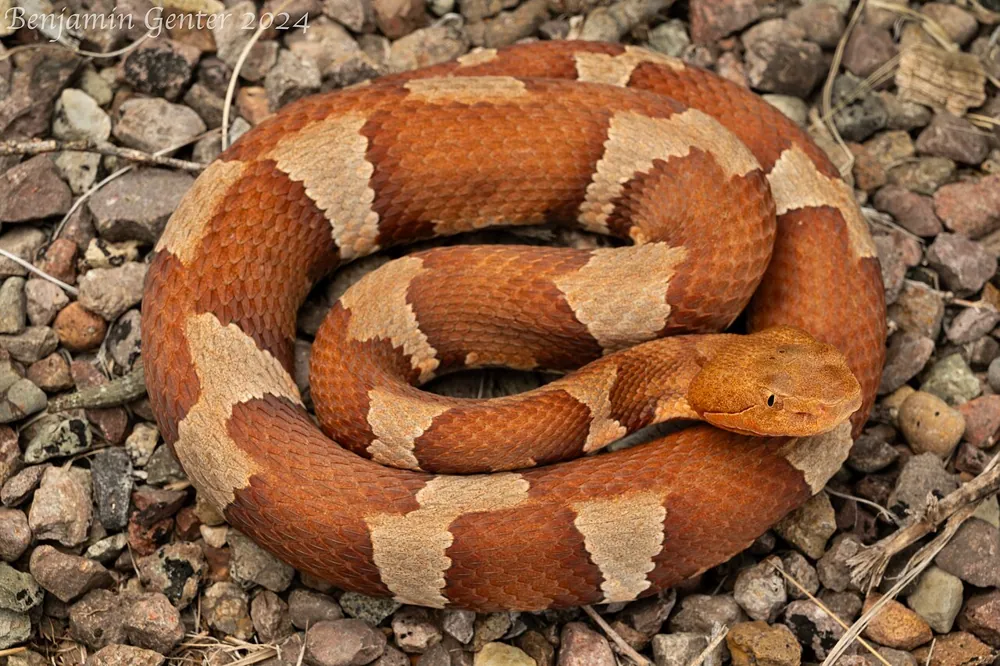
KaThe broad-banded copperhead is a venomous pit viper, a type of snake that uses heat-sensing pits between its eyes and nostrils to find prey. It lives in the central United States, mainly Oklahoma and central Texas, and in parts of northern Mexico. For a long time it was thought to be a form of the eastern copperhead, but it is now treated as its own species.1


 Sɛdeɛ wobɛhunu no
- Typically light tan with wide, darker brown crossbands, which give it its common name.1
- Colour varies by location, from red-brown to grey-brown.1
- The bands stay even in width. The eastern copperhead's bands narrow at the spine to form hourglass shapes.1
- Young snakes have a bright green-yellow tail tip that fades to grey or brown at about one year old.1
Wɔtaa fa no sɛ: The eastern copperhead overlaps with this species in the south of its range, and the two can be hard to tell apart there. Look at the bands: the broad-banded copperhead has even bands, while the eastern copperhead's bands narrow at the spine.1
Bɔre ahoɔden
Bɔre fi ne se mu ba bere a ɔka.
Ne bɔre yɛ dɛn?
Its venom is hemotoxic, meaning it mainly damages blood and tissue. It is injected through hinged, hollow fangs in a single quick strike. The bite can cause localised swelling, necrosis (death of tissue at the bite site) and severe pain.1
Ne asiane ma nnipa te sɛn?
Asiane ma nnipa: Ɛyɛ denSɛ ɛka wo a, kɔ dɔkota nkyɛn. Ɛntaa nkum obi koraa.Copperhead venom is not considered life-threatening to an otherwise healthy adult. Any bite from a venomous snake should still be treated as serious.1
 Asɛmpa: dɔkotafoɔ wɔ aduro (antivenom) anaa ayaresa ma yei.1
 Sɛ ɛka a
- Any bite from a venomous snake should be treated as serious, and medical treatment should be sought. Doctors may use CroFab in severe cases, which is made using cottonmouth venom because no antivenin is made specifically for copperheads.1
- Ma onipa no ntena dinn na ne bo nnwo, ma nsa anaa nan a ɛkaa no no nna pɛpɛɛpɛ ne ne koma (ɛnkɔ soro, ɛnsiane fam), yi kawa ne nneɛma a ɛkyere no den, na kɔ ayaresabea ntɛm.
Di kan frɛ wo ahohiahia nɔma (112, 000, 911). Yei yɛ mmoa a ɛdi kan ho akwankyerɛ, ɛnyɛ dɔkota afotuo. Mmoa a ɛdi kan ho nsɛm titiriw
 Hwɛ wo ho so
- Mfa wo nsa nka wiram aboa biara, nkyere no na mfa no nni agorɔ, sɛ ɔyɛ ketewa mpo, na sɛ ɛte sɛ ɔrededa anaa wawu mpo a.
- Ma no kwan. Sɛ wohyia baako a, ma wo bo nnwo, san w'akyi brɛoo na ma ɔnkɔ ne kwan.
- Sɛ baako ka wo a: ma wo bo nnwo, tena dinn, frɛ wo ahohiahia nɔma (112, 000, 911) anaa kɔ ayaresabea ntɛm. Kae sɛdeɛ na ɛte, mfonini bɛboa.
Ɛnhwehwɛ wo sɛ ɛbɛpira wo. Ɛde ne bɔre kyere aduane anaa ɛbɔ ne ho ban, na ɛpɛ sɛ ɛhinta sene biribiara. Nsɛm pii fa ahobammɔ ho
Wiase mu baabi bɛn?
Ne kɛseɛ te sɛn?
Ne tenten te sɛn?
 ne tenten te sɛ kwadu 4 a wɔde to ntoatoasoɔ mu
 ɛbɛtumi atu mita 100 wɔ anibu 110 mu (onipa a ɔwɔ ntɛm sen biara hia 9.6)
Broad-banded copperhead kɛseɛ te sɛn sɛ wode toto WO ho a?
Akontabuo kɛkɛ wɔ wo browser mu. Wɔnkora hwee, na wɔmfa hwee nkɔ baabiara.
Ne ntɛm te sɛn?


Nsɛm
It can swim across large bodies of water and has been found swimming more than a quarter of a mile from shore in Lake Texoma, Texas.1
In one radio tracking study, a snake was found with a Texas horned lizard inside it. The snake later passed the tracking device without harm.1
Although it is not tree-dwelling, it can climb and has been seen coiled and resting in trees about 2 metres above the ground.1
Some copperheads in Kansas are hybrids of the eastern and broad-banded copperheads. Genetic studies in that state found no genetically pure broad-banded copperheads.1
It is known by colourful local names, including thunder snake, rattlesnake pilot and red eye.1
Atosɛm sɛefoɔ
Atosɛm: Copperhead bites are harmless.
Nokorɛ: A bite is not life-threatening to a healthy adult, but it can cause swelling, tissue death and severe pain. Any bite should be treated seriously and medical care sought.1
Ma bɔre ho animdefoɔ
Baabi a nsɛm no fi
- Agkistrodon laticinctus (Wikipedia (CC BY-SA 4.0))
- Agkistrodon laticinctus (iNaturalist): din ne nkyekyɛmu.
- Venom Wiki: asiane gyinabea, kɛseɛ a ɛtaa yɛ ne ntɛm susuo no yɛ yɛn ankasa deɛ. Hwɛ sɛdeɛ yɛbu no: Sɛdeɛ yɛkyerɛ asiane gyinabea.
Nsɛm biara a ɛwɔ kratafa yi so wɔ nɔma a ɛkyerɛ ne fibea. Sɛ yɛfom biribi a, kafra, yɛyɛ mmoa ho akɔnnɔfoɔ, ɛnyɛ nyansahu nwoma. Ka kyerɛ yɛn wɔ [email protected] na yɛbɛsiesie.
 Ɔkɔm de akekantwerɛ no! Onipa baako na ɔyɛ Venom Wiki: ɛyɛ kwa, dawurubɔ nni so na biribiara nni so a ɛdi w'akyi. Akyɛdeɛ ketewa bi boa ma ɛkɔ so tena internet so.Ma akekantwere no aduane
 Terciopelo
 Eyelash viper
 Cottonmouth
 Eastern copperhead
 Cantil
 Central American bushmaster
 Eastern coral snake
 Eastern diamondback rattlesnake
 Timber rattlesnake
 Western diamondback rattlesnake
 Arizona bark scorpion
 Brown recluse
.jpg)