
 Abibirem
 Asia
Asia Yuropu
 Amerika Anaafoɔ
 Australia ne Oceania
 Antarctica
 Pacific Po
 Atlantic Po
 India Po
 Arctic Po
 Mediterranean Po
 Po Kɔkɔɔ
 Caribbean Po
 Coral Po
 China Anaafoɔ Po
 Philippine Po
 Andaman Po
 Atifi Po
 Timor ne Arafura Po
 Bengal Ɛpo Ano
 California Ɛpo Ano
Brown centipede
 Ka
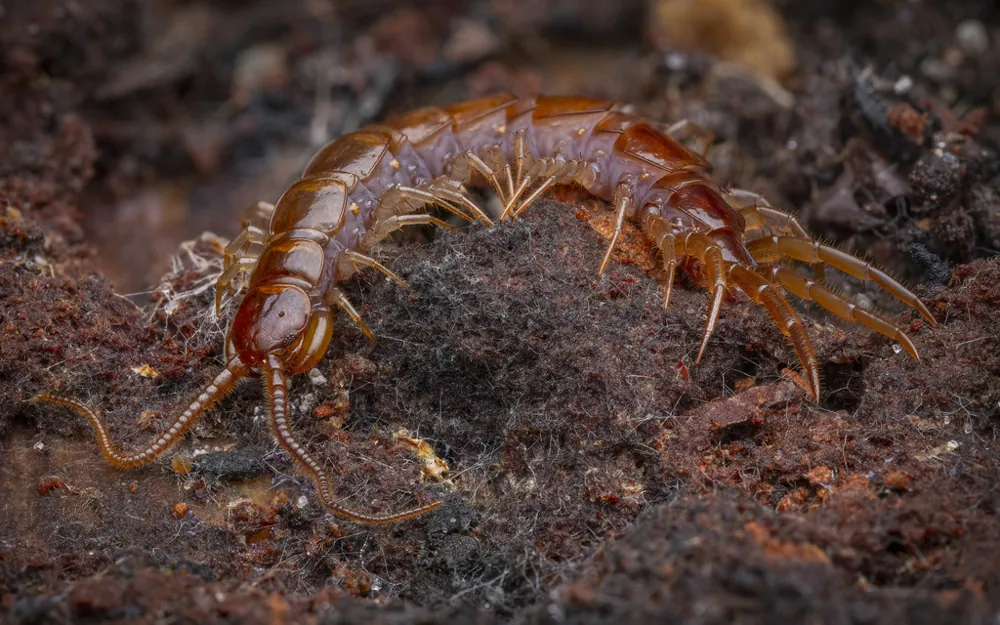
KaThe brown centipede is a small, common centipede with a chestnut brown body. It lives in the upper layers of soil, under rocks and rotting logs, across Europe, North America and the Hawaiian Islands. It is venomous, but its bite is not dangerous to people.1
 Sɛdeɛ wobɛhunu no
- Chestnut brown body1
- Adults are 18 to 30 mm long and up to 4 mm wide1
- Legs have no stripes1
- Runs extremely quickly for cover when uncovered1
Wɔtaa fa no sɛ: It is similar to several other European centipedes, especially the striped centipede (Lithobius variegatus). The brown centipede does not have stripes on its legs.1
Bɔre ahoɔden
Bɔre fi ne se mu ba bere a ɔka.
Ne bɔre yɛ dɛn?
Its venom is used to overpower prey such as insects and spiders. In people, a bite causes at most brief, localised pain.1
Ne asiane ma nnipa te sɛn?
Asiane ma nnipa: Ɛnyɛ denƐte sɛ wowa wɔ anaa ɛnnu saa. Ɛkame ayɛ sɛ ɛnni asiane ma nnipa.It is considered harmless to humans. Its small size means it rarely breaks the skin.1
Ɛyɛ dɛn bere a ehu aka no?
When uncovered, it runs away extremely quickly to find cover.1
 Sɛ ɛka a
- Hohoro baabi a ɛkaa no, dwo anaa fa hyɛ nsuo a ɛyɛ hyew kakra mu ma yaw no, na hwehwɛ dɔkota mmoa sɛ ɛyɛ den kɔ so a.
Di kan frɛ wo ahohiahia nɔma (112, 000, 911). Yei yɛ mmoa a ɛdi kan ho akwankyerɛ, ɛnyɛ dɔkota afotuo. Mmoa a ɛdi kan ho nsɛm titiriw
 Hwɛ wo ho so
- Mfa wo nsa nka wiram aboa biara, nkyere no na mfa no nni agorɔ, sɛ ɔyɛ ketewa mpo, na sɛ ɛte sɛ ɔrededa anaa wawu mpo a.
- Ma no kwan. Sɛ wohyia baako a, ma wo bo nnwo, san w'akyi brɛoo na ma ɔnkɔ ne kwan.
- Sɛ baako ka wo a: ma wo bo nnwo, tena dinn, frɛ wo ahohiahia nɔma (112, 000, 911) anaa kɔ ayaresabea ntɛm. Kae sɛdeɛ na ɛte, mfonini bɛboa.
Ɛnhwehwɛ wo sɛ ɛbɛpira wo. Ɛde ne bɔre kyere aduane anaa ɛbɔ ne ho ban, na ɛpɛ sɛ ɛhinta sene biribiara. Nsɛm pii fa ahobammɔ ho
Wiase mu baabi bɛn?
Ne kɛseɛ te sɛn?
Ne tenten te sɛn?
 ne tenten bɛyɛ sɛ paper clip
Brown centipede kɛseɛ te sɛn sɛ wode toto WO ho a?
Akontabuo kɛkɛ wɔ wo browser mu. Wɔnkora hwee, na wɔmfa hwee nkɔ baabiara.
Ne ntɛm te sɛn?


Nsɛm
Atosɛm sɛefoɔ
Atosɛm: Any centipede with venom is dangerous to people.
Nokorɛ: Although it has venom, this centipede is considered harmless to humans. Its small size means it rarely breaks the skin, and bites cause at most brief, localised pain.1
Ma bɔre ho animdefoɔ
- Nyansahu din
- Lithobius forficatus
- Kuo
- Centipede
- Abusua
- Lithobiidae2
- Nhyehyɛeɛ (Order)
- Lithobiomorpha
- Asaase akɛseɛ
- Yuropu
- Mmofra nketewa
- It hatches from an egg with seven pairs of legs. It gains body segments and a new pair of legs each time it moults, up to a maximum of 15 pairs in adults.1
- Mfeɛ a ɔtena ase
- bɛyɛ mfeɛ 61
- Asiane ma nnipa
- 1 / 5: Ɛnyɛ den3
Baabi a nsɛm no fi
- Lithobius forficatus (Wikipedia (CC BY-SA 4.0))
- Lithobius forficatus (iNaturalist): din ne nkyekyɛmu.
- Venom Wiki: asiane gyinabea, kɛseɛ a ɛtaa yɛ ne ntɛm susuo no yɛ yɛn ankasa deɛ. Hwɛ sɛdeɛ yɛbu no: Sɛdeɛ yɛkyerɛ asiane gyinabea.
Nsɛm biara a ɛwɔ kratafa yi so wɔ nɔma a ɛkyerɛ ne fibea. Sɛ yɛfom biribi a, kafra, yɛyɛ mmoa ho akɔnnɔfoɔ, ɛnyɛ nyansahu nwoma. Ka kyerɛ yɛn wɔ [email protected] na yɛbɛsiesie.
 Ɔkɔm de akekantwerɛ no! Onipa baako na ɔyɛ Venom Wiki: ɛyɛ kwa, dawurubɔ nni so na biribiara nni so a ɛdi w'akyi. Akyɛdeɛ ketewa bi boa ma ɛkɔ so tena internet so.Ma akekantwere no aduane
Pii fi kuo korɔ no mu: Centipede
 Mediterranean banded centipede
 House centipede
 Western Mediterranean centipede
 Peruvian giant centipede
 Chinese red-headed centipede
 Giant Australian centipede
Ɔte nso wɔ: Yuropu
 Common European adderViper ne adderƐhia dɔkota
 Spanish flyMmoa afoforɔ a wɔn ho yɛ awuduroƐhia dɔkotaMfa wo nsa nka
 Common waspWowa, kotokurodu ne kotokurodu akɛseɛƐyɛ yaw kɛkɛ
 European hornetWowa, kotokurodu ne kotokurodu akɛseɛƐyɛ yaw kɛkɛ
 Fire salamanderApɔtorɔwa a wɔn ho yɛ awuduro, apɔtorɔ ne newtƐyɛ yaw kɛkɛMfa wo nsa nka
 Western honey beeWowa, kotokurodu ne kotokurodu akɛseɛƐyɛ yaw kɛkɛ