
 Abibirem
 Asia
Asia Yuropu
 Amerika Anaafoɔ
 Australia ne Oceania
 Antarctica
 Pacific Po
 Atlantic Po
 India Po
 Arctic Po
 Mediterranean Po
 Po Kɔkɔɔ
 Caribbean Po
 Coral Po
 China Anaafoɔ Po
 Philippine Po
 Andaman Po
 Atifi Po
 Timor ne Arafura Po
 Bengal Ɛpo Ano
 California Ɛpo Ano
Chinese red-headed centipede
 Ka
KaThe Chinese red-headed centipede is one of the largest centipedes in the world. It lives across much of southeastern Asia and on many islands and continents, often through human introduction. It is an active hunter with a venomous bite, so it is best seen from a safe distance.1



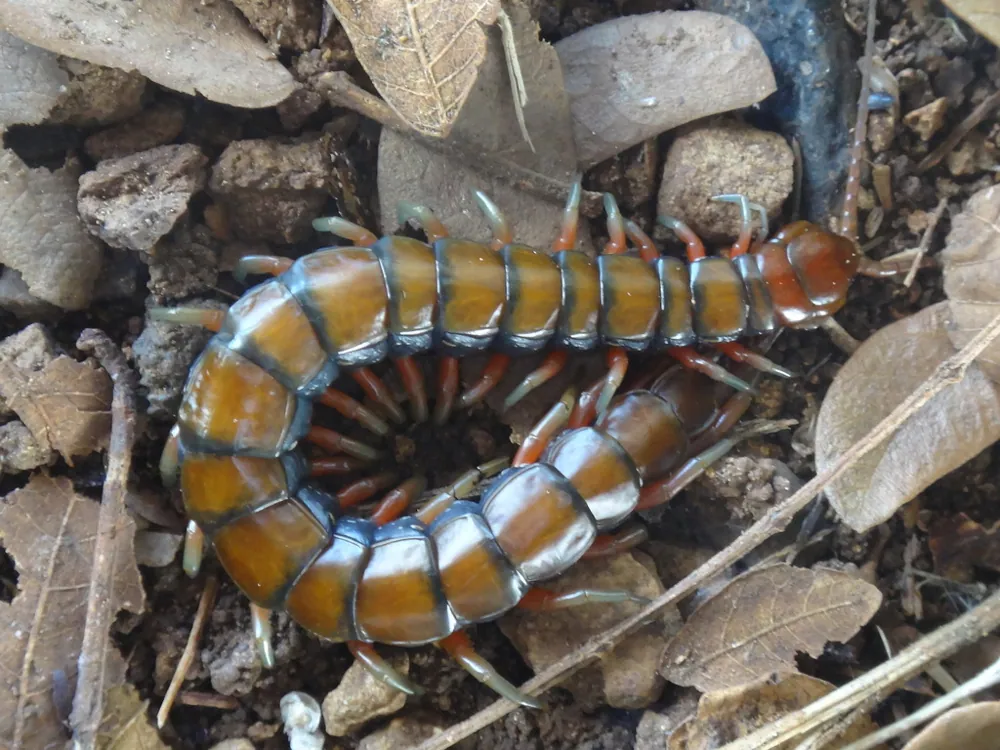
 Sɛdeɛ wobɛhunu no
Bɔre ahoɔden
Bɔre fi ne se mu ba bere a ɔka.
Ne bɔre yɛ dɛn?
Its venom normally causes extreme pain, among other symptoms. A fatal case was reported in the Philippines, where a 7-year-old girl was bitten on the head and died 29 hours later.1
Ne asiane ma nnipa te sɛn?
Asiane ma nnipa: Ɛyɛ denSɛ ɛka wo a, kɔ dɔkota nkyɛn. Ɛntaa nkum obi koraa.Its bite causes extreme pain, and a child has died after being bitten in the Philippines. Bites per year and other risk details are not recorded.1
Ɛyɛ dɛn bere a ehu aka no?
It is aggressive and nervous, ready to strike if disturbed, and when defending itself it coils its whole body around the attacker while using its toxicognaths.1
 Sɛ ɛka a
- Hohoro baabi a ɛkaa no, dwo anaa fa hyɛ nsuo a ɛyɛ hyew kakra mu ma yaw no, na hwehwɛ dɔkota mmoa sɛ ɛyɛ den kɔ so a.
Di kan frɛ wo ahohiahia nɔma (112, 000, 911). Yei yɛ mmoa a ɛdi kan ho akwankyerɛ, ɛnyɛ dɔkota afotuo. Mmoa a ɛdi kan ho nsɛm titiriw
 Hwɛ wo ho so
- Mfa wo nsa nka wiram aboa biara, nkyere no na mfa no nni agorɔ, sɛ ɔyɛ ketewa mpo, na sɛ ɛte sɛ ɔrededa anaa wawu mpo a.
- Ma no kwan. Sɛ wohyia baako a, ma wo bo nnwo, san w'akyi brɛoo na ma ɔnkɔ ne kwan.
- Sɛ baako ka wo a: ma wo bo nnwo, tena dinn, frɛ wo ahohiahia nɔma (112, 000, 911) anaa kɔ ayaresabea ntɛm. Kae sɛdeɛ na ɛte, mfonini bɛboa.
Ɛnhwehwɛ wo sɛ ɛbɛpira wo. Ɛde ne bɔre kyere aduane anaa ɛbɔ ne ho ban, na ɛpɛ sɛ ɛhinta sene biribiara. Nsɛm pii fa ahobammɔ ho
Wiase mu baabi bɛn?
Ne kɛseɛ te sɛn?
Ne tenten te sɛn?
 ne tenten te sɛ agodeɛ blɔk 6 a wɔde to ntoatoasoɔ mu
 ɛbɛtumi atu mita 100 wɔ anibu 190 mu (onipa a ɔwɔ ntɛm sen biara hia 9.6)
Chinese red-headed centipede kɛseɛ te sɛn sɛ wode toto WO ho a?
Akontabuo kɛkɛ wɔ wo browser mu. Wɔnkora hwee, na wɔmfa hwee nkɔ baabiara.
Ne ntɛm te sɛn?


Nsɛm
It is among the largest centipedes in the world, with a normal maximum length of 20 cm.1
The centipede was a traditional food source for Aboriginal Australians.1
Adults molt once every year and may live for 10 years or more.1
It is a popular pet among arthropod hobbyists.1
Young centipedes molt once a year and take 3 to 4 years to reach full adult size.1
Ma bɔre ho animdefoɔ
- Nyansahu din
- Scolopendra subspinipes
- Kuo
- Centipede
- Abusua
- Scolopendridae2
- Nhyehyɛeɛ (Order)
- Scolopendromorpha
- Asaase akɛseɛ
- Asia
- Mmofra nketewa
- The female lays 50 to 80 eggs in a dark, protected place, guards them until they hatch, and wraps around her young if danger is detected.1
- Mfeɛ a ɔtena ase
- bɛyɛ mfeɛ 101
- Asiane ma nnipa
- 3 / 5: Ɛyɛ den3
Baabi a nsɛm no fi
- Scolopendra subspinipes (Wikipedia (CC BY-SA 4.0))
- Scolopendra subspinipes (iNaturalist): din ne nkyekyɛmu.
- Venom Wiki: asiane gyinabea, kɛseɛ a ɛtaa yɛ ne ntɛm susuo no yɛ yɛn ankasa deɛ. Hwɛ sɛdeɛ yɛbu no: Sɛdeɛ yɛkyerɛ asiane gyinabea.
Nsɛm biara a ɛwɔ kratafa yi so wɔ nɔma a ɛkyerɛ ne fibea. Sɛ yɛfom biribi a, kafra, yɛyɛ mmoa ho akɔnnɔfoɔ, ɛnyɛ nyansahu nwoma. Ka kyerɛ yɛn wɔ [email protected] na yɛbɛsiesie.
 Ɔkɔm de akekantwerɛ no! Onipa baako na ɔyɛ Venom Wiki: ɛyɛ kwa, dawurubɔ nni so na biribiara nni so a ɛdi w'akyi. Akyɛdeɛ ketewa bi boa ma ɛkɔ so tena internet so.Ma akekantwere no aduane
 Giant Australian centipede
 Mediterranean banded centipede
 House centipede
 Vietnamese giant centipede
 Indian tiger centipede
 Japanese giant centipede
 Deathstalker
 Indian cobra
 Indian saw-scaled viper
 King cobra
 Puff adder
 Russell ɔnanka