
 Abibirem
 Asia
Asia Yuropu
 Amerika Anaafoɔ
 Australia ne Oceania
 Antarctica
 Pacific Po
 Atlantic Po
 India Po
 Arctic Po
 Mediterranean Po
 Po Kɔkɔɔ
 Caribbean Po
 Coral Po
 China Anaafoɔ Po
 Philippine Po
 Andaman Po
 Atifi Po
 Timor ne Arafura Po
 Bengal Ɛpo Ano
 California Ɛpo Ano
Puff adder
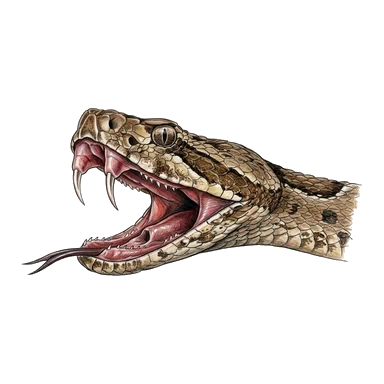 Ka
KaThe puff adder is a large, stout viper that lives across most of Africa and parts of the Arabian Peninsula. It is one of the most dangerous snakes in Africa because it lives in places where many people live and work, and it has very potent venom. Its camouflage hides it well, so it is easy to step near without seeing it.1
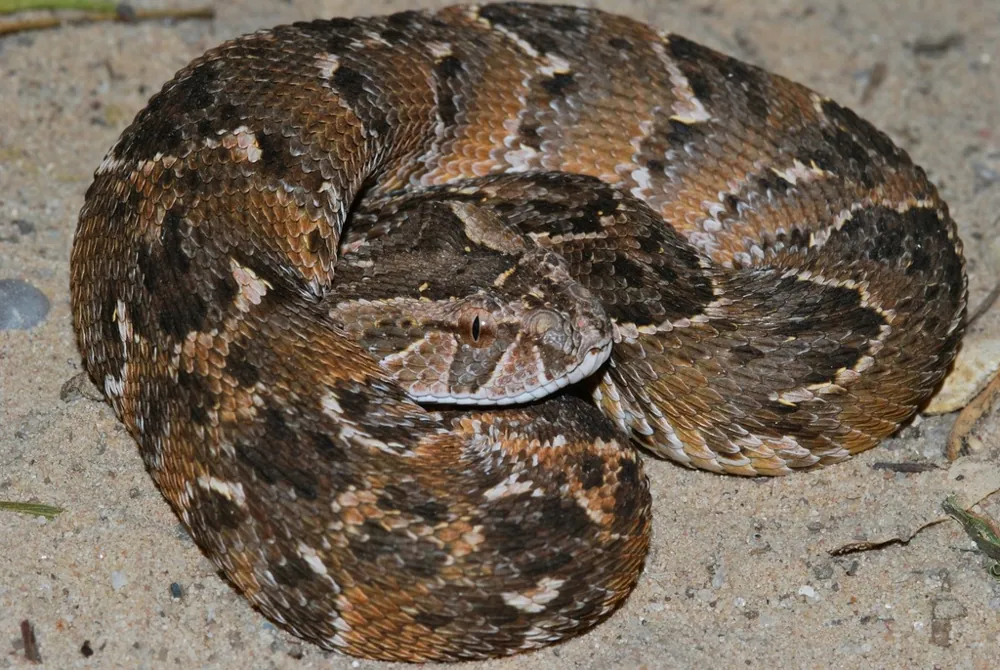
 Sɛdeɛ wobɛhunu no
- Stout, heavy body. Usually about 1.0 m long including the tail.1
- Two dark bands across the top of the head, and two dark bars running from each eye down the sides of the head.1
- Back is straw yellow, light brown, orange or reddish brown, with 18–22 dark brown to black chevron-shaped bands running down the back and tail.1
- In some populations, the body is heavily flecked with brown and black, giving a dusty-brown or blackish look.1
- Males from highland East Africa and the Western Cape of South Africa often have a striking yellow-and-black pattern.1
Bɔre ahoɔden
Bɔre fi ne se mu ba bere a ɔka.
Ne bɔre yɛ dɛn?
Its venom is cytotoxic, which means it destroys body tissue. Bites cause severe pain, swelling, bleeding under the skin and, in serious cases, tissue death that can spread and lead to gangrene. Other symptoms include shock, nausea, vomiting, dizziness and periods of semi-consciousness. Death can occur in about 25 hours from a dose of around 100 mg, and deaths usually come 2–4 days after a bite from complications.1
Ne asiane ma nnipa te sɛn?
Asiane ma nnipa: ƐkumMmoa a asiane wɔ wɔn ho sen biara wɔ wiase no mu baako.It is responsible for more snakebite deaths in Africa than any other African snake. This is due to its wide range, common presence near people, large size, potent venom and aggressive temperament. Deaths are uncommon in untreated cases, but severe bites can be fatal, with one report giving a 52% mortality rate. Most deaths are linked to poor medical care.1
Ɛyɛ dɛn bere a ehu aka no?
When disturbed, it hisses loudly and continuously, coils tightly with the front of its body in a taut S shape, and may back away towards cover before striking suddenly and fast.1
 Sɛ ɛka a
- Ma onipa no ntena dinn na ne bo nnwo, ma nsa anaa nan a ɛkaa no no nna pɛpɛɛpɛ ne ne koma (ɛnkɔ soro, ɛnsiane fam), yi kawa ne nneɛma a ɛkyere no den, na kɔ ayaresabea ntɛm.
Di kan frɛ wo ahohiahia nɔma (112, 000, 911). Yei yɛ mmoa a ɛdi kan ho akwankyerɛ, ɛnyɛ dɔkota afotuo. Mmoa a ɛdi kan ho nsɛm titiriw
 Hwɛ wo ho so
- Mfa wo nsa nka wiram aboa biara, nkyere no na mfa no nni agorɔ, sɛ ɔyɛ ketewa mpo, na sɛ ɛte sɛ ɔrededa anaa wawu mpo a.
- Ma no kwan. Sɛ wohyia baako a, ma wo bo nnwo, san w'akyi brɛoo na ma ɔnkɔ ne kwan.
- Sɛ baako ka wo a: ma wo bo nnwo, tena dinn, frɛ wo ahohiahia nɔma (112, 000, 911) anaa kɔ ayaresabea ntɛm. Kae sɛdeɛ na ɛte, mfonini bɛboa.
Ɛnhwehwɛ wo sɛ ɛbɛpira wo. Ɛde ne bɔre kyere aduane anaa ɛbɔ ne ho ban, na ɛpɛ sɛ ɛhinta sene biribiara. Nsɛm pii fa ahobammɔ ho
Wiase mu baabi bɛn?
Ne kɛseɛ te sɛn?
Ne tenten te sɛn?
Ne mu duru te sɛn?
 ne tenten te sɛ fie agyinamoa 4 a wɔde hwene ne dua to ntoatoasoɔ mu
 ne tenten te sɛ kwadu 11 a wɔde to ntoatoasoɔ mune mu duru bɛyɛ sɛ fie agyinamoa
 ɛbɛtumi atu mita 100 wɔ anibu 97 mu (onipa a ɔwɔ ntɛm sen biara hia 9.6)
Puff adder kɛseɛ te sɛn sɛ wode toto WO ho a?
Akontabuo kɛkɛ wɔ wo browser mu. Wɔnkora hwee, na wɔmfa hwee nkɔ baabiara.
Ne ntɛm te sɛn?


Nsɛm
A female in a Czech zoo gave birth to 156 young, the largest litter recorded for any snake species.1
Its fangs are long and can penetrate deeply, and the force of its strike can kill prey by physical trauma alone.1
A large adult can produce between 150 and 350 mg of venom at a time, with a maximum of 750 mg.1
Dogs and meerkats, which hunt by scent, find it hard to detect because of a form of olfactory crypsis, meaning it hides its scent.1
It is one of the most toxic vipers based on LD50 (the dose that kills half of test animals in a study).1
It is a good swimmer and climber, and one specimen was found 4.6 m above the ground in a dense tree.1
Atosɛm sɛefoɔ
Atosɛm: Puff adders are fast, aggressive snakes that chase people.
Nokorɛ: They are normally sluggish and rely on camouflage for protection. They strike when disturbed, but they do not usually pursue people.1
Ma bɔre ho animdefoɔ
Baabi a nsɛm no fi
- Puff adder (Wikipedia (CC BY-SA 4.0))
- Bitis arietans (iNaturalist): din ne nkyekyɛmu.
- Venom Wiki: asiane gyinabea, kɛseɛ a ɛtaa yɛ ne ntɛm susuo no yɛ yɛn ankasa deɛ. Hwɛ sɛdeɛ yɛbu no: Sɛdeɛ yɛkyerɛ asiane gyinabea.
Nsɛm biara a ɛwɔ kratafa yi so wɔ nɔma a ɛkyerɛ ne fibea. Sɛ yɛfom biribi a, kafra, yɛyɛ mmoa ho akɔnnɔfoɔ, ɛnyɛ nyansahu nwoma. Ka kyerɛ yɛn wɔ [email protected] na yɛbɛsiesie.
 Ɔkɔm de akekantwerɛ no! Onipa baako na ɔyɛ Venom Wiki: ɛyɛ kwa, dawurubɔ nni so na biribiara nni so a ɛdi w'akyi. Akyɛdeɛ ketewa bi boa ma ɛkɔ so tena internet so.Ma akekantwere no aduane
 Indian saw-scaled viper
 Russell ɔnanka
 Gaboon viper
 Common European adder
 Eastern Russell's viper
 Northeast African carpet viper
 Black mamba
 Deathstalker
 Egyptian cobra
 Boomslang
 Fat-tailed scorpion
 Western honey bee