
 Abibirem
 Asia
Asia Yuropu
 Amerika Anaafoɔ
 Australia ne Oceania
 Antarctica
 Pacific Po
 Atlantic Po
 India Po
 Arctic Po
 Mediterranean Po
 Po Kɔkɔɔ
 Caribbean Po
 Coral Po
 China Anaafoɔ Po
 Philippine Po
 Andaman Po
 Atifi Po
 Timor ne Arafura Po
 Bengal Ɛpo Ano
 California Ɛpo Ano
Deathstalker
 Ɛwɔ
ƐwɔThe deathstalker is a yellow scorpion that lives in deserts and scrubland from North Africa across the Middle East to Central Asia. It is one of the most dangerous scorpions in the world, and its venom is being studied as a possible way to help treat brain tumours.1
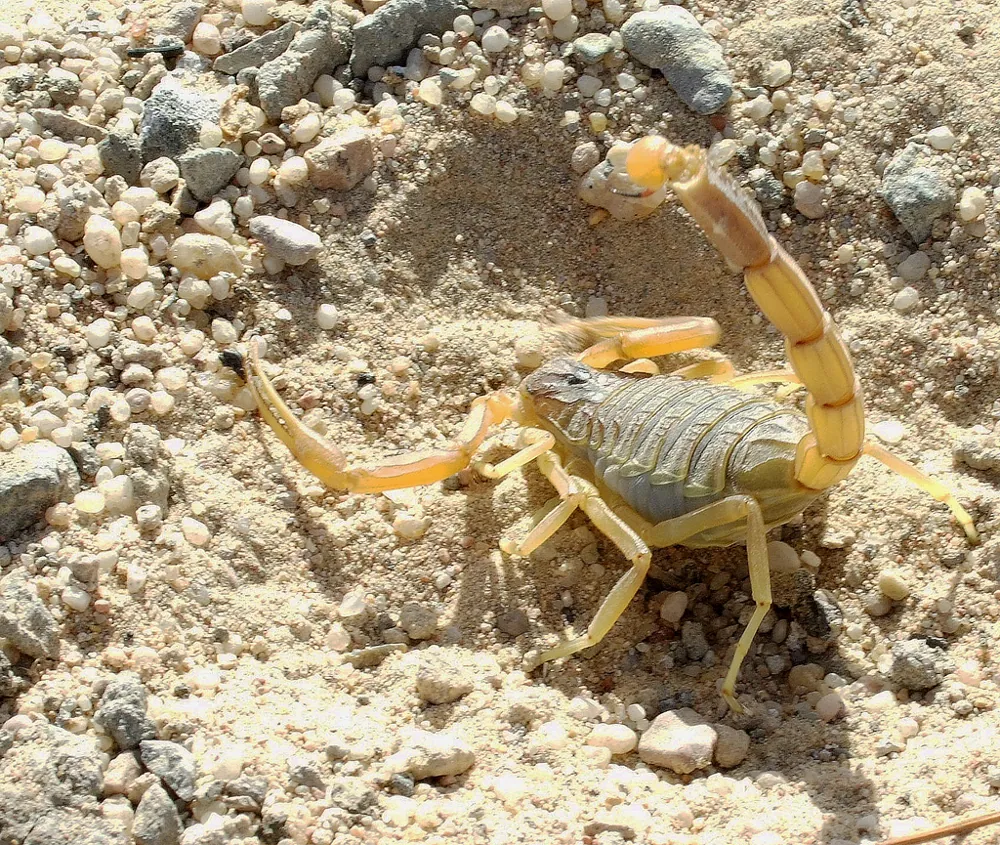
 Sɛdeɛ wobɛhunu no
Bɔre ahoɔden
Bɔre fi ne dua ano nsɔe (stinger) mu ba.
Ne bɔre yɛ dɛn?
The venom is a powerful mixture of neurotoxins, which attack the nerves. Its named components include chlorotoxin, charybdotoxin, scyllatoxin and agitoxins. A sting is extraordinarily painful. There is also a high rate of pancreatitis (inflammation of the pancreas) after envenomation, and any sting carries a risk of anaphylaxis, a severe allergic reaction.1
Ne asiane ma nnipa te sɛn?
Asiane ma nnipa: ƐkumMmoa a asiane wɔ wɔn ho sen biara wɔ wiase no mu baako.The deathstalker is one of the most dangerous scorpion species. Its venom has a low lethal dose, but a sting normally would not kill a healthy adult. Young children, elderly people and those who are infirm, such as people with heart conditions or allergies, are at much greater risk. If a sting proves deadly, the usual cause of death is pulmonary edema, which is fluid build-up in the lungs.1
 Asɛmpa: dɔkotafoɔ wɔ aduro (antivenom) anaa ayaresa ma yei.1
 Sɛ ɛwɔ a
- Envenomation is considered a medical emergency, even with treatment. Antivenom exists, but the venom is unusually resistant to treatment and typically needs large doses. Medical help should be sought urgently.1
- Fa ice pack dwo baabi a ɛwɔɔ no, na ma onipa no ntena dinn. Hwehwɛ dɔkota mmoa ntɛm, titiriw ma mmofra: akekantwerɛ bi tumi kum mmofra.
Di kan frɛ wo ahohiahia nɔma (112, 000, 911). Yei yɛ mmoa a ɛdi kan ho akwankyerɛ, ɛnyɛ dɔkota afotuo. Mmoa a ɛdi kan ho nsɛm titiriw
 Hwɛ wo ho so
- Mfa wo nsa nka wiram aboa biara, nkyere no na mfa no nni agorɔ, sɛ ɔyɛ ketewa mpo, na sɛ ɛte sɛ ɔrededa anaa wawu mpo a.
- Ma no kwan. Sɛ wohyia baako a, ma wo bo nnwo, san w'akyi brɛoo na ma ɔnkɔ ne kwan.
- Sɛ baako wɔ wo a: ma wo bo nnwo, tena dinn, frɛ wo ahohiahia nɔma (112, 000, 911) anaa kɔ ayaresabea ntɛm. Kae sɛdeɛ na ɛte, mfonini bɛboa.
Ɛnhwehwɛ wo sɛ ɛbɛpira wo. Ɛde ne bɔre kyere aduane anaa ɛbɔ ne ho ban, na ɛpɛ sɛ ɛhinta sene biribiara. Nsɛm pii fa ahobammɔ ho
Wiase mu baabi bɛn?
Ne kɛseɛ te sɛn?
Ne tenten te sɛn?
 ne tenten te sɛ agodeɛ blɔk 2,5 a wɔde to ntoatoasoɔ mu
 ɛbɛtumi atu mita 100 wɔ anibu 210 mu (onipa a ɔwɔ ntɛm sen biara hia 9.6)
Deathstalker kɛseɛ te sɛn sɛ wode toto WO ho a?
Akontabuo kɛkɛ wɔ wo browser mu. Wɔnkora hwee, na wɔmfa hwee nkɔ baabiara.
Ne ntɛm te sɛn?


Nsɛm
Its venom contains chlorotoxin, a peptide that has shown potential for treating human brain tumours.1
In preclinical animal trials, the paint could highlight clusters of as few as 200 cancer cells, while the lower limit for standard MRI was above 500,000.1
In 2015, clinical trials began on chlorotoxin with a fluorescent molecule attached, used as a brain tumour "paint" to mark cancer cells during surgery.1
There is some evidence that other venom components may help regulate insulin and could be used to treat diabetes.1
Atosɛm sɛefoɔ
Atosɛm: A deathstalker sting always kills.
Nokorɛ: A sting normally would not kill a healthy adult, but young children, the elderly and people with certain health conditions are at much greater risk.1
Baabi a nsɛm no fi
- Deathstalker (Wikipedia (CC BY-SA 4.0))
- Leiurus quinquestriatus (iNaturalist): din ne nkyekyɛmu.
- Venom Wiki: asiane gyinabea, kɛseɛ a ɛtaa yɛ ne ntɛm susuo no yɛ yɛn ankasa deɛ. Hwɛ sɛdeɛ yɛbu no: Sɛdeɛ yɛkyerɛ asiane gyinabea.
Nsɛm biara a ɛwɔ kratafa yi so wɔ nɔma a ɛkyerɛ ne fibea. Sɛ yɛfom biribi a, kafra, yɛyɛ mmoa ho akɔnnɔfoɔ, ɛnyɛ nyansahu nwoma. Ka kyerɛ yɛn wɔ [email protected] na yɛbɛsiesie.
 Ɔkɔm de akekantwerɛ no! Onipa baako na ɔyɛ Venom Wiki: ɛyɛ kwa, dawurubɔ nni so na biribiara nni so a ɛdi w'akyi. Akyɛdeɛ ketewa bi boa ma ɛkɔ so tena internet so.Ma akekantwere no aduane
 Fat-tailed scorpion
 Emperor scorpion
 Indian red scorpion
 Arabian fat-tailed scorpion
 Transvaal thick-tailed scorpion
 Chinese scorpion
 Black mamba
 Egyptian cobra
 Puff adder
 Boomslang
 Gaboon viper
 Western honey bee