
 Abibirem
 Asia
Asia Yuropu
 Amerika Anaafoɔ
 Australia ne Oceania
 Antarctica
 Pacific Po
 Atlantic Po
 India Po
 Arctic Po
 Mediterranean Po
 Po Kɔkɔɔ
 Caribbean Po
 Coral Po
 China Anaafoɔ Po
 Philippine Po
 Andaman Po
 Atifi Po
 Timor ne Arafura Po
 Bengal Ɛpo Ano
 California Ɛpo Ano
Indian saw-scaled viper
 Ka
KaThe saw-scaled viper is a small, venomous snake of the Middle East, Central Asia and the Indian subcontinent. It is the smallest of the 'big four' Indian snakes that cause the most snakebite cases and deaths. It is easy to miss, which is one reason it causes so many bites.1



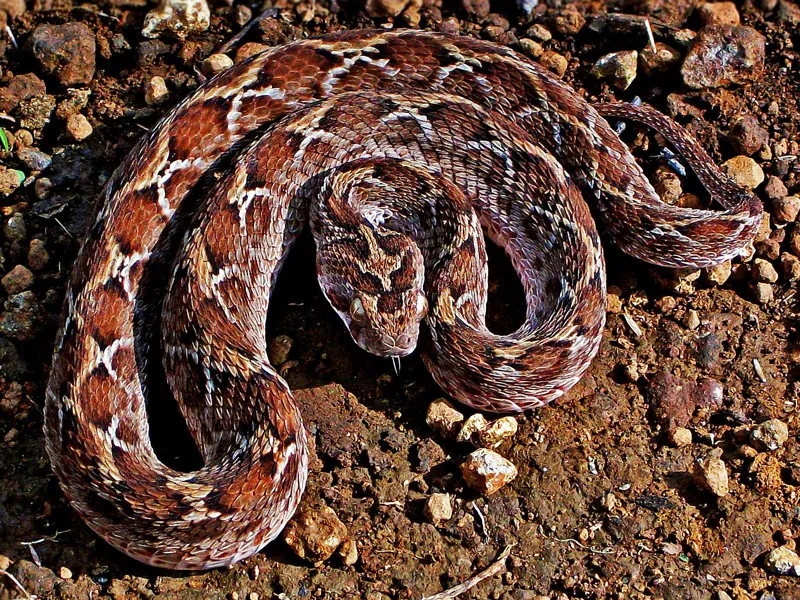
 Sɛdeɛ wobɛhunu no
- Small, usually no more than 60 cm long in total1
- Pale buff, grey, reddish, olive or pale brown body with whitish spots edged in dark brown1
- A whitish cross or trident pattern on the top of the head1
- A faint stripe running from the eye to the angle of the jaw1
- Whitish to pinkish belly, sometimes with brown dots1
Bɔre ahoɔden
Bɔre fi ne se mu ba bere a ɔka.
Ne bɔre yɛ dɛn?
Its venom causes swelling and pain within minutes of a bite, and the swelling can spread up the whole limb within 12 to 24 hours, with blisters forming on the skin. The more dangerous effects are whole-body: bleeding and clotting problems, bleeding from the stomach, lungs, nose or urine, and possible shock. Most patients produce little or no urine within a few hours to six days after the bite.1
Ne asiane ma nnipa te sɛn?
Asiane ma nnipa: ƐkumMmoa a asiane wɔ wɔn ho sen biara wɔ wiase no mu baako.About 20% of its bites used to be fatal, but deaths are now quite rare because antivenom is available. It is one of the species responsible for the most snakebite cases because it is inconspicuous and extremely aggressive.1
 Asɛmpa: dɔkotafoɔ wɔ aduro (antivenom) anaa ayaresa ma yei.1
Ɛyɛ dɛn bere a ehu aka no?
When threatened it forms a double coil in a figure of eight, with its head in the centre, so it can lash out like a released spring.1
 Sɛ ɛka a
- Antivenin therapy and intravenous hydration within hours of the bite are vital for survival.1
- Ma onipa no ntena dinn na ne bo nnwo, ma nsa anaa nan a ɛkaa no no nna pɛpɛɛpɛ ne ne koma (ɛnkɔ soro, ɛnsiane fam), yi kawa ne nneɛma a ɛkyere no den, na kɔ ayaresabea ntɛm.
Di kan frɛ wo ahohiahia nɔma (112, 000, 911). Yei yɛ mmoa a ɛdi kan ho akwankyerɛ, ɛnyɛ dɔkota afotuo. Mmoa a ɛdi kan ho nsɛm titiriw
 Hwɛ wo ho so
- Mfa wo nsa nka wiram aboa biara, nkyere no na mfa no nni agorɔ, sɛ ɔyɛ ketewa mpo, na sɛ ɛte sɛ ɔrededa anaa wawu mpo a.
- Ma no kwan. Sɛ wohyia baako a, ma wo bo nnwo, san w'akyi brɛoo na ma ɔnkɔ ne kwan.
- Sɛ baako ka wo a: ma wo bo nnwo, tena dinn, frɛ wo ahohiahia nɔma (112, 000, 911) anaa kɔ ayaresabea ntɛm. Kae sɛdeɛ na ɛte, mfonini bɛboa.
Ɛnhwehwɛ wo sɛ ɛbɛpira wo. Ɛde ne bɔre kyere aduane anaa ɛbɔ ne ho ban, na ɛpɛ sɛ ɛhinta sene biribiara. Nsɛm pii fa ahobammɔ ho
Wiase mu baabi bɛn?
Ne kɛseɛ te sɛn?
Ne tenten te sɛn?
 ne tenten te sɛ fie agyinamoa 1,5 a wɔde hwene ne dua to ntoatoasoɔ mu
 ne tenten te sɛ kwadu 4 a wɔde to ntoatoasoɔ mu
 ɛbɛtumi atu mita 100 wɔ anibu 110 mu (onipa a ɔwɔ ntɛm sen biara hia 9.6)
Indian saw-scaled viper kɛseɛ te sɛn sɛ wode toto WO ho a?
Akontabuo kɛkɛ wɔ wo browser mu. Wɔnkora hwee, na wɔmfa hwee nkɔ baabiara.
Ne ntɛm te sɛn?


Nsɛm
On average it produces about 18 mg of dry venom, with a recorded maximum of 72 mg. The lethal dose for an adult is estimated at only 5 mg.1
When it rains, up to 80% of the adult population may climb into bushes and trees. Once, about 20 individuals were seen massed on one cactus or small shrub.1
It moves mainly by sidewinding, a method it is very skilled at and surprisingly quick with. Only two points of its body touch the hot ground, which may help it avoid overheating.1
Its venom is used to make several drugs, including echistatin, an anticoagulant that can be made by chemical synthesis, and ecarin, used in a clotting test.1
In the northern parts of its range, it hibernates in winter.1
Baabi a nsɛm no fi
- Echis carinatus (Wikipedia (CC BY-SA 4.0))
- Echis carinatus (iNaturalist): din ne nkyekyɛmu.
- Venom Wiki: asiane gyinabea, kɛseɛ a ɛtaa yɛ ne ntɛm susuo no yɛ yɛn ankasa deɛ. Hwɛ sɛdeɛ yɛbu no: Sɛdeɛ yɛkyerɛ asiane gyinabea.
Nsɛm biara a ɛwɔ kratafa yi so wɔ nɔma a ɛkyerɛ ne fibea. Sɛ yɛfom biribi a, kafra, yɛyɛ mmoa ho akɔnnɔfoɔ, ɛnyɛ nyansahu nwoma. Ka kyerɛ yɛn wɔ [email protected] na yɛbɛsiesie.
 Ɔkɔm de akekantwerɛ no! Onipa baako na ɔyɛ Venom Wiki: ɛyɛ kwa, dawurubɔ nni so na biribiara nni so a ɛdi w'akyi. Akyɛdeɛ ketewa bi boa ma ɛkɔ so tena internet so.Ma akekantwere no aduane
 Puff adder
 Russell ɔnanka
 Common European adder
 Eastern Russell's viper
 Northeast African carpet viper
 Armenian viper
 Deathstalker
 Indian cobra
 King cobra
 Asian giant hornet
 Komodo dragon
 Spanish fly
_Photographed_By_Shantanu_Kuveskar.jpg)