
 Abibirem
 Asia
Asia Yuropu
 Amerika Anaafoɔ
 Australia ne Oceania
 Antarctica
 Pacific Po
 Atlantic Po
 India Po
 Arctic Po
 Mediterranean Po
 Po Kɔkɔɔ
 Caribbean Po
 Coral Po
 China Anaafoɔ Po
 Philippine Po
 Andaman Po
 Atifi Po
 Timor ne Arafura Po
 Bengal Ɛpo Ano
 California Ɛpo Ano
Indian cobra
 Ka
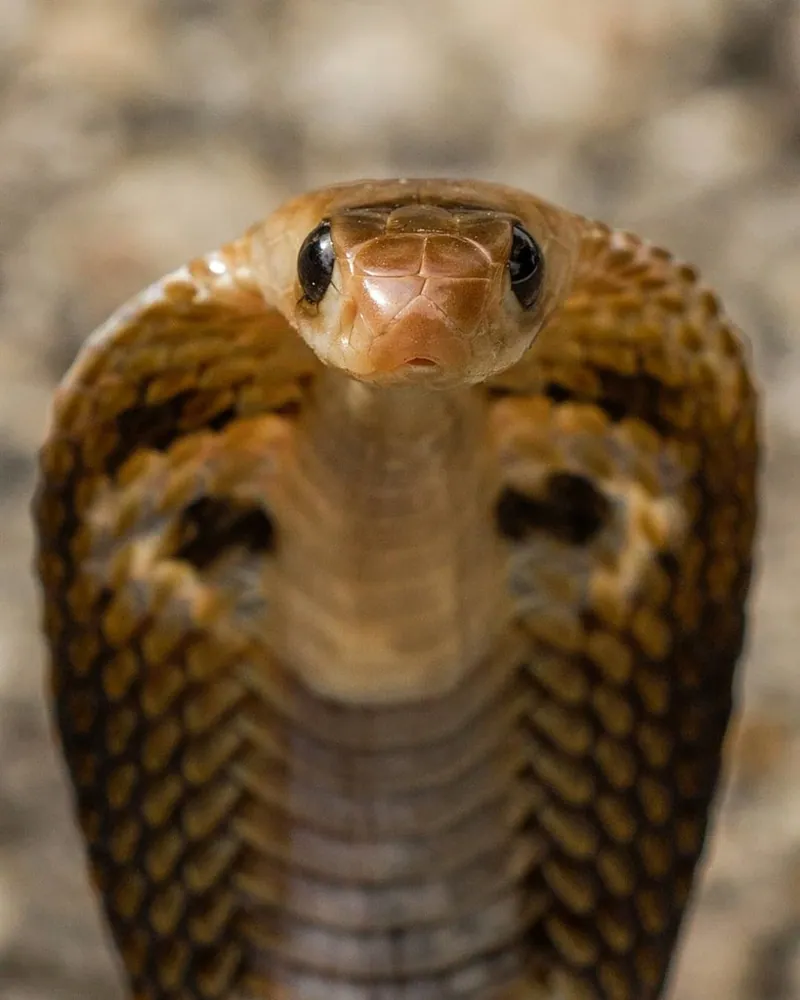
KaThe Indian cobra is a heavy-bodied venomous snake that lives across the Indian subcontinent. It is famous for the large hood it spreads when threatened. It is one of the four snakes responsible for the most snakebites in India and Sri Lanka, so knowing how to recognise it matters.1



 Sɛdeɛ wobɛhunu no
- A relatively large hood, which it expands when threatened.1
- Many individuals have a hood mark on the back of the hood: two round eye-like patterns joined by a curved line, looking like a pair of spectacles.1
- Colour varies widely. The underside can be grey, yellow, tan, brown, reddish or black, and many adults have salt-and-pepper speckles on the upper scales.1
- Adults in southern Pakistan are often uniformly black on top, with a light underside.1
Wɔtaa fa no sɛ: The Oriental rat snake is often mistaken for this cobra, but it is much longer and has a more ridged-looking body. The monocled cobra has an O-shaped pattern on the back of its hood, while the Indian cobra has a spectacles-shaped pattern. The Caspian cobra can be confused with it where they share range in Pakistan and Afghanistan, but it is never fully black.1
Bɔre ahoɔden
Bɔre fi ne se mu ba bere a ɔka.
Ne bɔre yɛ dɛn?
Its venom mainly contains a powerful neurotoxin, which attacks the nerves, and a cardiotoxin, which harms the heart. The neurotoxin paralyses muscles, and severe bites can lead to respiratory failure (breathing failure) or cardiac arrest (the heart stopping). Symptoms may appear between 15 minutes and two hours after a bite. Early signs include severe local pain and swelling that spreads up the limb, followed by darkening and blistering of the skin, as well as headache, nausea, vomiting, dizziness and drowsiness.1
Ne asiane ma nnipa te sɛn?
Asiane ma nnipa: ƐkumMmoa a asiane wɔ wɔn ho sen biara wɔ wiase no mu baako.It is responsible for many snakebites and most snakebite cases in Bangladesh. In one study, untreated bite victims had a mortality rate of about 20–30%. In another study of patients who received prompt medical treatment, the rate was 9%. The amount of venom delivered varies from bite to bite.1
 Asɛmpa: dɔkotafoɔ wɔ aduro (antivenom) anaa ayaresa ma yei.1
Ɛyɛ dɛn bere a ehu aka no?
When threatened, it spreads its large hood.1
 Sɛ ɛka a
- Prompt medical treatment and antivenom reduce deaths from this snake's bites. Polyvalent serum, an antivenom that works against several snake species, is available for treating these bites.1
- Ma onipa no ntena dinn na ne bo nnwo, yi kawa ne nneɛma a ɛkyere no den, na kɔ ayaresabea ntɛm: antivenom ne ayaresa no.
Di kan frɛ wo ahohiahia nɔma (112, 000, 911). Yei yɛ mmoa a ɛdi kan ho akwankyerɛ, ɛnyɛ dɔkota afotuo. Mmoa a ɛdi kan ho nsɛm titiriw
 Hwɛ wo ho so
- Mfa wo nsa nka wiram aboa biara, nkyere no na mfa no nni agorɔ, sɛ ɔyɛ ketewa mpo, na sɛ ɛte sɛ ɔrededa anaa wawu mpo a.
- Ma no kwan. Sɛ wohyia baako a, ma wo bo nnwo, san w'akyi brɛoo na ma ɔnkɔ ne kwan.
- Sɛ baako ka wo a: ma wo bo nnwo, tena dinn, frɛ wo ahohiahia nɔma (112, 000, 911) anaa kɔ ayaresabea ntɛm. Kae sɛdeɛ na ɛte, mfonini bɛboa.
Ɛnhwehwɛ wo sɛ ɛbɛpira wo. Ɛde ne bɔre kyere aduane anaa ɛbɔ ne ho ban, na ɛpɛ sɛ ɛhinta sene biribiara. Nsɛm pii fa ahobammɔ ho
Wiase mu baabi bɛn?
Ne kɛseɛ te sɛn?
Ne tenten te sɛn?
 ne tenten te sɛ fie agyinamoa 4 a wɔde hwene ne dua to ntoatoasoɔ mu
 ne tenten te sɛ kwadu 12 a wɔde to ntoatoasoɔ mu
 ɛbɛtumi atu mita 100 wɔ anibu 46 mu (onipa a ɔwɔ ntɛm sen biara hia 9.6)
Indian cobra kɛseɛ te sɛn sɛ wode toto WO ho a?
Akontabuo kɛkɛ wɔ wo browser mu. Wɔnkora hwee, na wɔmfa hwee nkɔ baabiara.
Ne ntɛm te sɛn?


Nsɛm
Its venom is used as an intoxicant in India. Snake charmers have been paid to provide bites from their snakes, and the effects include loss of consciousness, euphoria and sedation.1
Hatchlings are independent from birth and have fully working venom glands, so even young snakes can deliver venom.1
It is revered in Hindu mythology and culture, and is often seen with snake charmers.1
It is protected under the Indian Wildlife Protection Act (1972).1
Baabi a nsɛm no fi
- Indian cobra (Wikipedia (CC BY-SA 4.0))
- Naja naja (iNaturalist): din ne nkyekyɛmu.
- Venom Wiki: asiane gyinabea, kɛseɛ a ɛtaa yɛ ne ntɛm susuo no yɛ yɛn ankasa deɛ. Hwɛ sɛdeɛ yɛbu no: Sɛdeɛ yɛkyerɛ asiane gyinabea.
Nsɛm biara a ɛwɔ kratafa yi so wɔ nɔma a ɛkyerɛ ne fibea. Sɛ yɛfom biribi a, kafra, yɛyɛ mmoa ho akɔnnɔfoɔ, ɛnyɛ nyansahu nwoma. Ka kyerɛ yɛn wɔ [email protected] na yɛbɛsiesie.
 Ɔkɔm de akekantwerɛ no! Onipa baako na ɔyɛ Venom Wiki: ɛyɛ kwa, dawurubɔ nni so na biribiara nni so a ɛdi w'akyi. Akyɛdeɛ ketewa bi boa ma ɛkɔ so tena internet so.Ma akekantwere no aduane
 King cobra
 Caspian cobra
 Common krait
 Malayan krait
 Many-banded krait
 Monocled cobra
 Deathstalker
 Indian saw-scaled viper
 Puff adder
 Russell ɔnanka
 Asian giant hornet
 Komodo dragon